
Specifying Disposable Sanitary Napkins by Absorbency, Length and Core: A Technical Guide for Sourcing Teams
Specifying Disposable Sanitary Napkins by Absorbency, Length and Core
A sanitary napkin specification is not a list of attractive adjectives. It is a set of three interlocking engineering decisions — how long the pad is, how much fluid the core is designed to hold and release, and what the core and backsheet are built from. Get those three right and the rest of the specification (packaging, platform, compliance documentation, unit cost) falls into place. Get them wrong and the product fails at the point of use, not at the point of inspection.
This guide is written for health & medicine and FMCG sourcing teams, product managers and private-label brand owners who need to translate a market brief into a locked specification that a factory can quote, sample and run. It uses the technical parameters published for the Ecolivia-Bio Series (155–450 mm full range, customizable High / Super / Night absorbency, organic cotton, bamboo fiber and advanced bio-based core) and the FC-Standard Series (240 mm / 285 mm / 330 mm / 410 mm, high-speed absorption core, non-woven, SAP and breathable bio-film) as worked examples of how the three levers behave in practice.
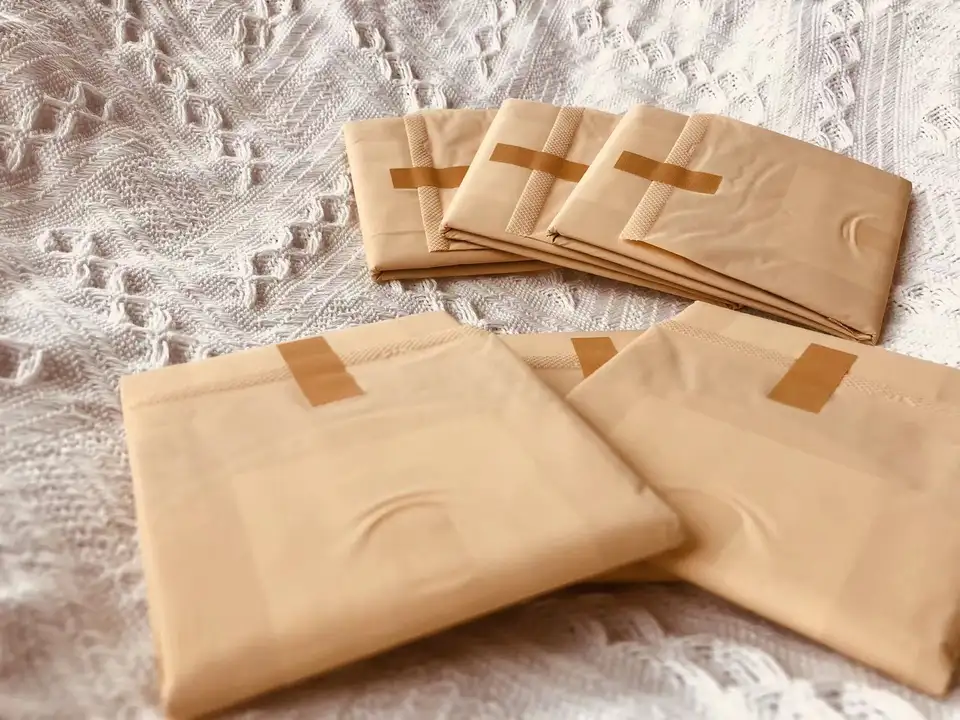
Why Most Sanitary Napkin Specifications Fail Before Production Starts
The most common specification failure is not a manufacturing defect. It is a translation failure: the brand team describes a consumer need in market language, the factory receives it as a product name, and neither side defines the physical parameter that has to be met.
Three patterns recur in B2B sourcing reviews:
- The sample becomes the specification. A buyer approves a competitor's pad as a reference and asks for "the same thing". The resulting order may match length and appearance while differing in core density, SAP loading and backsheet permeability — the three variables most responsible for leakage complaints.
- Absorbency is described as a label, not a target. "High absorbency" is a positioning word. A production line needs an absorbency class, a core structure and a quality gate, otherwise the same SKU can drift between production batches.
- Core and backsheet are specified independently. An advanced bio-based core paired with a low-permeability backsheet traps moisture and cancels the comfort benefit the core was selected to deliver.
Industry Background: Why Specification Discipline Matters More Than It Did Five Years Ago
Two structural shifts have raised the cost of loose specifications.
First, the export base has scaled. China's sanitary napkin exports reached 1.14 million tonnes in 2025, a 9.2% year-on-year increase, with the United States (21% of exports), Germany (12%) and the United Kingdom (9%) as the leading destinations, according to the CNHPIA industry whitepaper trade data. When a category is that large and that internationally distributed, buyers are no longer comparing a handful of local factories — they are comparing programs, and programs are compared on documents.
Second, the premium eco segment has become a distinct commercial category rather than a niche add-on. The Insight Partners estimates the global biodegradable sanitary napkin market at US$ 3.53 billion in 2025, with a projected CAGR of 17.38% across 2026–2034. That growth attracts new brand entrants, and new brand entrants are precisely the buyers most likely to accept an underspecified product because they have no internal baseline to compare against.
Price bands reinforce the same conclusion. For standard ultra-thin pads produced in China, FOB prices have stabilized in the range of US$ 0.018–0.032 per unit, depending on SAP content and topsheet material. That spread is roughly a 78% difference between the low and high end of the band — and almost all of it is explained by the three specification levers covered in this guide. A buyer who cannot articulate the core and topsheet requirements cannot explain their own unit cost, in either direction.
The Three Specification Levers
Lever 1 — Length: Fix the Format Before Anything Else
Length is the anchor parameter. It determines the product format, the folding pattern, the wrapper size, the carton count and the retail shelf facing. Changing length late in a project re-opens packaging tooling, which is why it should be decided first.
The two series illustrate how length ranges differ by positioning:
- Ecolivia-Bio Series: a full 155 mm to 450 mm range. The low end covers panty-liner and light-flow formats, the mid-range covers day use, and the upper end covers overnight and postpartum formats. A full range lets a brand build a coherent line — liner, regular, night, maternity — from one supplier and one core philosophy.
- FC-Standard Series: a fixed four-size ladder at 240 mm, 285 mm, 330 mm and 410 mm. This is the mass-market wholesale structure: fewer SKUs, faster line changeovers, simpler distributor assortments and predictable carton configuration for supermarket and B2B distribution channels.
In practice, a distributor launching a private label should start with the four-size ladder and add sizes only when a specific channel demands them. A brand building a differentiated eco proposition usually needs the wider range, because the liner-to-maternity spread is part of the brand story.
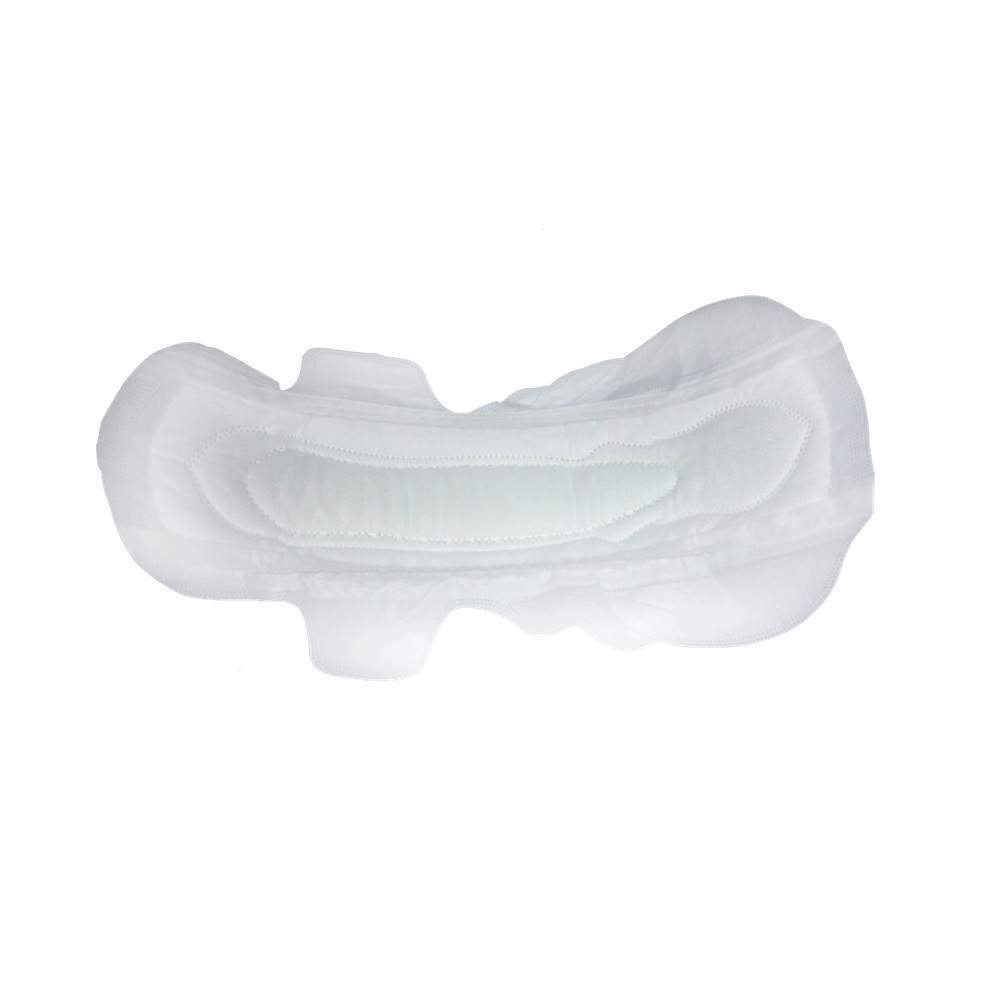
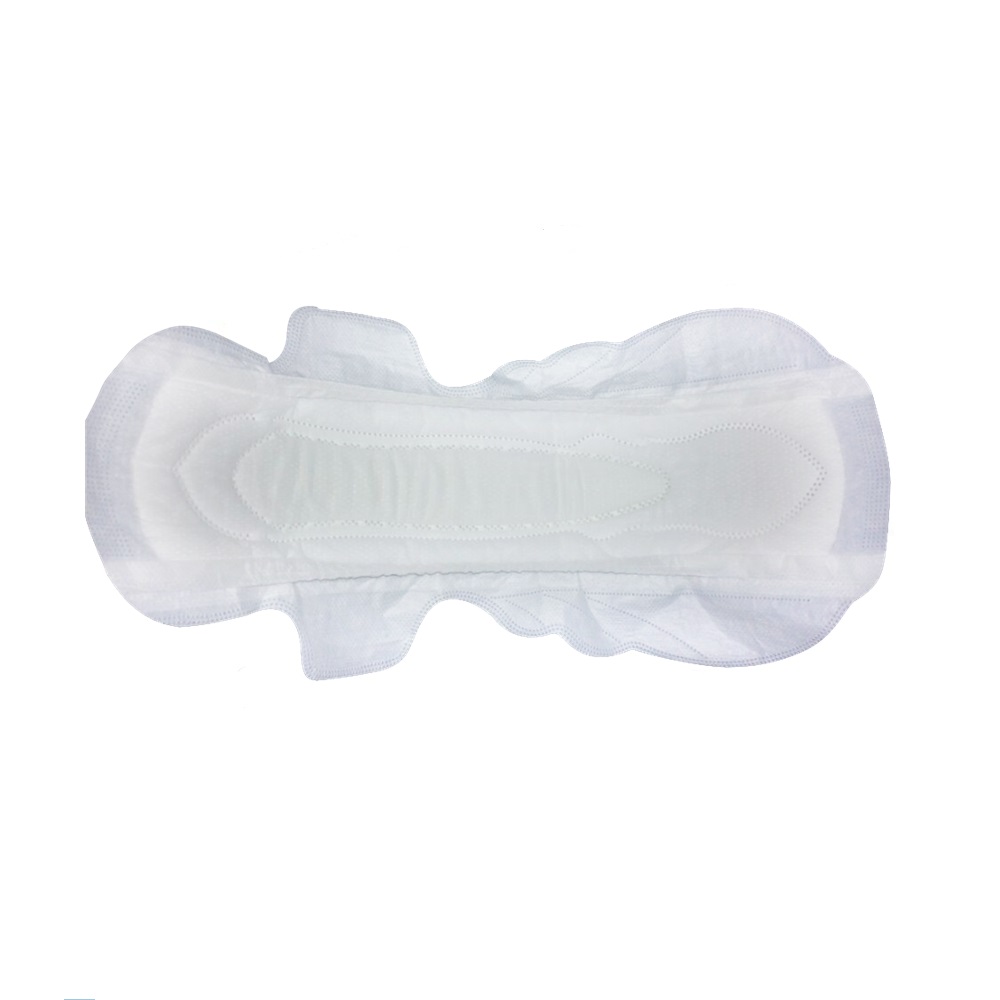
Lever 2 — Absorbency: Convert a Consumer Need into a Class
Absorbency is where market language and factory language diverge most sharply. The Ecolivia-Bio Series is specified with customizable absorbency classes expressed as High / Super / Night. That three-class structure is useful because it maps directly onto usage occasions rather than onto abstract performance claims:
- High: daytime regular-flow use, and the default for liner-adjacent and light-flow formats.
- Super: longer daytime wear, medium-to-heavy flow, and the workhorse SKU in most retail assortments.
- Night: overnight and extended-wear use, including postpartum recovery programs where the pad is worn for longer intervals.
What makes the class real on the production line is the core architecture behind it — how much superabsorbent polymer (SAP) is distributed through the core, how the pulp or bio-based carrier holds it, and how the acquisition layer manages the initial fluid surge. A specification that says "Super" but does not reference core structure leaves the absorbency class unenforceable.
The FC-Standard Series addresses the same variable with a different logic: a high-speed absorption core combined with SAP. That combination is designed for continuous high-volume production, where consistency across millions of units matters more than fine-tuning a single premium SKU.
Lever 3 — Core and Backsheet: Where Positioning Becomes Material
Core selection is the decision that determines what the brand can credibly claim, what the pad feels like, and what the bill of materials costs.
The Ecolivia-Bio Series is offered with three core routes:
- Organic cotton — the route most often requested by premium retail and subscription brands positioning on skin sensitivity and natural fiber content.
- Bamboo fiber — an alternative plant-fiber route that supports a differentiated material story without leaving the plant-based category.
- Advanced bio-based core — a bio-based absorbent architecture used as a replacement path for conventional SAP in brands moving toward lower fossil-based material content.
The FC-Standard Series uses a non-woven, SAP and breathable bio-film combination — the configuration that supports high-speed automated production at scale for wholesale and B2B distribution.
Backsheet choice deserves equal weight and is frequently under-specified. A plant-based bio-film backsheet delivers a 40% increase in airflow compared with standard polyethylene (PE) backsheets on comparable constructions. That airflow difference is not a marketing footnote: it is the mechanism behind breathability positioning, and it only works if the core above it is not saturated beyond its design class. A Night-class core under a breathable bio-film is a coherent specification; a High-class core under the same film, marketed as overnight protection, is not.
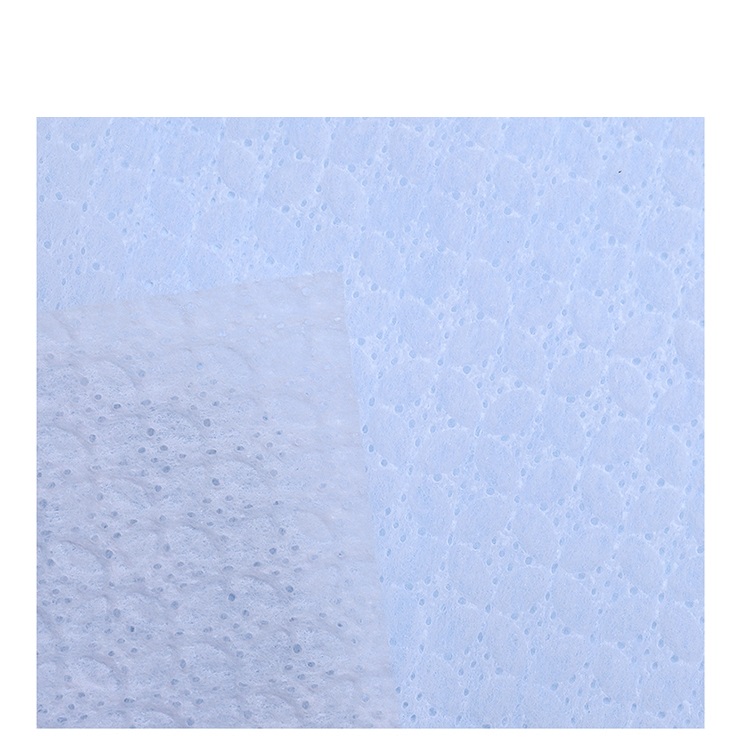
Raw Material GSM: The Parameter That Connects All Three Levers
Non-woven gram weight is supplied across a 10–80 gsm band, with roll width customizable per production line. GSM sits underneath all three levers because it governs the topsheet feel, the acquisition speed and the mechanical strength of the web during high-speed converting.
As a working rule: lower GSM supports a lighter, softer hand-feel and is typical of premium ultra-thin positioning; higher GSM supports structural stability and is favored where the line runs fast and the web must not distort. The consistent-GSM and high-tensile-strength requirements that appear in industrial raw-material supply briefs exist for exactly this reason — inconsistent GSM on a high-speed line shows up as downtime, not as a customer complaint.
Step-by-Step: Turning a Market Brief into a Locked Specification
The workflow below is the sequence used to convert a brand or tender brief into a manufacturable specification. Each step produces a documentable output.
Step 1 — Define the flow profile and usage occasion
Write down who wears the product, for how long, and in what context: daytime retail, overnight, postpartum recovery, institutional care, subscription box. The output is a list of usage occasions, not a product list.
Step 2 — Assign an absorbency class to each occasion
Map each occasion to High, Super or Night. Resist the temptation to specify Night across the whole range "for safety" — over-specifying absorbency raises core cost and can reduce comfort on light-flow SKUs. The output is an absorbency class table.
Step 3 — Fix the length ladder
Choose the four-size ladder (240 / 285 / 330 / 410 mm) for a lean wholesale assortment, or the 155–450 mm range where the brand needs liner and maternity formats. The output is a size ladder with one length per SKU.
Step 4 — Select the core architecture
Decide between organic cotton, bamboo fiber and advanced bio-based core, or the non-woven / SAP construction. Tie the choice to a claim you can support with documentation. The output is a core specification per SKU.
Step 5 — Specify the backsheet and the GSM band
Choose breathable bio-film or standard film. Add the non-woven GSM range (within 10–80 gsm) and the roll width requirement. The output is a materials clause.
Step 6 — Define the quality gate
State the inspection regime explicitly. The OEM/ODM production program operates 100% on-line visual inspection plus in-house laboratory quality control, with quality traceability supported after shipment. Written into the specification, this becomes an acceptance criterion rather than a reassurance. The output is a QC clause.
Step 7 — Attach the compliance scope
List the certificates and registrations required for the destination market. Manufacturing operations are ISO 9001 certified, and products are positioned against FDA, CE and GOTS standards. Note that FDA establishment registration and device listing are database records that must be verified against the specific legal entity and product scope before they are used as market-access evidence. The output is a compliance annex.
Step 8 — Lock commercial terms against the specification
Only now request pricing. The OEM/ODM program runs a minimum order quantity of 1 x 20GP, negotiable for start-up brands, with a production lead time of 15–25 days and monthly capacity of 54 million+ pieces. Material supply runs separately at 2 tonnes / 1 x 40GP minimum with a 7–14 day lead time and batch COA reports. The output is a quotable specification package.
Worked Scenario Mapping: Which Specification Fits Which Program
The table below converts the three levers into concrete program types. It is a starting configuration, not a fixed rule — every entry should be validated against the buyer's own market requirements.
| Program type | Length | Absorbency class | Core and backsheet | Specification priority |
|---|---|---|---|---|
| Retail eco brand, full line | 155–450 mm range | High / Super / Night split across SKUs | Organic cotton or bamboo fiber, advanced bio-based core, breathable bio-film | Claim substantiation and material documentation |
| Mass-market wholesale / B2B distribution | 240 / 285 / 330 / 410 mm | High-speed absorption core with SAP | Non-woven, SAP, breathable bio-film | Unit-cost stability and line speed |
| Overnight and heavy-flow range | 330 mm and 410 mm | Night | High-capacity core, breathable bio-film | Leakage performance and core saturation margin |
| Postpartum and maternity care | Upper end of range, 410 mm class | Night or dedicated maternity format | Soft non-woven surface, high-capacity core | Skin comfort over extended wear |
| E-commerce and subscription box | Mixed ladder within one box | Mixed classes by occasion | Premium core, boutique box packaging | Assortment logic and packaging consistency |
Comparing the Two Platforms on the Same Specification Axes
Buyers frequently ask which platform to start with. The honest answer is that they answer different briefs, and comparing them on the same three axes is the fastest way to see the difference.
| Specification axis | Ecolivia-Bio Series | FC-Standard Series |
|---|---|---|
| Length coverage | 155–450 mm full range | 240 / 285 / 330 / 410 mm fixed ladder |
| Absorbency specification | Customizable: High / Super / Night | High-speed absorption core |
| Core material routes | Organic cotton, bamboo fiber, advanced bio-based core | Non-woven with SAP |
| Backsheet | Breathable bio-film options | Breathable bio-film |
| Positioning | Premium eco-friendly pads for retail, FMCG and sustainable brands | Mass-market pads for wholesale, B2B distribution and supermarkets |
| Typical buyer | Brand owner building a differentiated eco line | Distributor or retailer needing a lean, repeatable assortment |
| Primary specification risk | Claim substantiation across multiple material routes | Assortment discipline — resisting SKU proliferation |
Neither column is superior. A distributor supplying supermarket chains with a 300-SKU catalogue needs the fixed ladder and the fastest changeover. A brand building a subscription proposition around plant-based materials needs the wider range and the multi-core flexibility. What matters is that the buyer matches the platform to the specification brief rather than adjusting the brief to whatever the factory already runs.
Use Cases: How the Specification Levers Play Out in Real Programs
Regional FMCG brand scaling an organic cotton line
A leading regional FMCG brand in Malaysia runs 2–3 x 40HQ containers per month of high-end organic cotton sanitary napkins and menstrual pants on a 3+ year program, and integrated advanced bio-based core technology to replace standard SAP. The specification lesson is sequencing: the core transition was treated as a specification change with its own validation, not as a silent material substitution. That program has supported the client's reported 25% annual sales growth in Southeast Asia.
Premium e-commerce brand in a plastic-free transition
A German premium e-commerce and subscription brand ships 500,000+ units per batch on a monthly recurring basis, in tailored organic cotton pads in luxury retail gift boxes, and has been supported through a transition to 100% plastic-free packaging over a 3-year relationship. Here the specification constraint was packaging compatibility: the pad had to be re-specified so the box-packing line could run at zero-defect retail standard, which is a length-and-folding decision before it is a packaging decision.
Medical and adult care procurement
A top-tier medical and adult care brand in the United States has run 2–3 x 40HQ containers per month for 10+ years, maintaining a 0% major quality complaint rate while scaling market share, with high-absorbency core stability and customized medical-grade packaging. For institutional programs, absorbency class and core stability are the acceptance criteria; packaging and branding are secondary. This is the clearest illustration of why absorbency must be written as a measured class rather than an adjective.
Boutique OEM with custom packaging
Boutique brand programs in the UAE market combine premium boxed packaging with FSC-certified paper boxes, high-end printing and low MOQ for new SKU testing. The specification here is driven by the packaging platform first: low MOQ SKU testing only works if length and folding are standardized across the trial range.
Frequently Asked Questions
Do the absorbency and core specifications change for US or EU market entry?
The technical specification does not change, but the documentation scope does. Disposable sanitary napkins and panty liners appear in the U.S. FDA Establishment Registration and Device Listing database as listed device types, so buyers should verify the specific legal entity and product record directly in the live database rather than relying on a certificate image. Manufacturing operations for the Ecolivia and FC-Standard platforms are ISO 9001 certified, and products are positioned against FDA, CE and GOTS standards. For the EU, buyers should also expect to substantiate any biodegradability or bio-based claim with test documentation — peer-reviewed environmental literature and published lifecycle inventory datasets both treat material composition and end-of-life claims as verification items, not as positioning statements.
Can one supplier hold a 155–450 mm range and multiple core options within a single OEM program?
Yes, within the Ecolivia-Bio Series, which is specified as a 155–450 mm full range with organic cotton, bamboo fiber and advanced bio-based core routes, and customizable High / Super / Night absorbency. The OEM/ODM manufacturing program supports customization of brand and logo, sizing, bio-based core structure and packaging, with monthly capacity of 54 million+ pieces. The practical constraint is not capability but line scheduling: a program spanning liners to maternity formats needs staggered production runs rather than a single continuous run, which is why the size ladder should be sequenced by volume.
What drives unit cost across these specification choices?
Core material route, SAP content and topsheet material are the three dominant cost variables. For standard ultra-thin pads produced in China, FOB prices have stabilized in the US$ 0.018–0.032 per unit range depending on SAP content and topsheet material — a spread of roughly 78% between the low and high end. Moving from a standard non-woven / SAP construction to an organic cotton or advanced bio-based core moves a program toward the upper end of that band. Buyers should expect the cost difference to be explainable line by line in the quotation; if it is not, the specification is probably not locked.
How should absorbency and core performance be validated before mass production?
Through a sample that is tested against a written specification, not against a visual impression. The production program applies 100% on-line visual inspection plus in-house laboratory quality control, and quality traceability is maintained after shipment. For material supply, batch COA reports are issued per batch, and sample testing support is available. Buyers should request that the sample approval record reference the specific absorbency class, core structure, GSM band and length — so that the approved sample and the production run are governed by the same document.
What lead time applies to a customized OEM sanitary napkin order?
OEM/ODM manufacturing runs a production lead time of 15–25 days, with a minimum order quantity of 1 x 20GP that is negotiable for start-up brands. Separate material supply runs a 7–14 day lead time at a 2 tonne / 1 x 40GP minimum, depending on the material. Logistics capacity supports 30+ 40HQ containers per month with a 3–5 day treatment-date lead time and pre-shipment loading inspection. Buyers planning a launch should sequence the material lead time before the production lead time rather than treating them as one number.
Conclusion: Lock Three Numbers, Then Talk About Price
Absorbency, length and core are not three independent choices to be negotiated one at a time. They form a single specification decision: length fixes the format and the packaging platform, absorbency fixes the core architecture and the SAP strategy, and core plus backsheet fix the material story and the substantiable claim.
A buyer who arrives at a factory with those three parameters written down — plus the GSM band, the quality gate and the compliance annex — gets a quotation that can be compared against another supplier's quotation. A buyer who arrives with a reference sample and a positioning statement gets a price that cannot be benchmarked, and a product that cannot be defended in a complaint review.
Family Cares Group is a Xiamen-headquartered integrated hygiene and medical materials manufacturer, founded in 2001, operating 35,000+ square meters of production space with 350–500 employees, 25+ professional engineers and annual output exceeding 650 million pieces, exporting 85%–90% of production to North America, Europe, Southeast Asia, the CIS, the Middle East and Africa. The Ecolivia brand and the FC-Standard platform are both specified through the same three-lever process described in this guide.
Next step: send us your three parameters
Share your target length ladder, absorbency class and core route, and we will return a specification review covering material GSM, backsheet options, quality gate and indicative lead time. Sample requests and specification reviews are handled by the technical sales team.
Email: admin@family-cares.com | Website: www.family-cares.com | WhatsApp: +86 13805968557
Have Questions or Need More Details?
Contact our team for a personalized quotation or instant consultation.
Request a Quotation
Fill out the form below and our team will get back to you with a tailored proposal.
WhatsApp Direct Chat
Prefer to chat in real-time? Message us on WhatsApp for instant assistance & quick answers.
- Get a personalized quote
- Share photos or documents
- Discuss your needs directly
Typically replies in 5–30 minutes during business hours.