
Disposable Sanitary Napkins: Postpartum to Institutional
Disposable sanitary napkins are bought through three different doors — postpartum recovery, retail shelf, and institutional care — and each door opens onto a different specification. The absorbency, length, material platform and documentation that satisfy a maternity program will over-engineer a supermarket planogram, while a retail SKU will fail a care facility's leakage tolerance. This application guide maps each scenario to a defined product family from Family Cares Group and its Ecolivia brand, and gives buyers a repeatable way to convert a use case into a purchase order.
Family Cares Group (Xiamen) is an integrated hygiene and medical materials manufacturer founded in 2001, operating 35,000+ square metres of production space with 350–500 employees and 25+ professional engineers. Its disposable sanitary napkin brand, Ecolivia, is produced in the hygiene industrial cluster of Quanzhou, Fujian, and the group exports 85%–90% of output to North America (USA, Canada), Europe (UK, Germany, France), Southeast Asia (Malaysia, Vietnam, Thailand, Singapore), the CIS, the Middle East and Africa.

The Problem: One Pad Specification Cannot Serve Three Buyers
Most sourcing errors in this category are specification errors before they are price errors. A buyer who orders one 'standard' napkin for every channel ends up with three simultaneous failures: a retail cost structure that is too heavy for the absorbency actually delivered, a postpartum product that is too short for the highest-flow days, and an institutional case that leaks under prolonged wear.
Postpartum programs need length, format and surface softness
Postpartum flow is heavier and longer-lasting than routine menstrual flow, and it begins while the user may still be recovering from delivery. The requirements that follow are functional rather than promotional: greater length, a higher-capacity core, a soft non-woven surface, and — for the first days — a pants format that stays in place without depending on adhesive wings and underwear fit. Retailers assembling maternity kits normally pair a pants-format product for the immediate period with longer winged pads for the days that follow.
Retail needs an assortment ladder, not a single hero SKU
A retail shelf is a ladder: an entry-price daytime pad, a mainstream tier, an overnight pad, and optionally a premium eco-positioned line. Over-specifying the entry SKU erodes margin; under-specifying the overnight SKU generates the leakage complaints that damage a private label fastest. The ladder is defined by length and absorbency first, material second.
Institutional care buys leakage control at case volume
Nursing homes, hospitals and home-care distributors evaluate products per case, not per pack. Their tolerances concentrate on four things: containment under prolonged wear, skin tolerance during extended contact, packaging integrity through humid storage, and documented quality control that survives an audit. Absorbency claims matter less than repeatability across pallets.
Industry Background: How the Category Is Actually Structured
Commercial research segments the feminine hygiene category into sanitary napkins/pads, panty liners, tampons and other formats, and treats sanitary napkins as a distinct sub-segment. That segmentation matters at quotation stage: a price quoted for 'feminine hygiene' does not automatically cover the same product scope, material set or test documentation as a price quoted for a defined pad construction.
Two structural signals shape sourcing decisions in 2026. First, the eco-positioned segment is growing faster than the conventional one — The Insight Partners estimates the global biodegradable sanitary napkin market at US$3.53 billion in 2025, reaching US$14.93 billion by 2034 at a 17.38% CAGR for 2026–2034. Second, supply remains concentrated in China: a 2026 CNHPIA industry whitepaper reports China's sanitary napkin exports at 1.14 million tonnes in 2025, a 9.2% year-on-year increase, with the United States taking 21% of exports, Germany 12% and the United Kingdom 9%.
The same whitepaper places FOB prices for standard ultra-thin pads in China at US$0.018–US$0.032 per unit, varying with SAP content and top-sheet material. That band is a useful reality check during budget planning: material upgrades move unit cost inside a relatively narrow range, so specification decisions are usually driven by application fit and claim substantiation rather than by raw price alone.
Environmental literature points the same way. Peer-reviewed work on menstrual hygiene products and published lifecycle inventory datasets both treat material composition and end-of-life as verification dimensions rather than marketing attributes. For a buyer, that means an eco-positioned line should be specified through documented material inputs and test documentation, not through an unqualified 'biodegradable' or 'plant-based' label.
Detailed Solution: Three Product Families Mapped to Three Tracks
Family Cares Group structures its disposable sanitary napkin offer as three families — FC-Standard, Ecolivia-Bio and FC-Pants — plus an adjacent adult-care line. Each family answers a different application question, and the families are designed to sit on the same shelf or in the same tender without competing for the same position.
FC-Standard Series — the retail workhorse
The FC-Standard Series is built in four lengths: 240 mm, 285 mm, 330 mm and 410 mm, on a non-woven top sheet, a super absorbent polymer (SAP) core and a breathable bio-film backsheet. It covers the retail ladder directly: 240 mm for the daytime entry SKU, 285 mm for the mainstream tier, and 330 mm and 410 mm for overnight and heavy-flow positions. The SAP core supplies the absorbency per millimetre that ultra-thin construction depends on, while the breathable bio-film backsheet addresses the heat and stuffiness complaint that drives returns in warm, humid markets. Where the SKU is sold in a premium eco position, plant-based bio-film backsheet technology is available as an upgrade path.
Ecolivia-Bio Series — the eco-positioned line
The Ecolivia-Bio Series spans 155 mm to 450 mm, from panty-liner format to long overnight and postpartum lengths, and is built on organic cotton, bamboo fibre and a bio-based absorbent core. Its natural fit is the premium eco shelf, sensitive-skin ranges and subscription or e-commerce assortments where the material story is part of the purchase decision rather than a footnote. The limitation is commercial rather than technical: bio-based inputs carry a higher material cost, so the line performs best where the retail price position and the brand's claim substantiation both support it.
FC-Pants Series — postpartum and heavy-flow containment
The FC-Pants Series uses a pull-on pants format for the periods when adhesive wings are the weakest part of the system: the first days after delivery and heavy-flow overnight use. Pants remove the placement variable entirely, which is exactly what both a maternity kit and a heavy-flow retail SKU need from the format.
Adult diapers — institutional heavy-flow care
For care facilities, the group's adult-care line handles prolonged heavy-flow containment, including programs where core stability at high absorbency (6500 ml+ in medical and adult-care applications) is the operative specification. Institutional buyers typically combine adult diapers for the highest-dependency residents with pants and long winged pads for ambulatory residents, so a single tender may cover three formats from the same supplier.
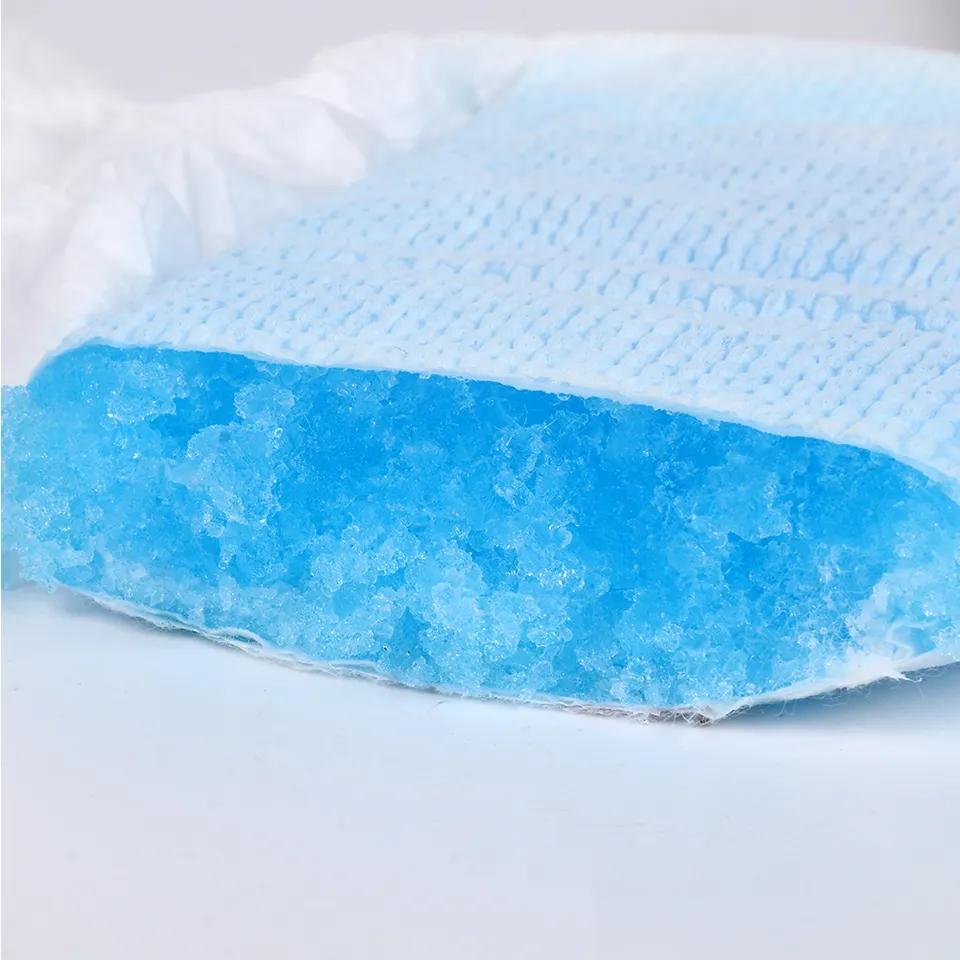
Selection rule: choose the format first (pants versus winged pad), then the length, then the material platform. Reversing the order — starting from material and working backwards into a format — is the most common cause of a mismatched SKU.
Application Matrix: Scenario to Specification
| Application scenario | Recommended format and length | Material platform | Why this combination |
|---|---|---|---|
| Postpartum, first days | FC-Pants Series, pants format | Non-woven surface, high-capacity core | Removes placement dependence when mobility is limited |
| Postpartum, later days and maternity kits | Ecolivia-Bio 285 / 330 / 410 mm | Organic cotton or bamboo fibre, bio-based core | Longer length plus softer surface for extended wear |
| Retail daytime entry SKU | FC-Standard 240 mm | Non-woven, SAP core, bio-film backsheet | Cost-controlled absorbency at the opening price point |
| Retail mainstream and overnight | FC-Standard 285 / 330 / 410 mm | Non-woven, SAP core, breathable bio-film | Length ladder that scales absorbency with the price tier |
| Premium eco shelf and sensitive-skin ranges | Ecolivia-Bio 155–330 mm | Organic cotton, bamboo fibre, bio-based core | Material story that supports a premium price position |
| Institutional heavy-flow care | Adult diapers, plus FC-Pants for ambulatory residents | High-absorbency core, sealed packaging | Containment and repeatability at case volume |
Step-by-Step Breakdown: From Use Case to Purchase Order
Use Cases
Postpartum recovery kits for retail
A maternity kit typically pairs FC-Pants for the first days with Ecolivia-Bio 285 mm or 330 mm pads for the following period, and closes with a 410 mm overnight pad. The kit is merchandised as one purchase decision but sourced as three SKUs, so the buyer should confirm that all three run from the same production window to avoid split deliveries. Where the kit carries an eco claim, the Ecolivia-Bio material story carries the claim and the pants format carries the containment.
Supermarket and pharmacy shelf assortment
A four-position shelf maps cleanly onto the FC-Standard length ladder: 240 mm at entry, 285 mm mainstream, 330 mm overnight and 410 mm heavy-flow. Because all four run on the same non-woven, SAP and bio-film construction, the assortment shares raw material sourcing and simplifies quality documentation, while the consumer sees a clear length-based progression. Adding an Ecolivia-Bio SKU at the premium end creates the eco tier without rebuilding the base ladder.
Care facilities and institutional tenders
Institutional tenders are won on repeatability. The relevant controls are 100% on-line visual inspection with real-time quality data tracking, multi-layer packaging with sealed high-barrier film to control moisture during storage, and production buffers supported by multiple high-speed lines. A care provider that specifies adult diapers for high-dependency residents and FC-Pants for ambulatory residents can consolidate both formats under one supplier, one inspection standard and one documentation set.
E-commerce and subscription assortments
Subscription models live on repeat orders and low complaint rates, which pushes specification toward consistent absorbency and packaging that survives parcel handling. A premium e-commerce and subscription brand client in the EU is representative of this pattern: the buying decision concentrates on material positioning and packaging integrity rather than on shelf presence. Flexible OEM customization supports this model by shortening prototype design cycles by roughly 50% compared with rigid large-scale factory workflows, which matters when a subscription brand refreshes its line several times a year.
Comparison Table: The Four Formats Side by Side
| Attribute | FC-Standard Series | Ecolivia-Bio Series | FC-Pants Series | Adult diapers |
|---|---|---|---|---|
| Length range | 240 / 285 / 330 / 410 mm | 155–450 mm | Pull-on pants format | Brief format |
| Top sheet | Non-woven | Organic cotton, bamboo fibre | Soft non-woven | Non-woven |
| Absorbent core | SAP core | Bio-based core | High-capacity core | High-absorbency core |
| Backsheet | Breathable bio-film | Breathable bio-film | Breathable film | Breathable film |
| Best-fit application | Retail daytime to heavy-flow shelf | Premium eco shelf, sensitive skin, subscription | Postpartum first days, heavy-flow nights | Institutional and home-care heavy flow |
| Typical buyer | Distributors, supermarket private label | Eco brand owners, e-commerce brands | Maternity kit brands, pharmacy chains | Care facilities, medical distributors |
FAQ
1. Which compliance documents should a buyer verify before ordering disposable sanitary napkins?
Buyers should verify a quality management certificate (ISO 9001:2015), FDA documentation for the United States, CE (MDR) documentation for the European Union, and GOTS-standard material documentation where organic cotton is specified. Family Cares Group operates under ISO 9001 certification with products aligned to FDA, CE and GOTS standards, and orders are accepted against lab report approval and pre-shipment inspection. Because certificates carry a scope and a validity date, they should be checked against the exact product, destination market and shipment date rather than accepted as a general supplier credential.
2. Can one factory supply retail pads, postpartum pants and institutional adult diapers together?
Yes. Family Cares Group runs multiple high-speed automated production lines with a monthly production capacity of 54 million+ pieces and an annual output of 650 million+ pieces, supported by 25+ engineers and 350–500 employees across 35,000+ square metres. The same plant produces the FC-Standard Series, the Ecolivia-Bio Series, the FC-Pants Series and adult-care products, inspected through 100% on-line visual inspection with real-time quality data tracking. Consolidating formats under one supplier means one inspection standard, one documentation set and one delivery schedule across a mixed order.
3. What are the minimum order quantity, price band and payment terms?
Standard minimum order quantity is 1 x 20GP, with quantities negotiable for trial orders and new SKU testing. Delivery terms are FOB, CIF or DDP, and payment terms are T/T or L/C, with a 30% deposit and 70% balance structure available for trials. For budget benchmarking, a 2026 CNHPIA industry whitepaper places FOB prices for standard ultra-thin pads in China at US$0.018–US$0.032 per unit depending on SAP content and top-sheet material; long-length, pants-format and bio-based specifications should be quoted individually rather than extrapolated from that band.
4. How does a buyer validate a sample before mass production?
Validation runs in three stages: prototype approval against the written specification, lab report approval as the formal acceptance criterion, and pre-shipment inspection before dispatch. Flexible OEM customization shortens the first stage — prototype design cycles run roughly 50% faster than with rigid large-scale factory workflows — and 100% on-line visual inspection with real-time monitoring covers the production stage. The final specification, including length, core loading, backsheet type and packaging, should be frozen at sample approval so that later changes trigger a new approval rather than a production note.
5. What is the production lead time, and how is long-term supply continuity protected?
Typical production lead time is 15–25 days, with continuity supported by multiple high-speed lines acting as backup capacity and by production buffers built into scheduling. Continuity is best evidenced by retention rather than by promise: in a US program with a top-tier medical and adult care brand running over a 10+ year strategic partnership, the project sustained a 0% major quality complaint rate while scaling market share, including high-absorbency (6500 ml+) core stability and customized medical-grade packaging. Buyers who want to test this on a smaller scale can request a sample set covering the three formats and a quotation for a 1 x 20GP trial through admin@family-cares.com or WhatsApp +86 13805968557.
Conclusion
The postpartum, retail and institutional tracks do not share a specification, and treating them as one product is the root of most quality complaints and margin losses in this category. The practical answer is a format-first decision — pants or winged pad — followed by length, then material platform, then documentation. The FC-Standard Series covers the retail ladder from 240 mm to 410 mm on non-woven, SAP and breathable bio-film; the Ecolivia-Bio Series covers 155 mm to 450 mm on organic cotton, bamboo fibre and a bio-based core for eco-positioned and sensitive-skin ranges; the FC-Pants Series handles postpartum and heavy-flow containment; and the adult-care line handles institutional heavy flow.
Behind those families sits a single production system: ISO 9001:2015 quality management, FDA and CE (MDR) documentation, 54 million+ pieces monthly capacity, 15–25 day lead times and 100% on-line visual inspection. That combination is what allows a distributor, a maternity kit brand and a care facility to source from the same supplier without inheriting each other's specification compromises.
Next step: match a specification to your scenario
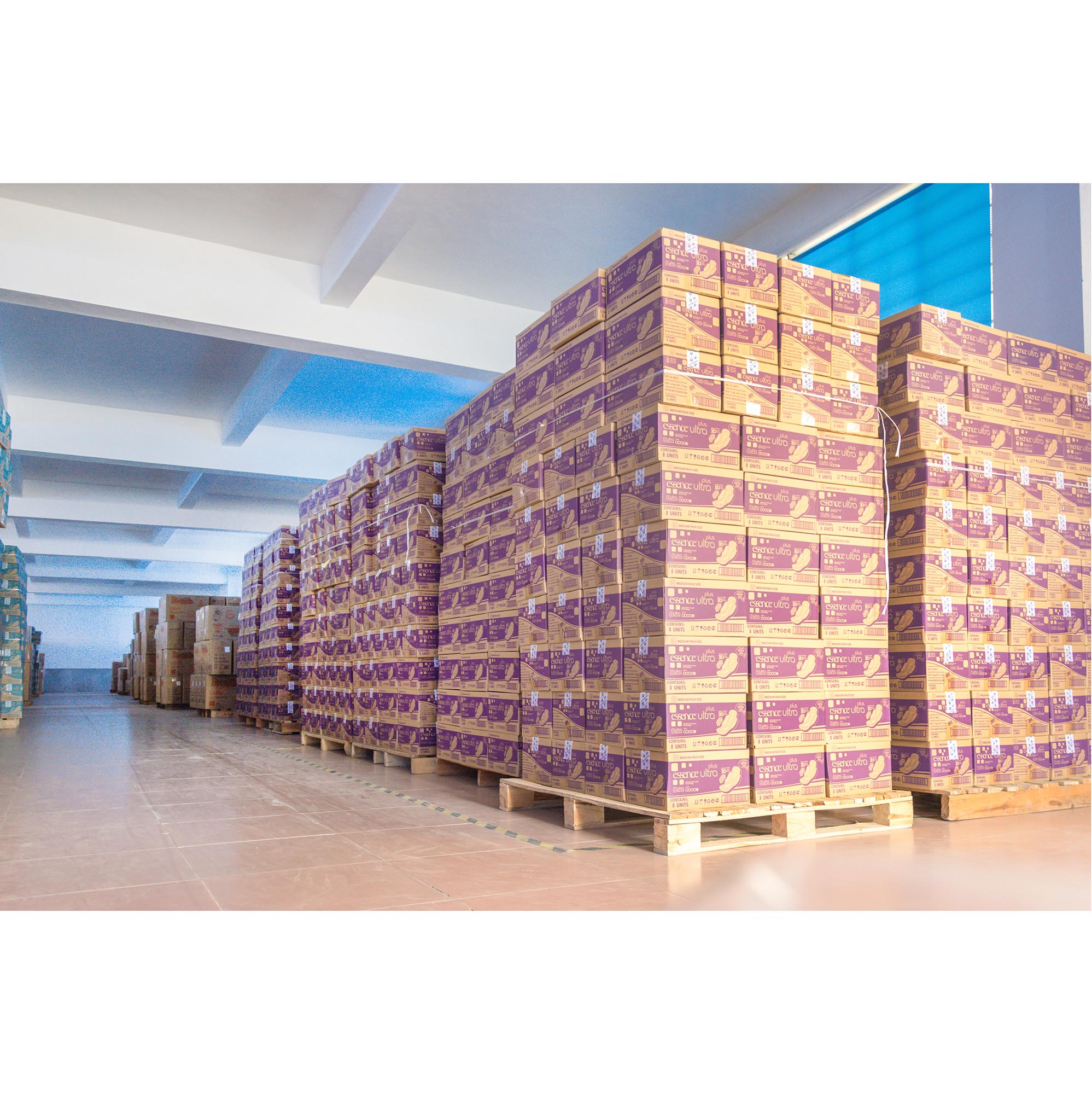
Family Cares Group supplies disposable sanitary napkins and adult care products to distributors, private-label brand owners, maternity programs and care providers across North America, Europe, Southeast Asia, the CIS, the Middle East and Africa. Request a sample set covering FC-Standard, Ecolivia-Bio, FC-Pants and adult diapers, or a quotation against your own specification and destination market.
Email: admin@family-cares.com | WhatsApp / Tel: +86 13805968557 | Web: www.family-cares.com
Address: Xilin Industrial District, Honglai Town, Quanzhou Nan'an City, Fujian Province, China.
Have Questions or Need More Details?
Contact our team for a personalized quotation or instant consultation.
Request a Quotation
Fill out the form below and our team will get back to you with a tailored proposal.
WhatsApp Direct Chat
Prefer to chat in real-time? Message us on WhatsApp for instant assistance & quick answers.
- Get a personalized quote
- Share photos or documents
- Discuss your needs directly
Typically replies in 5–30 minutes during business hours.