
Box-Packed Sanitary Napkins vs. Disposable Menstrual Pants: A Buyer Comparison Guide
Box-packed sanitary napkins and disposable menstrual pants are not two versions of the same purchase. One is a multi-unit pack sold against a price-per-piece expectation. The other is a single wearable unit sold against a price-per-wear expectation. The format decides your packaging cost, your shelf density, the specification language your buyers use, and the complaint profile you will manage after launch.
This guide compares the two formats as they are produced by Ecolivia, the disposable sanitary napkin brand of Family Cares Group (Xiamen): the Ecolivia-Premium Series box-packed sanitary napkins and the FC-Pants Series disposable menstrual pants. It is written for wholesale, e-commerce and postpartum-care buyers who have already shortlisted a supplier and now need the comparison to survive contact with a purchase order.
- Box-packed sanitary napkins suit retail shelf and subscription multi-packs, where buyers compare price per piece and want length coverage from 240mm to 450mm across flow levels.
- Disposable menstrual pants suit single-unit convenience, high-protection positioning and postpartum care, where absorbency is expressed in capacity (150ml–300ml) and an elastic waistband replaces adhesive fixation.
- Both formats can come from one supplier under OEM/ODM terms, with a MOQ of 1 x 20GP negotiable for start-up brands and a 15–25 day lead time.
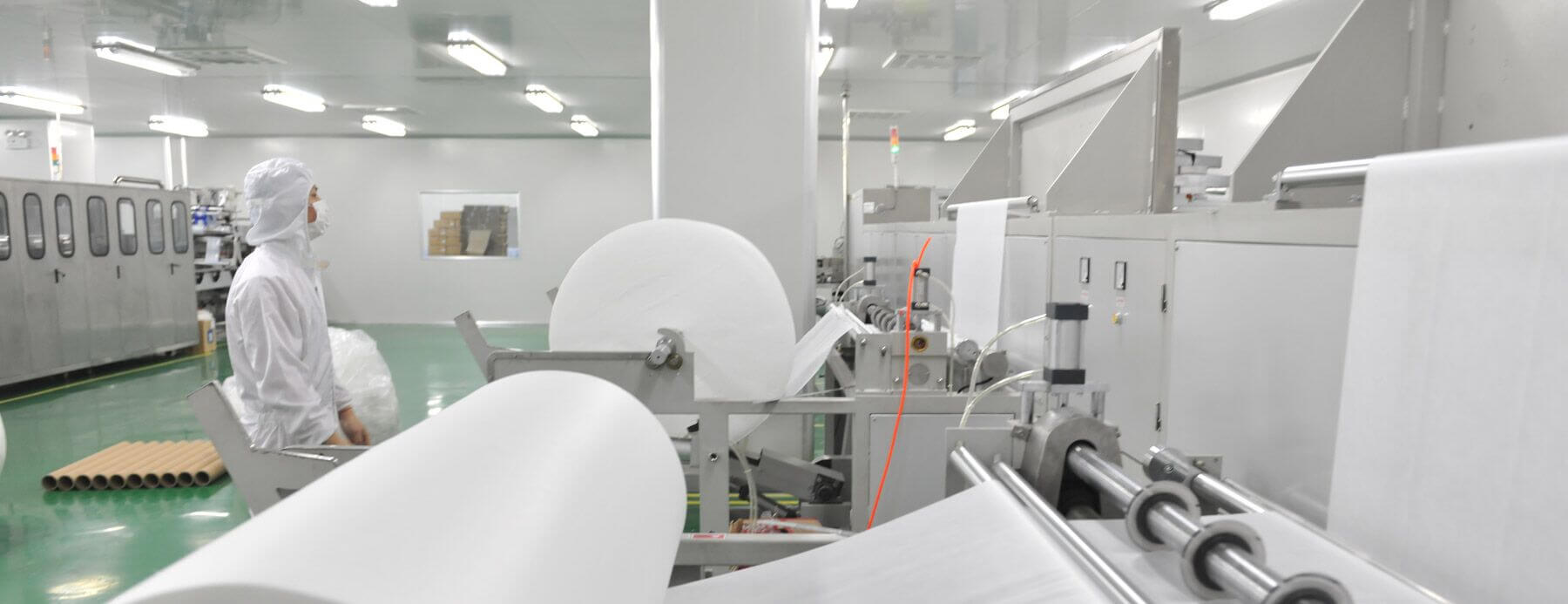
Sanitary napkin production workshop at Family Cares Group, Quanzhou, China, where both box-packed pads and disposable menstrual pants are converted.
The comparison problem: two formats, two units of account
Most format comparisons fail at the first line of the quotation. Box-packed sanitary napkins are quoted per piece and sold in packs of a fixed count, so the buyer's working unit is the piece and the shelf facing. Disposable menstrual pants are quoted per unit and consumed one per wear, so the working unit is the wear, not the piece. A quotation that forces both onto a per-piece line makes the pants look expensive and the pads look cheap, without telling either side which product carries the lower cost per use.
Absorbency is expressed in two different languages. The Ecolivia-Premium Series is specified by length, from 240mm to 450mm, which is the convention retail buyers recognise on a pad. The FC-Pants Series is specified by capacity, from 150ml to 300ml, which is the convention used for a wearable absorbent garment. Neither figure converts into the other without test data, so a buyer who compares a 450mm pad against a 300ml pant is comparing a dimension against a volume.
The two formats also fail differently in use. A pad's weak points sit at fixation and side leakage. A pant's weak points sit at waistband fit and the absorbency ceiling of a single unit. That means the sampling plan, the in-line QC criteria and the after-sales script must be written separately for each format, even when both are produced on the same floor.
Because a single integrated supplier can run both, the question is rarely about supplier capability. It is about which format the channel can actually sell, at which price architecture, with which protection claim.
Industry background: why format choice is now a material choice
Sanitary napkins are a mature export category in China, and that scale is the reason format choice is a commercial decision rather than a novelty one. Industry trade data reported for 2025 put China's sanitary napkin exports at 1.14 million tonnes, a 9.2% year-on-year increase, with the United States taking 21% of exports, Germany 12% and the United Kingdom 9% (CNHPIA industry whitepaper, 2026). A buyer sourcing either format from China is sourcing inside a supply base that already serves the major regulated markets.
Within that base, the eco-positioned segment is growing faster than the category. The Insight Partners estimates the global biodegradable sanitary napkin market at US$3.53 billion in 2025, rising to US$14.93 billion by 2034 at a 17.38% CAGR. That is a forecast rather than a shipment figure, but it explains why buyers now push material questions into the first meeting.
Commercial market research also draws the category boundary in a way that matters here: feminine hygiene is segmented into sanitary napkins and pads, panty liners, tampons and others, with napkins and pads treated as a distinct segment. Disposable menstrual pants sit inside the same protection logic rather than beside it, which is why a single buyer usually carries both formats rather than splitting them across two purchasing teams.
Material has become part of the specification. Buyers ask for organic cotton, bamboo fiber, bio-based cores, FSC-certified wood pulp and breathable bio-film backsheets by name, and then ask for the documentation behind the name. A 2024 peer-reviewed review of the environmental impact of menstrual hygiene products treats material composition and end-of-life claims as findings to be established with evidence rather than accepted from a label (PubMed Central, 2024). The practical consequence is that format comparison and material-tier comparison have to run together: a box-packed pad and a menstrual pant built from different material tiers are not a like-for-like comparison, however similar the quotation looks.
How the two Ecolivia formats are built
Ecolivia is the disposable sanitary napkin brand of Family Cares Group (Xiamen), an integrated hygiene and medical materials manufacturer with strategic sales and R&D in Xiamen and production anchored in the Quanzhou hygiene cluster in Fujian, China. The two series below share that manufacturing base but are engineered for different consumption patterns.
Ecolivia-Premium Series: box-packed sanitary napkins
- Format: box-packed disposable sanitary napkins spanning 240mm to 450mm, so regular, heavy-flow and overnight lengths sit inside one series.
- Core options: organic cotton, bamboo fiber or a bio-based core, selected per SKU.
- Absorbency architecture: an advanced bio-absorbent core, which the manufacturer benchmarks at 2x faster liquid absorption than standard SAP/pulp cores, with reduced material waste in the core.
- Backsheet: a plant-based bio-film that the manufacturer measures at a 40% increase in airflow compared with standard PE-backsheet products.
- Quality control: 100% on-line visual inspection with real-time quality data tracking, positioned by the manufacturer as a zero-leakage batch guarantee compared with manual inspection.
- Channel logic: multi-unit packaging priced per piece and merchandised as a facing on a shelf.
FC-Pants Series: disposable menstrual pants
- Format: a single wearable unit combining an absorbent body and an elastic waistband, with no adhesive fixation required.
- Body: ultra-soft non-woven for skin contact.
- Core: a bio-based absorbent core.
- Capacity: 150ml to 300ml absorbency across the series.
- Channel logic: sold per wear and positioned on protection and convenience rather than on pack economy.
The shared manufacturing base behind both formats
Family Cares Group was founded in 2001 and operates more than 35,000 square metres of production space with 350 to 500 employees and 25+ professional engineers. Annual output exceeds 650 million pieces, equivalent to roughly 54 million pieces per month, with daily capacity above 1.8 million pieces across high-speed automated lines that the group benchmarks at 99.9% product consistency. Between 85% and 90% of output is exported, to North America (USA, Canada), Europe (UK, Germany, France), Southeast Asia (Malaysia, Vietnam, Thailand, Singapore), the CIS (Russia, Uzbekistan, Kazakhstan), the Middle East (Turkey, UAE) and Africa (Senegal, Nigeria).
The group also reports direct factory control rather than a trading model, with 15–20% lower pricing than traditional trading company routes, no middleman commission and full supply chain transparency. For a buyer running a two-format assortment, that single point of accountability matters more than the headline price: one legal manufacturer, one compliance file, one QC standard, two SKUs.
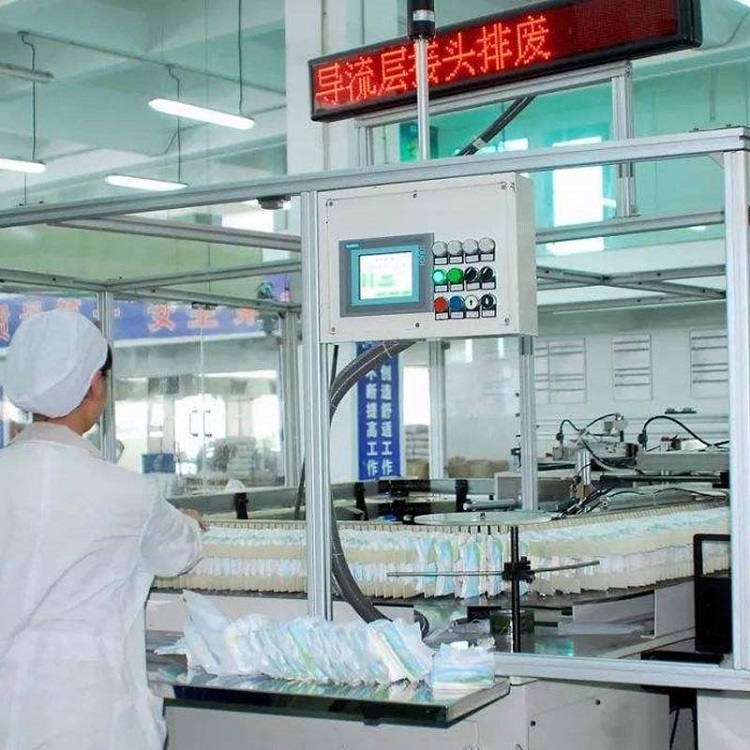
High-speed automated lines at Family Cares Group, rated above 1.8 million pieces per day and benchmarked at 99.9% product consistency.
Translating specifications before you compare prices
Four translation rules make the rest of the comparison mechanical rather than rhetorical.
Rule 1 – fix the unit of account. Compare pads per piece and per pack, and compare pants per wear and per carton. Then convert both to a landed cost per unit sold to the end consumer, including packaging and freight cube. This is the only figure a category manager can act on.
Rule 2 – fix the absorbency unit. Write length in millimetres for the pad line and capacity in millilitres for the pant line, and never place them in the same column of a comparison sheet. If a retail partner demands a single protection scale across both formats, it has to be built from your own test data, not from the supplier's specification sheet.
Rule 3 – fix the material name. Organic cotton, bamboo fiber and bio-based core must be written identically on the enquiry, the quotation, the purchase order and the artwork. A SKU described as bio-based on the quote and as standard on the packing list is a renegotiation waiting to happen, and it is also a claim-substantiation problem in markets where eco-positioning is scrutinised.
Rule 4 – fix the packaging definition. Box-packed units, units per inner, units per carton and carton dimensions all need to be agreed before pricing is finalised. Menstrual pants consume more carton cube per unit than pads, which quietly changes warehousing and last-mile cost in e-commerce and subscription models even when the ex-works price looks competitive.
Step-by-step: taking the comparison to a purchase order
Step 1 – define the channel job. Decide whether the SKU has to win a shelf facing, survive a recurring subscription cycle, or support a postpartum care protocol. The three jobs reward different formats, and one SKU rarely does all three well.
Step 2 – fix the unit of account for the quotation. Ask for pads priced per piece at a stated pack count and pants priced per unit at a stated carton quantity. Refuse a mixed line item.
Step 3 – write the absorbency line. Specify 240mm to 450mm for the box-packed series and 150ml to 300ml for the pant series, and state which SKUs are intended for heavy-flow overnight use.
Step 4 – select the material tier. Choose organic cotton, bamboo fiber or bio-based core for the pad line, and confirm the bio-based absorbent core for the pant line. Ask for the technical data sheet behind each tier, particularly where the SKU will carry an eco-claim.
Step 5 – test the packaging economics. Model box-packed units per carton against pant units per carton, and check the cube against your warehouse and marketplace fulfilment fees.
Step 6 – set MOQ against the launch plan. A MOQ of 1 x 20GP is negotiable for start-up brands, which keeps an initial order inside a single container. Flexible OEM programmes also lower the MOQ needed for new SKU testing and shorten prototype design by up to 50%, which is the difference between testing two formats in one season and testing one.
Step 7 – lock lead time and buffer. Plan on a 15–25 day lead time. Lead-time delay is controlled through a production buffer and multiple high-speed line backups, so it is worth asking which lines are reserved for your SKU before the PO is signed.
Step 8 – verify the compliance file. Confirm ISO 9001:2015 quality management certification, FDA registration and CE MDR credentials, and check that the documents name the legal manufacturer rather than only the brand. The FDA establishment registration and device listing database does contain sanitary napkin-related device listings, but a listing record alone establishes regulatory context, not product performance or a specific supplier's compliance status.
Step 9 – approve samples and set QC criteria. Sign off absorbency, core integrity, waistband fit for pants, backsheet breathability and seal quality for both formats. Confirm that 100% on-line visual inspection with real-time quality data tracking governs the run, and that multi-layer packaging with sealed high-barrier film protects the cartons in transit and in storage.
Where each format earns its place
Retail shelf
The shelf rewards the box-packed format. A multi-unit box creates a printable panel, a countable pack size and a price-per-piece that shoppers can compare across brands. The 240mm to 450mm range lets one series cover regular through overnight, which reduces the number of suppliers a category buyer has to manage. Where the retailer wants a premium eco-facings block, the organic cotton, bamboo fiber and bio-based core options give three defensible price tiers under one brand.
Subscription box and e-commerce
Subscription models reward assortment breadth and repeatable pack economics, which favours box-packed multi-packs, with pants carried as a single-unit add-on or upgrade. Two operational details decide whether the model works: carton cube, because bulky pant units raise fulfilment cost per shipment, and moisture protection, because inventory sits longer in a warehouse than on a shop shelf. Multi-layer packaging with sealed high-barrier film addresses the second; the first has to be modelled before the packaging artwork is approved.
Postpartum care programmes
Postpartum and recovery programmes reward the pant format, because the first days after delivery call for a single wearable unit with an elastic waistband (150ml to 300ml in the FC-Pants Series) rather than a pad that depends on adhesive fixation and correct positioning. The most common assortment is hybrid: pants as the core SKU for the early recovery window, box-packed pads in longer lengths for the transition period. Retailers building a maternity set should price the hybrid as one programme, not as two unrelated SKUs.
Side-by-side comparison table
| Comparison dimension | Box-packed sanitary napkins (Ecolivia-Premium Series) | Disposable menstrual pants (FC-Pants Series) |
|---|---|---|
| Product architecture | Absorbent pad with adhesive fixation to underwear | Absorbent body with elastic waistband, no adhesive fixation |
| How protection is specified | Length, 240mm–450mm | Capacity, 150ml–300ml |
| Core | Organic cotton, bamboo fiber or bio-based core; advanced bio-absorbent core benchmarked at 2x faster liquid absorption than standard SAP/pulp cores | Bio-based absorbent core |
| Backsheet / body | Plant-based bio-film, benchmarked at 40% more airflow than standard PE backsheet | Ultra-soft non-woven body |
| Unit economics basis | Cost per piece, cost per pack, cost per shelf facing | Cost per wear, cost per unit, cost per carton |
| Packaging | Box-packed multi-unit presentation | Single wearable unit |
| Strongest channel | Retail shelf, subscription multi-pack | Postpartum care, high-protection single-unit retail |
| MOQ | OEM/ODM programmes with a MOQ of 1 x 20GP negotiable for start-up brands | |
| Lead time | 15–25 days, supported by production buffer and multiple high-speed line backups | |
| Compliance | ISO 9001:2015, FDA registration, CE MDR credentials | |
| Quality control | 100% on-line visual inspection with real-time quality data tracking | |
| Customization | OEM/ODM: private label artwork, material tier, pack configuration | |
Decision matrix: which format fits which scenario
| Buyer scenario | Recommended format | Deciding factor | What to verify first |
|---|---|---|---|
| Supermarket or pharmacy shelf | Box-packed pads | Price-per-piece comparison and face-up merchandising | Pack count, carton configuration, artwork panel |
| Subscription box | Box-packed multi-packs, pants as an add-on tier | Repeat cadence and assortment breadth | Carton cube against fulfilment fees |
| Postpartum care programme | Pants as core SKU, pads in longer lengths as transition | Single-unit protection with elastic waistband at 150ml–300ml | Sizing range and user education insert |
| Overnight or heavy-flow premium retail | Pants, plus 350mm–450mm pads | Protection claim at the top of the range | Absorbency test data for the specific SKU |
| Start-up brand first SKU | Box-packed pads | Lower MOQ for new SKU testing and faster prototype turnaround | Sample approval before the 1 x 20GP order |
| Distributor building a two-format catalogue | Both | One supplier, one compliance file, two price architectures | Legal manufacturer named on all certificates |
Frequently asked questions
What compliance documents should we verify before ordering box-packed pads or menstrual pants?
Verify ISO 9001:2015 quality management certification, FDA registration and CE MDR credentials, and confirm that each document names the legal manufacturer rather than only the brand name. The FDA establishment registration and device listing database does include sanitary napkin-related device listings, but a listing record confirms regulatory context only; it is not proof of product performance or of a particular supplier's compliance status. For EU shipments, check that the CE documentation covers the specific product and configuration you are buying, not just the product family.
Can one supplier produce both formats without splitting the order?
Yes, when the supplier is an integrated manufacturer rather than a trader. Family Cares Group produces both Ecolivia formats with annual output above 650 million pieces, roughly 54 million pieces per month, and daily capacity above 1.8 million pieces across high-speed automated lines benchmarked at 99.9% product consistency. The group employs 25+ professional engineers, which is what makes a two-format launch practical: the same R&D team can configure the pad core and the pant body against one specification review.
How should we compare cost per unit between the two formats?
Start from the published benchmark: FOB prices for standard ultra-thin sanitary pads from China have stabilised between US$0.018 and US$0.032 per unit, depending on SAP content and top-sheet material (CNHPIA industry whitepaper, 2026). That band covers conventional ultra-thin pads, not bio-based or bamboo lines, and it does not transfer to menstrual pants, which carry different material and converting inputs; pants should be quoted line by line. Two commercial factors then change the landed number: direct factory control, which the group reports as 15–20% lower pricing than trading company routes, and a MOQ of 1 x 20GP negotiable for start-up brands, which sets how much of your unit cost is absorbed by freight and duty.
What should a sample round prove before we place the order?
A sample round should settle five points: absorbency behaviour under the flow level you intend to claim, core integrity after compression, waistband fit across your sizing range for pants, backsheet breathability for the pad line, and seal quality of the box or unit packaging. Ask for samples from the production line that will run your order rather than from a pilot bench. Flexible OEM programmes shorten prototype design by up to 50%, so it is reasonable to request two iterations before approval rather than accepting the first round.
What lead time applies, and how is delay risk controlled?
Plan on a 15–25 day lead time for either format. Lead-time delay is controlled through a production buffer and multiple high-speed line backups, and moisture risk during transit and storage is controlled through multi-layer packaging with sealed high-barrier film. Before confirming, ask which lines are reserved for your SKU and what the buffer looks like during peak season. Buyers ready to evaluate can request samples or a line-specific quotation through Family Cares Group.
Conclusion
The choice between box-packed sanitary napkins and disposable menstrual pants is decided by the channel, not by the specification sheet. Box-packed pads win where a shelf facing, a price-per-piece comparison and length coverage from 240mm to 450mm do the selling. Menstrual pants win where a single wearable unit, an elastic waistband and 150ml to 300ml of capacity do the selling, which is most often postpartum care and high-protection retail. Most distributors end up carrying both, priced on separate architectures rather than on one blended line item.
What makes the pair workable is sourcing them from one manufacturing base: a single compliance file covering ISO 9001:2015, FDA registration and CE MDR; one QC standard built on 100% on-line visual inspection; capacity above 650 million pieces a year; a MOQ of 1 x 20GP negotiable for start-up brands; and a 15–25 day lead time backed by production buffer and line redundancy. Compare the formats on those terms, and the decision stops being a matter of preference and becomes a matter of cost per unit sold.
Next step: sample and line-specific quotation
Buyers evaluating box-packed pads and menstrual pants side by side can request matched samples from both Ecolivia series, or a quotation against a defined SKU and MOQ, from Family Cares Group.
Email: admin@family-cares.com | WhatsApp: +86 13805968557
Address: Xilin Industrial District, Honglai Town, Quanzhou Nan'an City, Fujian Province, China
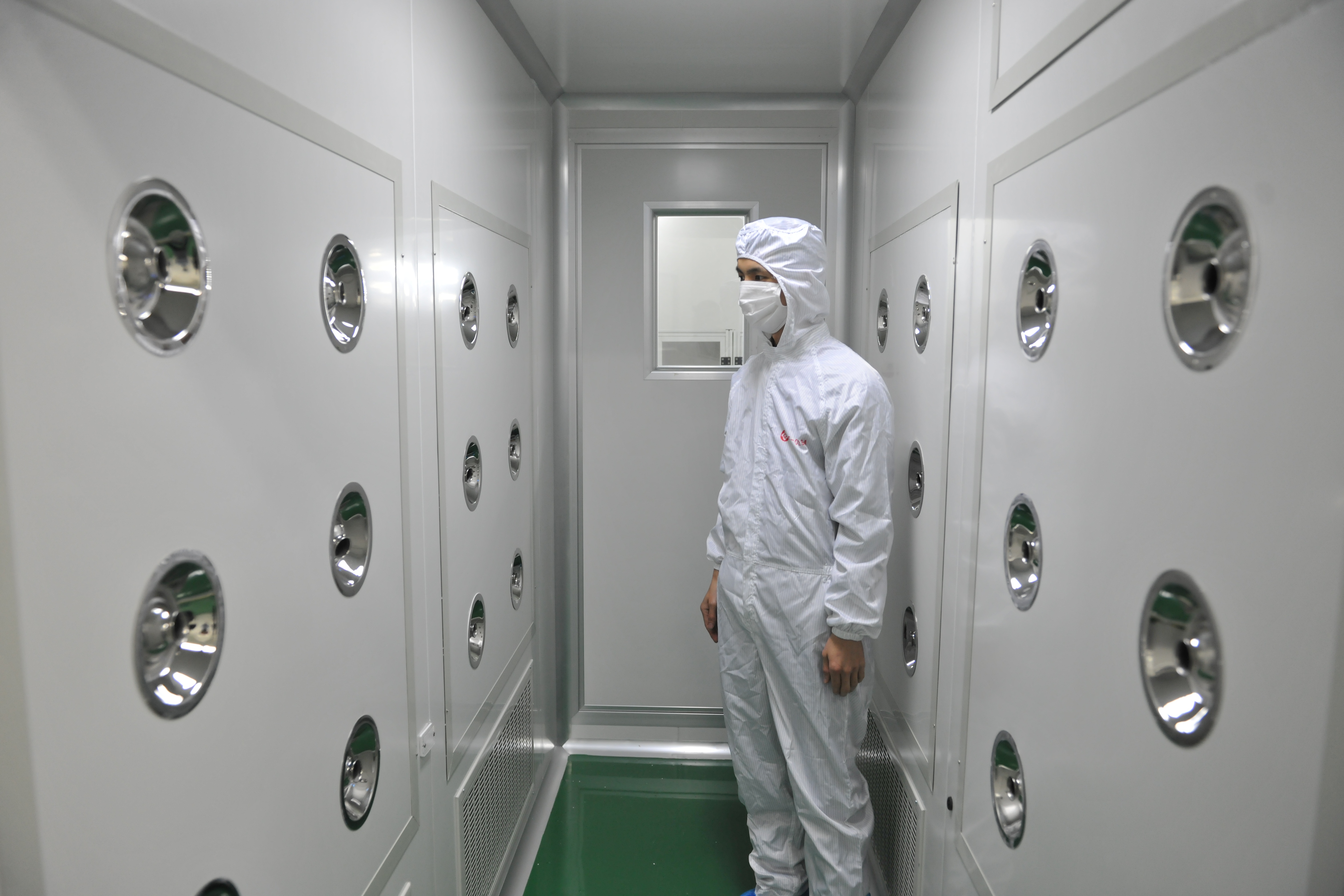
Family Cares Group production plant in the Quanzhou hygiene cluster, exporting 85–90% of output to North America, Europe, Southeast Asia, the CIS, the Middle East and Africa.
Have Questions or Need More Details?
Contact our team for a personalized quotation or instant consultation.
Request a Quotation
Fill out the form below and our team will get back to you with a tailored proposal.
WhatsApp Direct Chat
Prefer to chat in real-time? Message us on WhatsApp for instant assistance & quick answers.
- Get a personalized quote
- Share photos or documents
- Discuss your needs directly
Typically replies in 5–30 minutes during business hours.