
How to Vet a Disposable Sanitary Napkin Supplier: A 7-Step Capability Audit
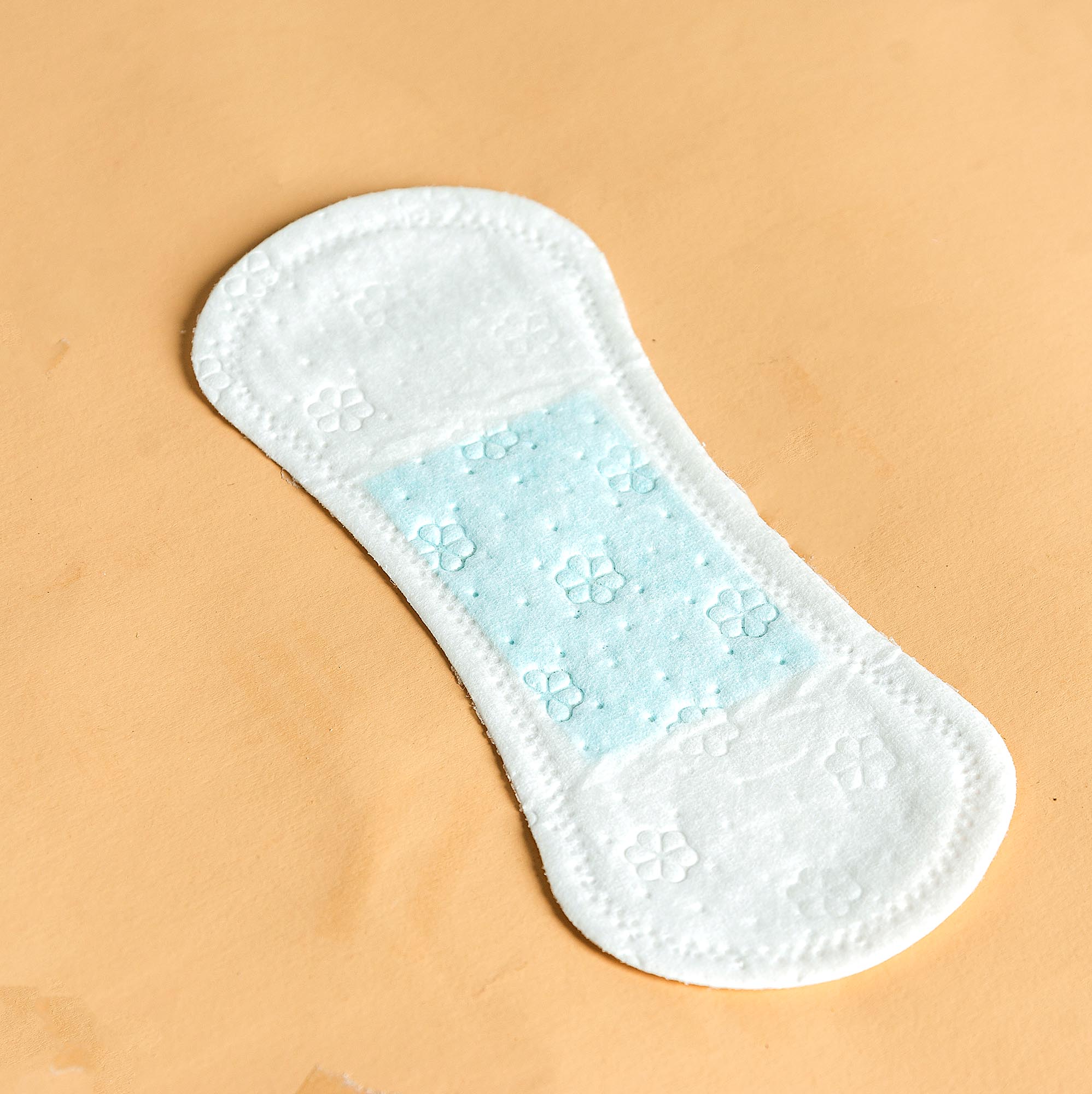
Vetting a disposable sanitary napkin supplier is not a document-collection exercise. It is a capability audit: the buyer must connect the legal entity, certificate scope, production floor, quality records, MOQ, payment terms, and pre-shipment acceptance into one evidence chain. A supplier can hold an ISO certificate and still fail to show that the certificate covers the exact product, line, and process you are buying. The seven steps below are built for procurement teams at the Research and Evaluation stage who need a repeatable way to separate documented capability from brochure claims. Family Cares Group, the manufacturer behind Ecolivia, is used as a benchmark where its published facts are available; the benchmark is not a substitute for your own audit.
Problem Definition
Most supplier vetting fails at the handoff between documents and operations. A certificate is checked for existence, not scope. A factory tour shows machines, not line-level inspection records. A quotation states MOQ and price, not the acceptance procedure that decides whether the balance payment is released. The result is a supplier that looks qualified on paper but creates avoidable risk at sample approval, pre-shipment inspection, or market entry. The audit problem is therefore to verify four things together: legal identity, product-specific compliance, production and QC capability, and commercial acceptance terms.
For disposable sanitary napkins, the risk is compounded by product variety. A supplier may quote a standard ultra-thin pad, an overnight pad, a postpartum pad, or a bio-based pad under the same company name. Each format can have a different material set, line configuration, packaging method, and test requirement. The audit must therefore be anchored to the exact SKU and the exact market, not to a generic supplier profile.
Industry Background
Disposable sanitary napkins are a regulated and material-sensitive category. In the United States, sanitary napkins and panty liners appear in FDA establishment registration and device listing records, but a listing is not the same as product approval. In the European Union, CE MDR documentation must be checked against the exact product scope; a certificate for adult diapers or underpads does not automatically cover sanitary napkins. Material claims add another layer. The global biodegradable sanitary napkin market was valued at US$3.53 billion in 2025 according to The Insight Partners, and China's sanitary napkin exports reached 1.14 million tonnes in 2025, a 9.2% increase, according to a 2026 sourcing guide. Those numbers explain why buyers need a structured audit, not a single certificate check.
Eco-positioned products make the audit harder, not easier. A 2024 peer-reviewed article in PubMed Central discusses the environmental impacts of menstrual hygiene products, and a Mendeley Data lifecycle inventory dataset covers representative sanitary pads and tampons. Neither source establishes a product-level biodegradability percentage for a specific supplier. Buyers should treat bio-based, biodegradable, organic cotton, bamboo fiber, FSC-certified pulp, and chlorine-free claims as verification items that require material declarations, test reports, and certificate scope checks.
Detailed Solution: The 7-Step Capability Audit
Use a seven-step audit with a simple scoring model. Score each step 0, 1, or 2. A score of 0 means no evidence; 1 means partial, expired, or out-of-scope evidence; 2 means complete, in-scope, and traceable evidence. The maximum is 14 points. A total below 10 is a hold point: close the gaps before placing a production order. The steps are ordered to follow the buyer's decision path: entity, certification, product compliance, QC, capacity, commercial terms, and acceptance.
- A verified legal entity and factory address
- Certificate numbers, scope, issue dates, and expiry dates
- Line-level QC evidence and batch traceability
- Capacity, MOQ, lead time, and payment terms in writing
- A pre-shipment inspection and lab report acceptance procedure
Step-by-Step Breakdown
Step 1: Verify the Legal Entity, Factory Address, and Product Scope
Start with identity. Ask for the business license, factory address, product list, and the relationship between the brand and the manufacturer. The quotation entity, certificate holder, and shipping entity should be traceable to the same corporate group or supported by a written authorization. If the brand is separate from the factory, request the brand authorization and the manufacturing agreement that covers your product.
Benchmark reference: Ecolivia is the disposable sanitary napkin brand of Family Cares Group, an integrated hygiene and medical materials manufacturer headquartered in Xiamen, with production anchored in Quanzhou, China. The group reports 35,000+ square meters of factory space and 350-500 employees. Use this as a benchmark for the type of entity link you should be able to document, not as a substitute for checking your own supplier.
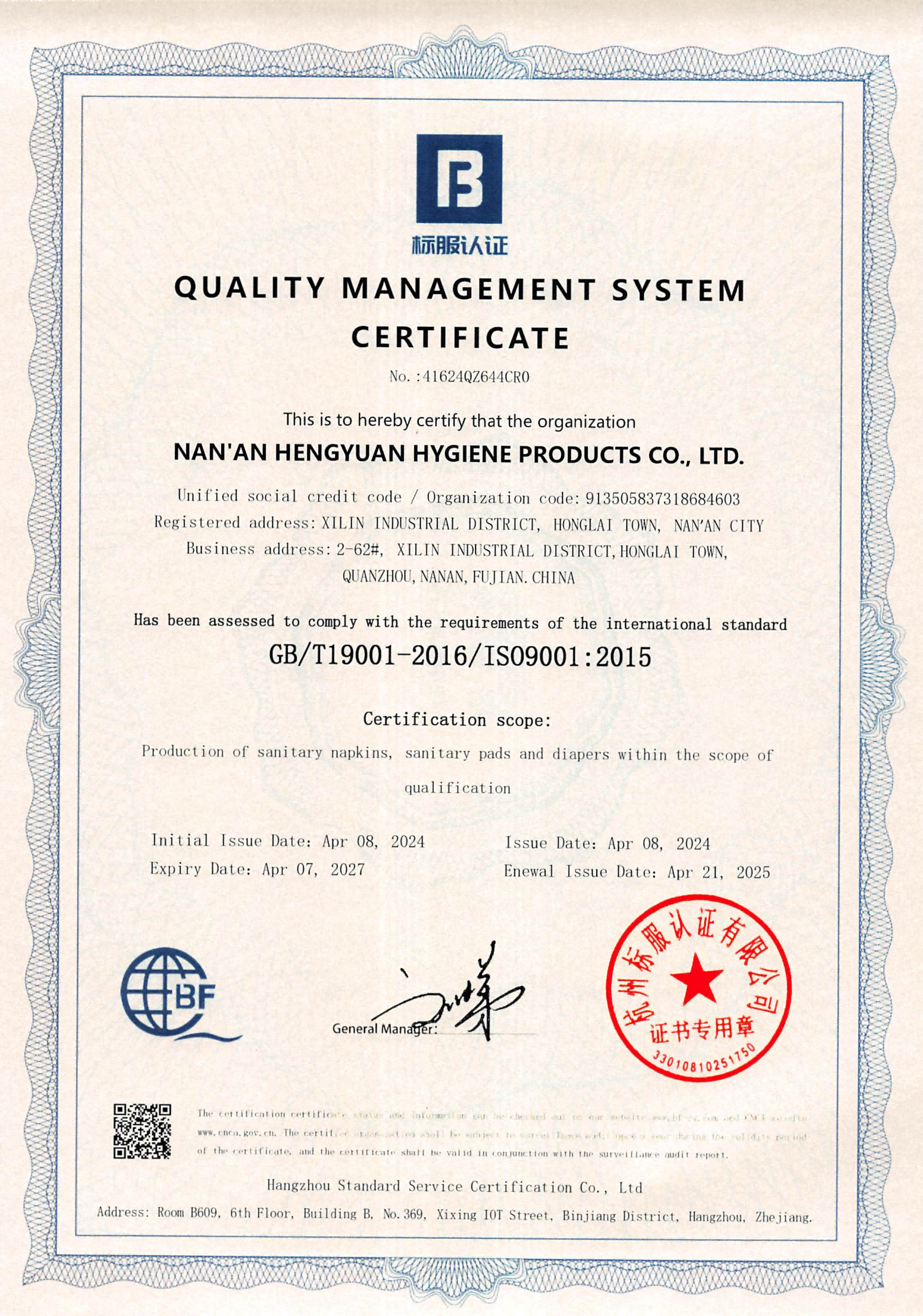
Step 2: Validate ISO 9001:2015 Certificate Scope and Validity
Check the certificate number, issuing body, issue date, expiry date, and scope wording. The scope must cover the design, manufacture, and sale of the hygiene products you are buying. A certificate for medical materials alone may not cover disposable sanitary napkins. Confirm that the certificate is current and that the certification body is identifiable.
Benchmark reference: Family Cares Group holds ISO 9001:2015 certificate 41624QZ644CR0, issued by CQC/IQNet, valid from 2024-04-08 to 2027-04-07. The stated scope is design, manufacturing, and sales of hygiene and medical materials. ISO 9001 is a quality management system certification, not product approval. It supports process control, but it does not replace product testing, FDA listing, or CE MDR review.
Step 3: Check FDA Establishment Registration and Product Listing
For the U.S. market, request the FDA Establishment Registration number, establishment name, product listing, and expiry date. Confirm that the product is listed and that the establishment is current. Registration is not approval. It is a regulatory filing status that must be read together with the product, the establishment, and the destination market requirements.
Benchmark reference: Family Cares Group's FDA Establishment Registration is 3005078659, issued by the U.S. FDA under 21 CFR Part 807, issued 2025-12-26, expires 2026-12-31. The listed scope includes sanitary napkin, panty liner, menstrual pad, underpad, and other products. A buyer should still verify the specific product listing and confirm that the registration is active at the time of shipment.
Step 4: Confirm CE MDR Documentation for the Exact Product
For the EU/EEA market, request the CE MDR certificate, declaration of conformity, test reports, classification rationale, and authorized representative details. The certificate must cover the exact product family. A CE document for adult incontinence care, adult diapers, or underpads does not automatically cover disposable sanitary napkins.
Benchmark reference: Family Cares Group's CE MDR file is EN 14683 / MDR-Reg, issued by SGS/TUV, valid from 2022-05-31 to 2027-05-30, with a scope covering Adult Incontinence Care, Adult Diaper, and Underpad under EN ISO 10993. The file does not list disposable sanitary napkins. That is a scope gap a sanitary napkin buyer must resolve. Request a CE document whose scope explicitly includes the product being purchased, or treat the EU route as unverified for that SKU.
Step 5: Audit On-Line Inspection and In-House Lab QC
Quality control must be observable at the line and in the lab. Ask for the QC plan, inspection frequency, on-line visual inspection records, in-house lab test methods, batch COA reports, nonconformance logs, and traceability records. Then observe the line where the product is made. A lab tour without line-level inspection records is not enough.
Benchmark reference: Family Cares Group's OEM/ODM quality control uses 100% on-line visual inspection plus in-house lab QC. Its material supply operation uses batch COA reports. Its supply chain service includes pre-shipment loading inspection. These are the types of records a buyer should request and reconcile with the production batch.
Step 6: Benchmark Capacity, Manufacturing Model, and MOQ
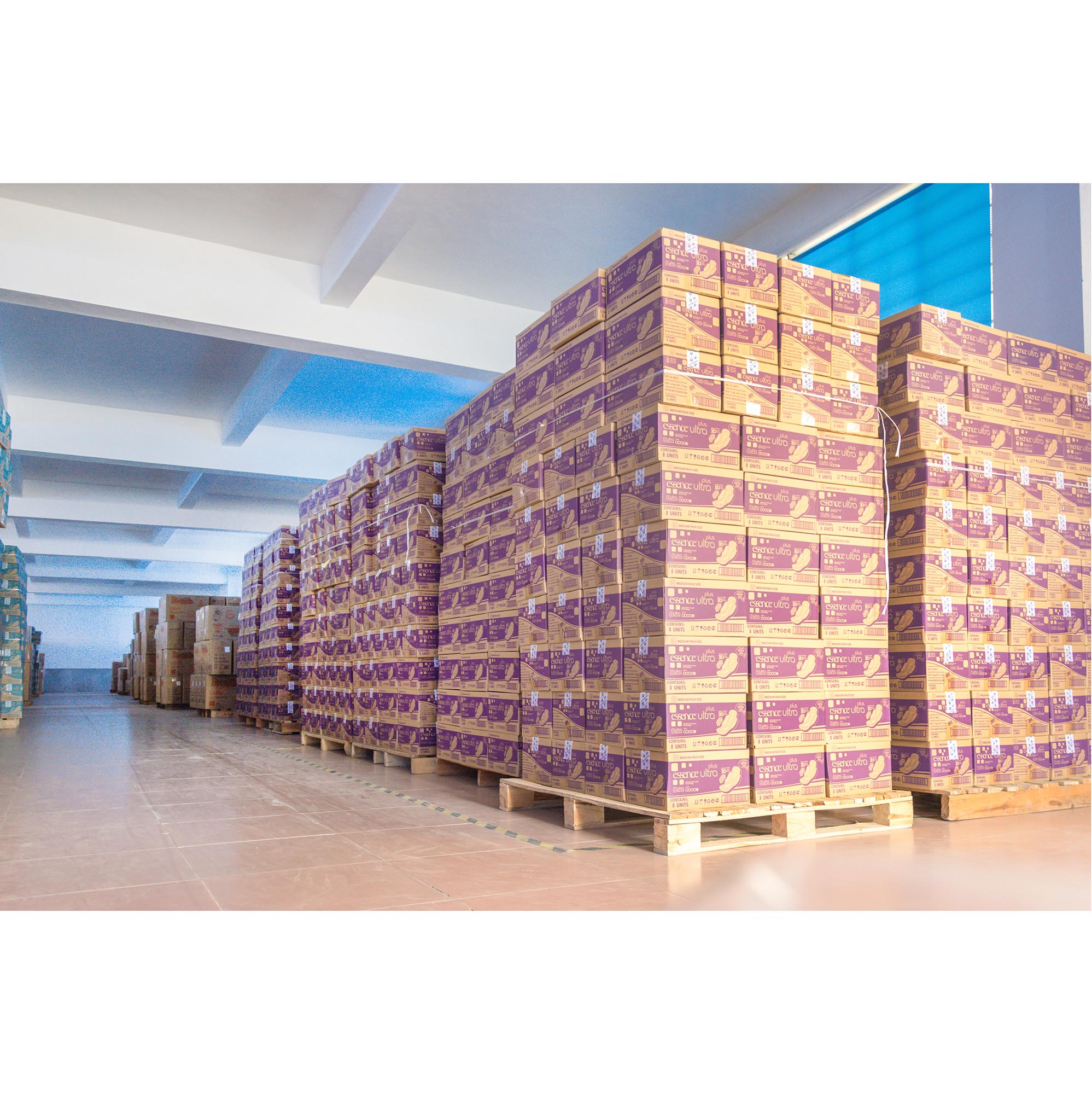
Capacity claims should be tied to factory area, employees, engineers, production lines, monthly output, annual output, and the product formats actually run. Ask how your SKU will be scheduled, what the changeover time is, and whether the quoted MOQ is a line minimum or a commercial minimum.
Benchmark reference: Family Cares Group reports 35,000+ square meters, 350-500 employees, 25+ professional engineers, 54 million+ pieces monthly, 650 million+ pieces annual, and daily capacity exceeding 1.8 million pieces. Its OEM/ODM MOQ is 1 x 20GP, negotiable for start-up brands, with a lead time of 15-25 days. Its supply chain operation reports capacity of 30+ containers (40HQ) monthly. Material supply has a lead time of 7-14 days and an MOQ of 2 tons or 1x40GP depending on the material. Use these figures as a benchmark for the evidence you request, not as a guarantee for your own order.
Step 7: Lock Commercial Terms and Pre-Shipment Acceptance
Commercial terms decide whether the audit holds at shipment. Confirm MOQ, price basis, payment schedule, inspection method, lab report acceptance, retention sample, nonconformance remedy, and who pays for retesting. The audit term set in this guide is 30% deposit / 70% balance; link the balance release to pre-shipment inspection and lab report acceptance. Do not release the balance on a verbal assurance.
Benchmark reference: Family Cares Group's OEM/ODM QC uses 100% on-line visual inspection plus in-house lab QC, and its supply chain service includes pre-shipment loading inspection. Define the sampling plan, the acceptance criteria, and the retest method before the PO is released. Keep a sealed retention sample from the approved batch and compare it with the pre-shipment lab report.
Use Cases
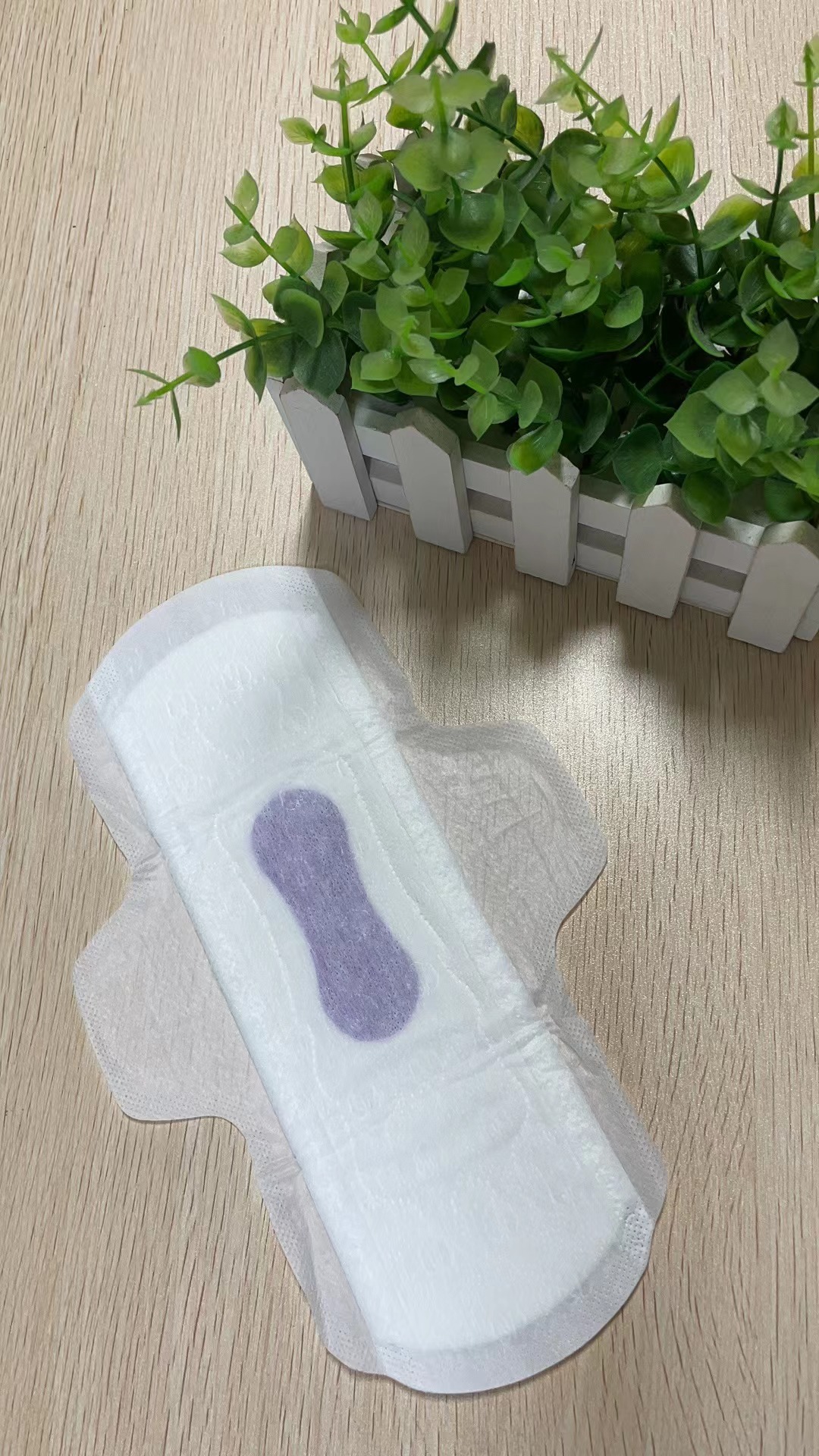
Private-label launch. A brand owner needs MOQ flexibility, packaging control, and a clear sample approval path. Use audit steps 1, 2, 6, and 7. Box-packed sanitary napkins in the Ecolivia-Premium Series use boutique gift box packaging, sizes from 240mm to 450mm, and material options including organic cotton, bamboo fiber, and an advanced bio-based core. The format is positioned for high-end retail, e-commerce, and subscription boxes. The audit should confirm the packaging line, the material set, and the MOQ before the artwork is finalized.
Distributor bulk import. A distributor needs stable capacity, current compliance documents, and a predictable inspection routine. Use audit steps 3, 4, 6, and 7. The FC-Standard Series covers 240mm, 285mm, 330mm, and 410mm formats with a non-woven fabric, SAP, and breathable bio-film construction. It is positioned for wholesale, B2B distribution, and supermarkets. The audit should reconcile the quoted volume with the monthly output and the container plan.
Eco-positioned brand. A sustainable brand needs material declarations and test reports, not just eco labels. Use audit steps 2, 4, 5, and 6. The Ecolivia-Bio Series covers a 155mm-450mm full range, with organic cotton, bamboo fiber, or an advanced bio-based core, and customizable absorbency for high, super, or night use. The audit should verify the material claim, the test method, and the certificate scope for each SKU.
Premium e-commerce and subscription. A German premium e-commerce and subscription brand orders 500,000+ units per batch on a monthly recurring basis, with a three-year relationship, and has transitioned to 100% plastic-free packaging. This case shows why high-capacity automated box-packing lines and zero-defect quality control matter in a supplier audit. The buyer needs packaging control, line-level inspection, and a repeatable pre-shipment acceptance process, not only a low unit price.
Comparison Table: Seven Audit Checkpoints and Benchmark Evidence
| Audit checkpoint | Evidence to request | Benchmark reference: Family Cares Group / Ecolivia | Pass criteria |
|---|---|---|---|
| 1. Legal entity and product scope | Business license, factory address, brand-manufacturer authorization, product list | Ecolivia is the disposable sanitary napkin brand of Family Cares Group; headquarters in Xiamen; production anchored in Quanzhou, China | Quotation entity, certificate holder, and factory address are traceable and consistent |
| 2. ISO 9001:2015 | Certificate number, issuing body, scope, issue date, expiry date | Certificate 41624QZ644CR0, issued by CQC/IQNet, valid 2024-04-08 to 2027-04-07, scope covers design, manufacturing, and sales of hygiene and medical materials | Certificate is current and the scope covers the product and process being purchased |
| 3. FDA Establishment Registration | Registration number, establishment name, product listing, expiry date | Registration 3005078659, U.S. FDA, 21 CFR Part 807, issued 2025-12-26, expires 2026-12-31, scope includes sanitary napkin, panty liner, and menstrual pad | Registration is active and the specific product is listed; registration is not treated as product approval |
| 4. CE MDR documentation | CE MDR certificate, declaration of conformity, test reports, classification rationale, authorized representative | CE MDR file EN 14683 / MDR-Reg, SGS/TUV, valid 2022-05-31 to 2027-05-30, scope covers Adult Incontinence Care, Adult Diaper, and Underpad; it does not list disposable sanitary napkins | CE document scope explicitly covers the sanitary napkin SKU, or the EU route is treated as unverified |
| 5. QC and lab records | On-line inspection records, in-house lab methods, batch COA, nonconformance logs, traceability | 100% on-line visual inspection plus in-house lab QC for OEM/ODM; batch COA reports for material supply; pre-shipment loading inspection in supply chain | Records are batch-specific, traceable, and match the observed line |
| 6. Capacity and MOQ | Factory area, employees, engineers, lines, monthly output, annual output, MOQ, lead time | 35,000+ square meters, 350-500 employees, 25+ engineers, 54 million+ pieces monthly, 650 million+ pieces annual, MOQ 1 x 20GP negotiable, lead time 15-25 days | Quoted volume and lead time are supported by line capacity and scheduling evidence |
| 7. Commercial terms and acceptance | Payment schedule, inspection method, lab report acceptance, retention sample, nonconformance remedy | Audit term: 30% deposit / 70% balance; pre-shipment loading inspection; 100% on-line visual inspection plus in-house lab QC | Balance release is tied to inspection and lab report acceptance; acceptance criteria are written into the PO |
FAQ
What compliance documents should a disposable sanitary napkin supplier provide?
Ask for the business license, ISO 9001:2015 certificate with scope and validity, FDA Establishment Registration and product listing, and CE MDR certificate or declaration of conformity for the exact product. Check the certificate holder, product scope, issue date, and expiry date. Family Cares Group's ISO 9001:2015 certificate is 41624QZ644CR0, issued by CQC/IQNet, valid 2024-04-08 to 2027-04-07. Its FDA Establishment Registration is 3005078659, issued 2025-12-26, expires 2026-12-31. Its CE MDR file covers adult incontinence care, adult diaper, and underpad, not sanitary napkins, so a sanitary napkin buyer must request a CE document with matching scope.
How can I verify a supplier's quality control and production capacity?
Review the QC plan, on-line inspection records, in-house lab tests, batch COA reports, nonconformance logs, and traceability. Then match those records to the factory area, employees, engineers, lines, monthly output, and annual output. Family Cares Group reports 35,000+ square meters, 350-500 employees, 25+ professional engineers, 54 million+ pieces monthly, 650 million+ pieces annual, and 100% on-line visual inspection plus in-house lab QC for OEM/ODM. Verify the records on site or by video audit; do not rely on the brochure alone.
What MOQ and payment terms should I expect for disposable sanitary napkin OEM orders?
MOQ depends on product format, packaging, and material. Family Cares Group's OEM/ODM MOQ is 1 x 20GP, negotiable for start-up brands, with a lead time of 15-25 days. The audit term set in this guide is 30% deposit / 70% balance; confirm it in the contract and link the balance to pre-shipment inspection and lab report acceptance. A 2026 sourcing guide reports FOB prices for standard ultra-thin pads in China at $0.018-$0.032 per unit, depending on SAP content and top sheet material.
How should I evaluate samples and pre-shipment lab reports?
Request samples from the exact production line and material set you will buy. Keep a sealed retention sample, define absorbency, dimensions, packaging, and visual acceptance criteria, and compare the pre-shipment lab report with the retained sample. Family Cares Group's OEM/ODM QC uses 100% on-line visual inspection plus in-house lab QC, and its supply chain service includes pre-shipment loading inspection. Agree on the retest method, sampling plan, and nonconformance remedy before the PO is released.
What lead time should I plan for a disposable sanitary napkin order?
For OEM/ODM production, Family Cares Group states a lead time of 15-25 days. Material supply lead time is 7-14 days, with an MOQ of 2 tons or 1x40GP depending on the material. Add time for sample approval, packaging proofing, pre-shipment inspection, and lab report review. If you need a starting point, request a sample and quote from Family Cares Group / Ecolivia at admin@family-cares.com or WhatsApp +86 13805968557.
Conclusion
A supplier audit is a chain of evidence. Start with entity and scope, then certification, product compliance, QC, capacity, commercial terms, and acceptance. Use Family Cares Group's published facts as a benchmark: ISO 9001:2015 certificate 41624QZ644CR0, FDA Establishment Registration 3005078659, CE MDR file scoped to adult incontinence care, adult diaper, and underpad, 35,000+ square meters, 54 million+ pieces monthly, 650 million+ pieces annual, MOQ 1 x 20GP negotiable, lead time 15-25 days, and 100% on-line visual inspection plus in-house lab QC. If you want to apply the audit to a specific product, request a sample and quote from Family Cares Group / Ecolivia.
Next Step: Sample, Quote, and Audit Pack

Family Cares Group / Ecolivia
Contact: Caffy
Email: admin@family-cares.com
Tel / WhatsApp: +86 13805968557
Website: https://www.family-cares.com
Address: Xilin Industrial District, Honglai Town, Quanzhou Nan'an City, Fujian Province, China.
Use the seven-step checklist to compare suppliers on evidence, not on brochure language. Ask for the certificate scope, the line-level QC records, the MOQ and payment terms, and the pre-shipment acceptance procedure in writing.
Have Questions or Need More Details?
Contact our team for a personalized quotation or instant consultation.
Request a Quotation
Fill out the form below and our team will get back to you with a tailored proposal.
WhatsApp Direct Chat
Prefer to chat in real-time? Message us on WhatsApp for instant assistance & quick answers.
- Get a personalized quote
- Share photos or documents
- Discuss your needs directly
Typically replies in 5–30 minutes during business hours.