
Disposable Menstrual Pants vs. Box-Packed Sanitary Napkins: A Head-to-Head Sourcing Decision
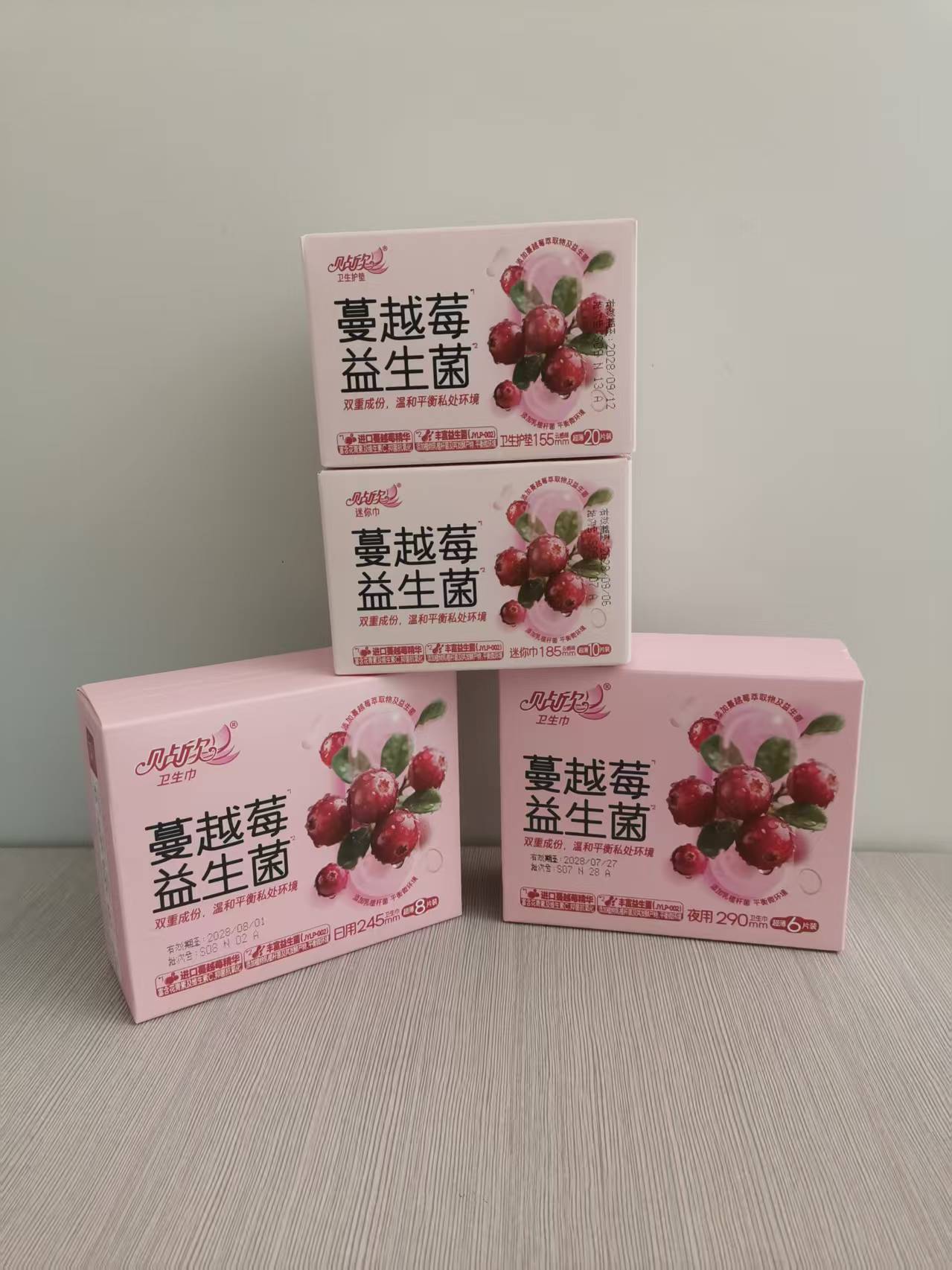
Disposable menstrual pants and box-packed sanitary napkins land in the same distributor catalogue, ship from the same factories and often carry the same brand name — yet they are not interchangeable line items. This head-to-head sourcing decision compares the FC-Pants Series disposable menstrual pants with the Ecolivia-Premium Series box-packed sanitary napkins on materials, sizing, absorbency, packaging, channel fit and production terms, so a buyer can commit a container to the format that actually sells through.
Decision summary. Choose the FC-Pants Series disposable menstrual pants when the channel rewards convenience and leakage security: retail and FMCG shelves, postpartum care programs, and markets where a pull-on 360° leak-proof underwear format replaces a pad-plus-underwear combination. Choose the Ecolivia-Premium Series box-packed sanitary napkins when the channel rewards presentation and material story: high-end retail, e-commerce and subscription boxes where boutique gift-box packaging and organic cotton or bamboo fiber surfaces justify a premium position. Both formats can be produced from one OEM/ODM program — MOQ 1 x 20GP, 15–25 day lead time, and 54 million+ pieces monthly capacity.
Problem Definition: The Constraint Is Channel Fit, Not Unit Price
Most sourcing comparisons start with the ex-works price per piece. That is the wrong first filter for these two formats, because menstrual pants and box-packed napkins fail in different ways after the container arrives. A pad that sits on a low-traffic shelf at a premium price fails on velocity. A pull-on pant that is listed in a channel expecting discreet, individually wrapped pads fails on shopper expectation, not on absorbency.
Four constraints decide the outcome, and all four are commercial rather than technical:
- Pack format versus shelf and carton reality. A boutique gift box and a compact retail pack create different carton configurations, different pallet counts and different freight economics per unit sold. The pack is a logistics decision as much as a branding decision.
- SKU depth versus MOQ. Box-packed napkins invite a length ladder, which multiplies SKUs; menstrual pants compress the range into a waist-band fit range. The OEM/ODM MOQ of 1 x 20GP applies to the program, so a buyer must decide whether to spread that volume across many pad SKUs or concentrate it on two or three pant sizes.
- Absorbency labelling and consumer expectation. Pants are specified by absorbency in millilitres; pads are specified by length. Mixing the two logics in one product range creates confusion at the shelf and in after-sales complaints.
- Compliance documentation per SKU. Every SKU that carries a claim — organic, compostable, sensitive-skin — needs supplier documentation behind it. Claims are cheap to print and expensive to defend.
The practical consequence: a distributor should choose the format that matches the channel it already sells into, then use the second format as a deliberate line extension rather than a speculative addition.
Industry Background: Why Both Formats Have Room
Demand conditions support both a volume format and a premium format running in parallel. The global sanitary pads market was valued at approximately USD 20.4 billion to USD 25.73 billion in 2024, with growth projected at a CAGR of 4% to 5.6% through 2034, according to Kings Research and Expert Market Research as summarised in a Vertex AI Search market summary. That is a mature, steadily expanding base rather than a boom category.
The supply side is concentrated in China. China is the world's leading exporter of sanitary pads under HS code 961900, with export values reaching approximately USD 3.3 billion to USD 3.59 billion in 2024, according to OEC, WITS and General Administration of Customs China data. For importers, that means deep, price-competitive manufacturing capacity — and a corresponding need to differentiate suppliers on capability rather than on the existence of supply.
Two segments are growing faster than the base market, and both pull in a different direction:
- Biodegradable and plant-based protection. The biodegradable sanitary napkins market was valued at USD 2.43 billion in 2023 and is projected to reach USD 8.54 billion by 2030, exhibiting a high CAGR of 20.1%, according to Mark & Spark Solutions. This is the segment where bio-based absorbent cores and material transparency become a purchasing argument.
- Organic and sensitive-skin cotton. Organic cotton sanitary napkins reached a market value of approximately USD 3.95 billion in 2025, with growth driven by consumer preference for hypoallergenic and chemical-free products, according to Providence Strategic Partners. This segment is where box-packed, gift-ready premium pads earn their margin.
At the top of the market, Procter & Gamble (Always) and Kimberly-Clark (Kotex) remain the top global manufacturers, with Always introducing Flexfoam technology in 2025 to target on-the-go portability, according to Expert Market Research and IMARC Group. The read-across for private-label buyers is not to imitate a multinational's technology platform, but to compete where multinationals are structurally slower: channel-specific pack formats, regional material stories and fast private-label iteration.
Detailed Solution: How the Two Formats Actually Differ
FC-Pants Series: 360° Leak-Proof Disposable Menstrual Pants
The FC-Pants Series is a disposable menstrual pant built as a 360° leak-proof underwear format rather than as an absorbent insert. Its construction combines an ultra-soft non-woven body-side surface, an advanced bio-based absorbent core and an elastic waistband, which is what allows the product to be worn as a single pull-on garment.
Two specifications drive the buying decision. First, sizing: the range covers M-L and L-XL, which maps to a waist range of 60–120cm. That waist range is the true fit constraint, and it should be checked against the target market's body-size distribution before artwork is finalised — a pant that gaps at the leg cuff leaks regardless of core performance. Second, absorbency: 150ml to 300ml, and this figure is customizable within the OEM/ODM program. Absorbency grade should be selected per market and per use occasion, not inherited from a competitor's pack copy.
Commercially, the format's strength is that it removes a decision from the shopper's path. There is no pad to position, no wing to fold and no separate underwear requirement, which is why the format is specified for retail, FMCG and postpartum care applications. The trade-off is fit sensitivity: a pant is less forgiving than a pad when the size range is too narrow for the market.

Ecolivia-Premium Series: Box-Packed Boutique Sanitary Napkins
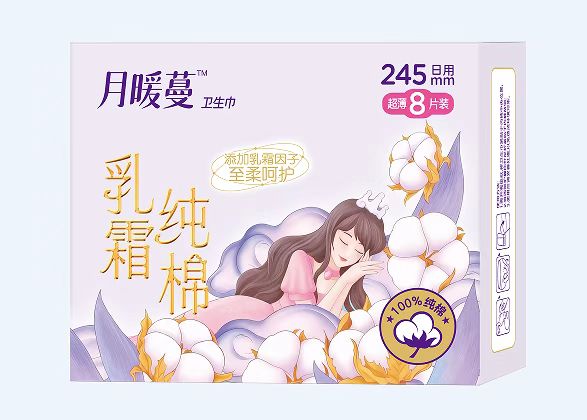
The Ecolivia-Premium Series is a box-packed sanitary napkin positioned as a premium boutique pad. The material set is organic cotton, bamboo fiber and an advanced bio-based core, and the packaging is a boutique gift box — the format is designed to be merchandised as a gift, a starter kit or a subscription shipment rather than as a commodity pad on a hook.
The specification logic is the opposite of the pant. Length is the primary ladder, spanning 240mm to 450mm, which lets a brand build a light-day to overnight range from a single material platform. Absorbency is described as tailored for sensitive skin rather than fixed in millilitres, which means the absorbency grade is set per SKU in the project brief — a heavy flow overnight variant and a sensitive-skin daytime variant are two different briefs, not two pack sizes.
The format's strength is margin and merchandising: a boutique box carries a premium position, supports subscription replenishment and gives a brand room to tell a material story around organic cotton, bamboo fiber and a bio-based core. The trade-off is cost and complexity — rigid box packaging and high-end printing add cost per unit and require automated rigid box folding and packaging lines to keep output stable at retail quality. For buyers whose channel cannot absorb that cost, the box format underperforms a plain retail pack.
Comparison Table: FC-Pants Series vs. Ecolivia-Premium Series
| Decision dimension | FC-Pants Series (disposable menstrual pants) | Ecolivia-Premium Series (box-packed sanitary napkins) |
|---|---|---|
| Format type | 360° leak-proof underwear, pull-on | Premium boutique pads, box-packed |
| Material construction | Ultra-soft non-woven / advanced bio-based absorbent core / elastic waistband | Organic cotton / bamboo fiber / advanced bio-based core |
| Size specification | M-L and L-XL, waist 60–120cm | 240mm–450mm length ladder |
| Absorbency specification | 150ml–300ml, customizable | Tailored for sensitive skin, grade set per SKU |
| Packaging logic | Configured per OEM/ODM project brief | Boutique gift box |
| Primary channels | Retail, FMCG, postpartum care | High-end retail, e-commerce, subscription box |
| Customization scope | Brand/logo, sizing, bio-based core structure, packaging (OEM/ODM) | Brand/logo, sizing, bio-based core structure, packaging (OEM/ODM) |
| MOQ | 1 x 20GP, negotiable for start-up brands | 1 x 20GP, negotiable for start-up brands |
| Production lead time | 15–25 days | 15–25 days |
| Quality control | 100% on-line visual inspection + in-house lab QC | 100% on-line visual inspection + in-house lab QC |
| Standards and certifications | ISO 9001 certified operations; products adhere to FDA, CE and GOTS standards | ISO 9001 certified operations; products adhere to FDA, CE and GOTS standards |
| Strongest fit | Buyers selling convenience, fit-based sizing and leakage security | Buyers selling presentation, material story and repeat replenishment |
Because both lines run from the same manufacturing program, MOQ, lead time and quality control are identical. The differentiation sits in size logic, absorbency specification, packaging and channel positioning — which is exactly where the sourcing decision should be made.
Step-by-Step Breakdown: How to Run This Decision
- Fix the channel before the product. Write down where the unit will actually be sold: supermarket shelf, pharmacy chain, boutique retailer, marketplace listing or subscription shipment. Menstrual pants are specified for retail, FMCG and postpartum care; box-packed napkins for high-end retail, e-commerce and subscription boxes. If the channel is undecided, the material comparison is premature.
- Map absorbency and fit to the end user. For pants, validate the 60–120cm waist coverage against the target market and select an absorbency grade within the 150–300ml customizable band. For pads, build the length ladder across 240mm to 450mm and define what each length is for. Do not let a single SKU carry two occasions.
- Choose the material story the market pays for. Organic cotton, bamboo fiber and a bio-based core support a premium, sensitive-skin position on the box-packed line. An ultra-soft non-woven surface with a bio-based absorbent core supports a comfort-and-security position on the pant line. Where your market requires additional specifications — chlorine-free processing, FSC-certified pulp, a specific nonwoven GSM or bio-film backsheet layer — state them in the RFQ, because these are customization variables rather than assumptions.
- Lock packaging and private-label scope. Boutique OEM projects commonly specify FSC-certified paper boxes and high-end printing such as UV or foil, with low MOQ for new SKU testing. Retail packs on the pant line follow the project brief. Confirm artwork, box structure and print process before the production slot is booked, not after.
- Verify compliance documentation SKU by SKU. Confirm ISO 9001 certification for the operation, and FDA, CE and GOTS adherence for the products. If a compostable or biodegradable claim will appear on pack, the applicable reference standards are EN 13432 in Europe and ASTM D6400 in North America, both of which require 90% biodegradation within 6 months under industrial conditions, per TÜV SÜD and European Bioplastics. A claim without that evidence trail is a commercial risk, not a marketing asset.
- Validate samples and set the inspection protocol. Before a first production run, test absorbency, fit across the size range and packaging durability, and use supplier sample testing support to compare material lots. In production, 100% on-line visual inspection plus in-house lab QC is the baseline, and pre-shipment loading inspection protects the container.
- Plan MOQ, lead time and logistics together. With a 1 x 20GP MOQ (negotiable for start-up brands) and a 15–25 day production lead time, the calendar constraint is rarely production alone — it is booking, treatment and sailing. Logistics support covers shipping mode, consolidation, customs clearance, FOB, CIF and DDP terms, with a treatment date of 3–5 days and monthly handling of 30+ 40HQ containers.
- Scale the winner, then extend. Concentrate first-order volume on the format your channel already sells, prove sell-through, then add the second format as a line extension with its own pack and its own absorbency logic.

Use Cases: Which Format Wins in Which Program
FMCG and regional retail distribution
A leading regional FMCG brand in Malaysia runs high-end organic cotton sanitary napkins and menstrual pants at 2–3 x 40HQ containers per month, a partnership of more than three years. The program integrated advanced bio-based core technology to replace standard SAP, and the brand achieved 25% annual sales growth in Southeast Asia. The lesson for distributors is that running both formats inside one distribution relationship is viable — but it works because the buyer already controlled the retail channel, not because the formats were similar.
Premium e-commerce and subscription boxes
A premium e-commerce and subscription brand in Germany orders more than 500,000 units per batch on a monthly recurring basis, running tailored organic cotton pads in luxury retail gift boxes for three years. The program supported the client's transition to 100% plastic-free packaging and relies on high-capacity automated box-packing lines with zero-defect quality control for premium retail standards. This is the clearest case for the Ecolivia-Premium Series format: when the unboxing experience is the product, the boutique box is not packaging overhead, it is the value proposition.
Postpartum and maternity care programs
Postpartum care is a listed application for the FC-Pants Series, where the pull-on format and the 150–300ml customizable absorbency range are specified against a care protocol rather than a retail shelf. Buyers running hospital, clinic or maternity-kit programs should align absorbency grade and size range with the care provider's protocol, and keep box-packed pads for lighter-flow days and discharge-stage use. Splitting the program across both formats by care stage is more clinically coherent than forcing one format across the whole recovery period.
Production Reality: What Sits Behind Both Formats
Family Cares Group (Xiamen) is an integrated manufacturing and supply chain group specialising in high-performance hygiene and medical materials, with its global sales and R&D hub in Xiamen and manufacturing bases in the hygiene industrial cluster of Quanzhou, China. The group was founded in 2001 and operates 35,000+ square metres of factory space with 350–500 employees, including 25+ professional engineers.
Output capacity is the practical answer to the format question. Annual output exceeds 650 million pieces, with daily capacity above 1.8 million pieces, and the OEM/ODM program alone carries 54 million+ pieces monthly. Material supply adds a further 1,600+ tons monthly with a 7–14 day lead time, which matters when a buyer needs a nonwoven GSM or bio-film layer changed mid-program. Export accounts for 85%–90% of business across North America, Europe, Southeast Asia, the CIS, the Middle East and Africa.
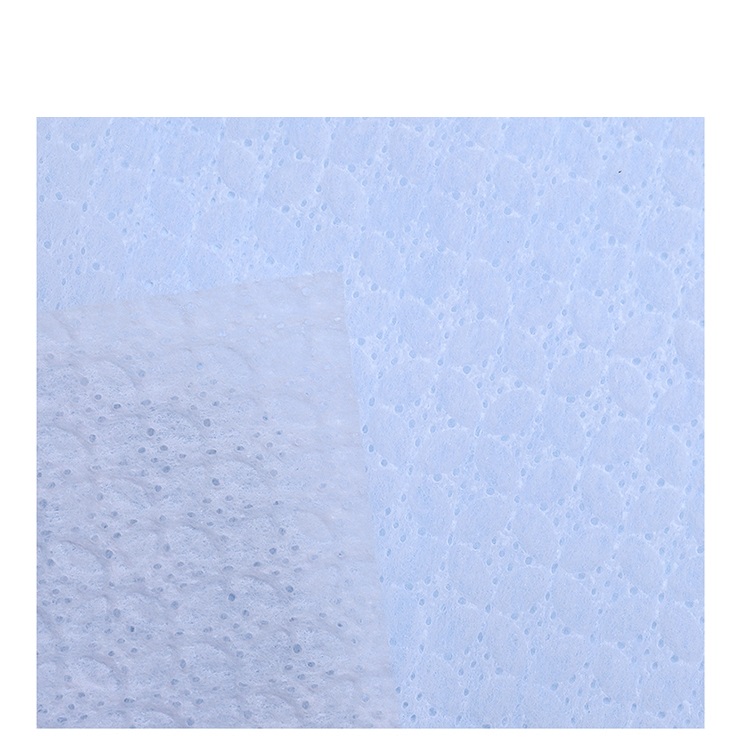
Raw-material control has a measurable effect downstream. A sanitary product manufacturer in Uzbekistan receiving 500+ tons of specialised non-woven fabric annually for four years reduced production downtime by 15% through material consistency, with GSM and roll diameter customised to fit high-speed machinery. For a buyer choosing between menstrual pants and box-packed napkins, that is the argument for sourcing both lines from a supplier that controls the input material rather than assembling from traders.
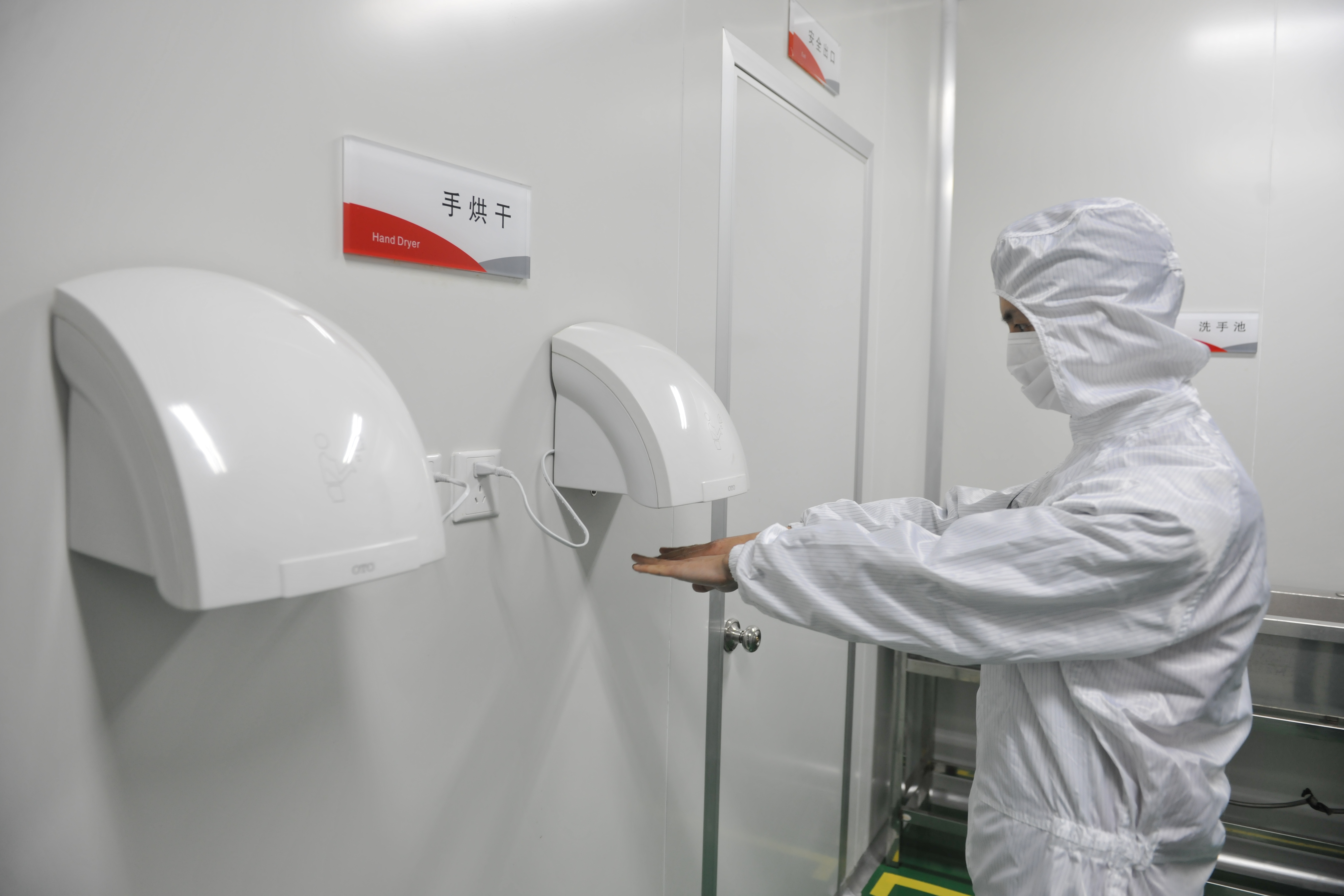
Compliance is handled at operation level: ISO 9001 certified, with products adhering to FDA, CE and GOTS standards. Documentation, traceability and 24/7 technical support are managed as part of the supply relationship rather than as an afterthought at shipment. Buyers can review the full capability and product range at family-cares.com.
FAQ: What Buyers Ask Before Committing a Container
Which certifications should a buyer verify for both formats?
Verify ISO 9001 certification for the manufacturing operation, and confirm that the products adhere to FDA, CE and GOTS standards, since these apply across both the FC-Pants Series and the Ecolivia-Premium Series. Boutique OEM packaging projects additionally specify FSC-certified paper boxes. If any SKU carries a compostable or biodegradable claim, the supporting standard is EN 13432 in Europe or ASTM D6400 in North America, both requiring 90% biodegradation within 6 months under industrial conditions. Ask for the documentation per SKU, not per catalogue.
Can one OEM/ODM partner produce both menstrual pants and box-packed napkins?
Yes. The OEM/ODM program covers brand and logo, sizing, bio-based core structure and packaging customization for both formats, with monthly capacity of 54 million+ pieces and quality control based on 100% on-line visual inspection plus in-house lab QC. The two lines differ in size logic — waist range for pants, 240mm–450mm length for pads — so the project brief must specify each SKU separately even when both run under one brand.
What drives the cost difference, and what MOQ applies?
Cost differences come from material mix (organic cotton or bamboo fiber versus ultra-soft non-woven), absorbency grade, elastic waistband construction, and above all packaging — a boutique gift box with high-end printing such as UV or foil costs more per unit than a standard retail pack, and requires rigid box folding and packaging lines. The MOQ is 1 x 20GP, negotiable for start-up brands, which allows a first order to concentrate on one format before adding the second.
How should samples be validated before a first production run?
Test three things: absorbency at the specified grade, fit across the declared size range, and packaging durability through handling and shipping. Material sample testing support is available to compare lots before committing, and pre-shipment loading inspection is the standard protection for the container itself. For pants, fit testing across the 60–120cm waist range matters more than a single-size absorbency test.
What lead time should a distributor plan for?
OEM/ODM production runs 15–25 days, raw material supply 7–14 days, and logistics documentation a 3–5 day treatment date, with monthly handling of 30+ 40HQ containers across FOB, CIF and DDP terms. Plan the launch calendar backwards from the sailing date rather than from the factory date. To move forward, request samples or a quotation for the FC-Pants Series, the Ecolivia-Premium Series, or both — contact admin@family-cares.com or WhatsApp +86 13805968557 with your target channel, size range and pack format.
Conclusion: Choose by Channel, Then Extend
The head-to-head answer is not a winner but a sequence. If your revenue comes from shelf velocity, convenience and postpartum care programs, the FC-Pants Series disposable menstrual pants should carry the first container: 360° leak-proof underwear construction, M-L and L-XL sizing across a 60–120cm waist range, and 150–300ml customizable absorbency. If your revenue comes from presentation, material story and repeat subscription revenue, the Ecolivia-Premium Series box-packed sanitary napkins should carry it: boutique gift-box packaging, a 240mm–450mm length ladder, and organic cotton, bamboo fiber and bio-based core construction positioned for sensitive skin.
What should not vary is the supplier standard behind either choice: 1 x 20GP MOQ negotiable for start-up brands, 15–25 day lead time, 54 million+ pieces monthly capacity, 100% on-line visual inspection with in-house lab QC, and ISO 9001, FDA, CE and GOTS documentation in place. Buyers who select the format for the channel and the supplier for the evidence avoid the most expensive mistake in this category — a well-made product that cannot sell where it is listed.
Request Samples or a Quotation
Compare the FC-Pants Series and the Ecolivia-Premium Series on your own shelf. Share your target channel, size range and pack format, and receive a sample set and a factory-direct quotation.
Email: admin@family-cares.com · WhatsApp: +86 13805968557 · www.family-cares.com
Have Questions or Need More Details?
Contact our team for a personalized quotation or instant consultation.
Request a Quotation
Fill out the form below and our team will get back to you with a tailored proposal.
WhatsApp Direct Chat
Prefer to chat in real-time? Message us on WhatsApp for instant assistance & quick answers.
- Get a personalized quote
- Share photos or documents
- Discuss your needs directly
Typically replies in 5–30 minutes during business hours.