
Disposable Sanitary Napkins for Postpartum, Retail & Medical Supply
Disposable Sanitary Napkins for Postpartum, Retail & Medical Supply

Short answer: Disposable sanitary napkin programs usually split into three distinct buying jobs — postpartum recovery care, premium retail and subscription boxes, and medical or senior care supply. Each job needs a different absorption ceiling, a different fit preference, and a different packaging and documentation standard. Four format families cover most of that map: the FC-Pants Series (150–300 ml, elastic waistband), Ecolivia-Premium box-packed napkins (240–450 mm), FC-Standard napkins (240 / 285 / 330 / 410 mm), and FC-Care Pro adult diapers (1500–8000 ml+). Match the format to the job first and the material second — that sequence is what keeps leakage complaints, subscription churn and care-facility incidents low.
Most sourcing problems in this category are not material problems. They are fit problems. A distributor supplying a hospital tender, a pharmacy chain and a direct-to-consumer subscription box is not buying one product — it is buying three, and it is frequently doing so on a single purchase order.
This guide is written for importers, distributors, brand owners and procurement managers who have finished shortlisting suppliers and are now specifying formats for execution. It maps the FC-Pants Series, Ecolivia-Premium box-packed napkins, FC-Standard napkins and FC-Care Pro adult diapers to the scenarios they were built for, and it sets out the absorbency, size, material, packaging, compliance and commercial parameters that should be locked before a deposit is paid.
Problem Definition: Why One Specification Fails Three Programs
Postpartum care, premium retail and medical supply all rely on absorbent hygiene products, but they optimise for different outcomes.
- Postpartum care optimises for volume control in the first days after delivery, for a fit that stays in place while the user is lying down or moving slowly, and for skin comfort on sensitive tissue.
- High-end retail and subscription boxes optimise for assortment — several lengths and absorbency levels inside one box — for unboxing quality, and for shelf life in a warehouse or fulfilment centre.
- Medical and senior care supply optimises for an absorption ceiling that covers overnight use and reduced mobility, for core stability under load, and for documentation that survives procurement and regulatory review.
When a single SKU is stretched across all three, the failure modes are predictable:
- Leakage complaints when an ultra-thin retail format is deployed against postpartum or overnight volume.
- Subscription churn when every box in a series contains the same length and the customer stops seeing value.
- Care-facility incidents when the absorbency ceiling sits below what a resident actually needs.
- Margin erosion when premium packaging is specified for a channel that only needs a functional carton.
Decision rule: lock the scenario first, then the absorbency ceiling, then the format and size, then the material and core structure, then the packaging — and only then negotiate price, MOQ and lead time. Reversing that order is what produces mismatched SKUs.
Industry Background: Demand Is Splitting, and the Eco Segment Is Moving Fastest
Third-party research published in 2024 and 2025 describes a category that is still growing steadily overall, while its bio-based and organic sub-segments grow several times faster.
- Industry research (Kings Research; Expert Market Research; Vertex AI Search summary) places the global sanitary pads market at roughly USD 20.4 billion to USD 25.73 billion in 2024, with a projected CAGR of about 4% to 5.6% through 2034. Base-year estimates do vary between research firms.
- The biodegradable sanitary napkin segment was valued at USD 2.43 billion in 2023 and is projected to reach USD 8.54 billion by 2030, a CAGR of about 20.1% (Mark & Spark Solutions).
- Organic cotton sanitary napkins reached approximately USD 3.95 billion in 2025, driven by preference for hypoallergenic and chemical-free products (Providence Strategic Partners).
- China remains the world's leading exporter of sanitary pads (HS 961900), with export values of roughly USD 3.3 billion to USD 3.59 billion in 2024 (OEC; WITS; General Administration of Customs China).
- At brand level, Procter & Gamble (Always) and Kimberly-Clark (Kotex) remain the top global manufacturers, with Always introducing Flexfoam technology in 2025 for on-the-go portability (Expert Market Research; IMARC Group).
Two regulatory reference points matter for the eco-facing part of the category. Certified compostable sanitary napkins are assessed against EN 13432 in Europe or ASTM D6400 in North America, both of which require 90% biodegradation within six months under industrial composting conditions (TÜV SÜD; European Bioplastics). Buyers intending to market compostability claims should confirm which standard and which disposal pathway the claim actually rests on.
The practical consequence is that format selection is no longer only a price decision. It is a material, compliance and channel decision at the same time.

Four Product Families That Cover Most Project Scenarios
FC-Pants Series — 150–300 ml, Elastic Waistband
A pants-format product with an elastic waistband and an absorbency range of 150–300 ml. The waistband holds the product in position during sleep, during extended periods lying down, and during light movement — the situation postpartum users are in for most of the first days after delivery. Because it does not depend on adhesive wings, it also avoids the repositioning problem that adhesive pads can present when the user is not upright.
Best fit: postpartum recovery, overnight use, and users who prefer a pull-on format.
Ecolivia-Premium Box-Packed Napkins — 240–450 mm
Box-packed napkins spanning 240 mm to 450 mm. The box format is built for retail presentation, shelf presence and subscription packing, and the wide length span lets a brand build a differentiated box — a lighter day format alongside a longer overnight format — without changing supplier or core structure.
Best fit: high-end retail, pharmacy premium shelves, and subscription boxes.
FC-Standard Napkins — 240 / 285 / 330 / 410 mm
Four standard lengths. This is the workhorse range for pharmacy, supermarket and institutional basics, and the length ladder lets a buyer construct a day/regular/night assortment from a single product family instead of mixing suppliers and mixing quality baselines.
Best fit: general retail assortments, tenders, and high-volume wholesale.
FC-Care Pro Adult Diapers — 1500–8000 ml+
A high-capacity adult care range running from 1500 ml to 8000 ml+. This is the format that covers overnight use and reduced mobility in care settings, where the absorbency ceiling and core stability under load matter more than thinness.
Best fit: medical supply, senior care facilities and long-duration wear.
Aligning Absorbency, Size, Material and Packaging
1. Absorbency: set the ceiling before the format
Absorbency is the parameter that decides whether a program works. It should be set from the worst realistic use case in the channel, not the average. For postpartum care, that is the first 24–72 hours. For an overnight retail claim, it is a full night's sleep. For senior care, it is the interval between scheduled changes.
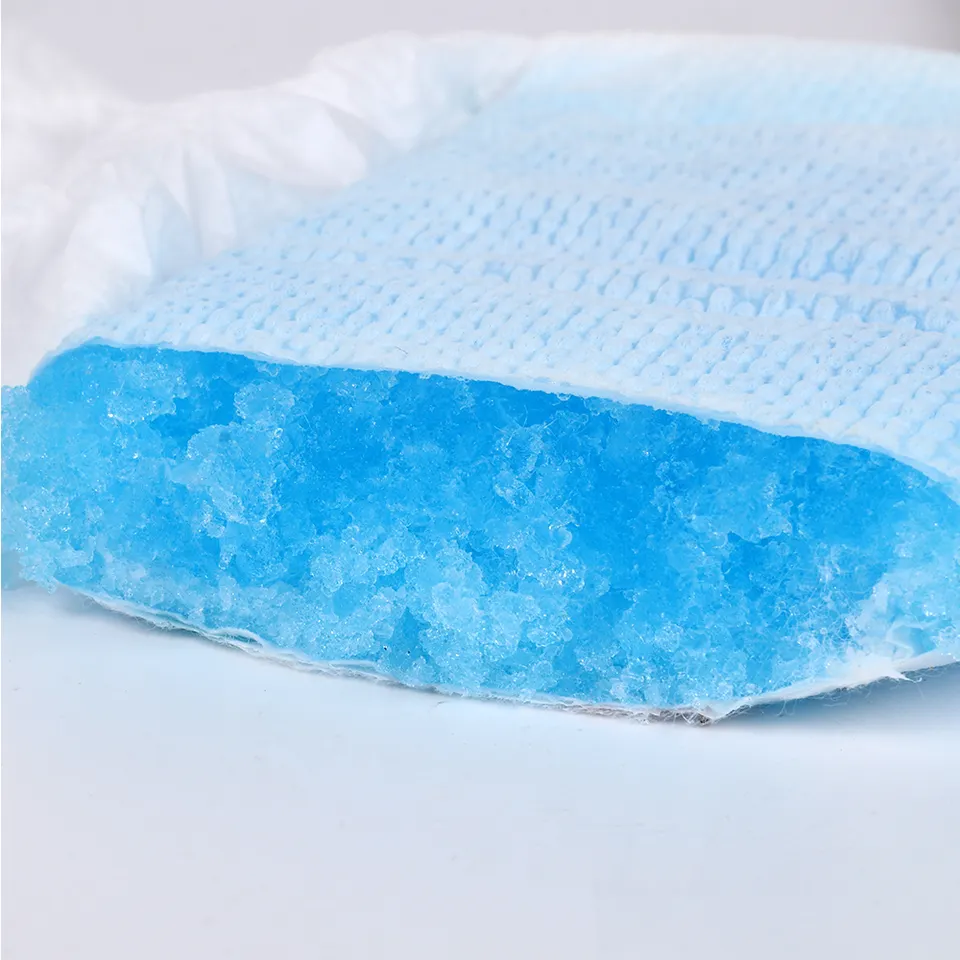
The advanced bio-absorbent core used by Family Cares Group is specified against standard SAP/pulp cores at 2x faster liquid absorption, with a simplified product structure and reduced material waste in the core — a combination that matters most in heavy-flow and overnight protection.
2. Size and fit
Length is a fit decision, not a capacity decision. The FC-Standard ladder of 240 / 285 / 330 / 410 mm exists so that one supplier can serve a daytime, regular and overnight assortment. Box-packed Ecolivia-Premium products run from 240 mm to 450 mm, which gives retail and subscription programs room to differentiate a box without re-qualifying a supplier.
For postpartum use, length should be paired with a format that resists movement. The FC-Pants Series uses an elastic waistband rather than adhesive wings, which removes the repositioning problem pads can have during extended lying-down periods.
3. Material and core structure
Material choice drives three outcomes at once: skin response, absorbency behaviour, and the sustainability claim a brand can put on the box.
- Bio-based and bio-absorbent cores. Plant-based core structures change both the absorption profile and the disposal story, which is why the biodegradable segment is the fastest-growing part of the category.
- Breathable bio-film backsheet. Against a standard PE backsheet, plant-based bio-film technology delivers a 40% increase in airflow. The trade-off is honest: material cost is higher, but the format supports premium eco-positioning and higher margins.
- Certified organic and hypoallergenic inputs. Where sensitive-skin or hypoallergenic positioning matters, organic cotton and GOTS-referenced materials are the relevant specification.
- Nonwoven GSM. Surface softness and liquid transfer are set by nonwoven GSM selection — a technical specification rather than a marketing one.
Family Cares Group works in material science directly, including Eco-Core™ technology, medical-grade hydrophilic PU foam and sustainable nonwoven fabrics. That is what makes bespoke OEM/ODM specification possible instead of a catalogue selection.
4. Packaging
Packaging has to do three jobs at once: protect the product, present it, and survive the channel.
- Moisture control. Sealed high-barrier film packing and multi-layer packaging are the standard controls against moisture risk in transit and storage.
- Retail and subscription. Box-packed formats such as Ecolivia-Premium support shelf presence and unboxing quality.
- Institutional and medical. Customized medical-grade packaging supports tenders, barcode requirements and care-facility handling.
Manufacturing and Quality Controls Behind the Formats
- High-speed automated lines deliver 99.9% product consistency, with a daily capacity exceeding 1.8 million pieces and lower unit cost through mass production. Compared with older-generation manufacturing, the advantage is consistency and lead-time reliability rather than price alone.
- 100% on-line visual inspection replaces manual quality inspection, supporting a zero-leakage batch guarantee and real-time quality data tracking. For medical-grade and premium retail programs, the practical benefit is a lower risk of batch recalls.
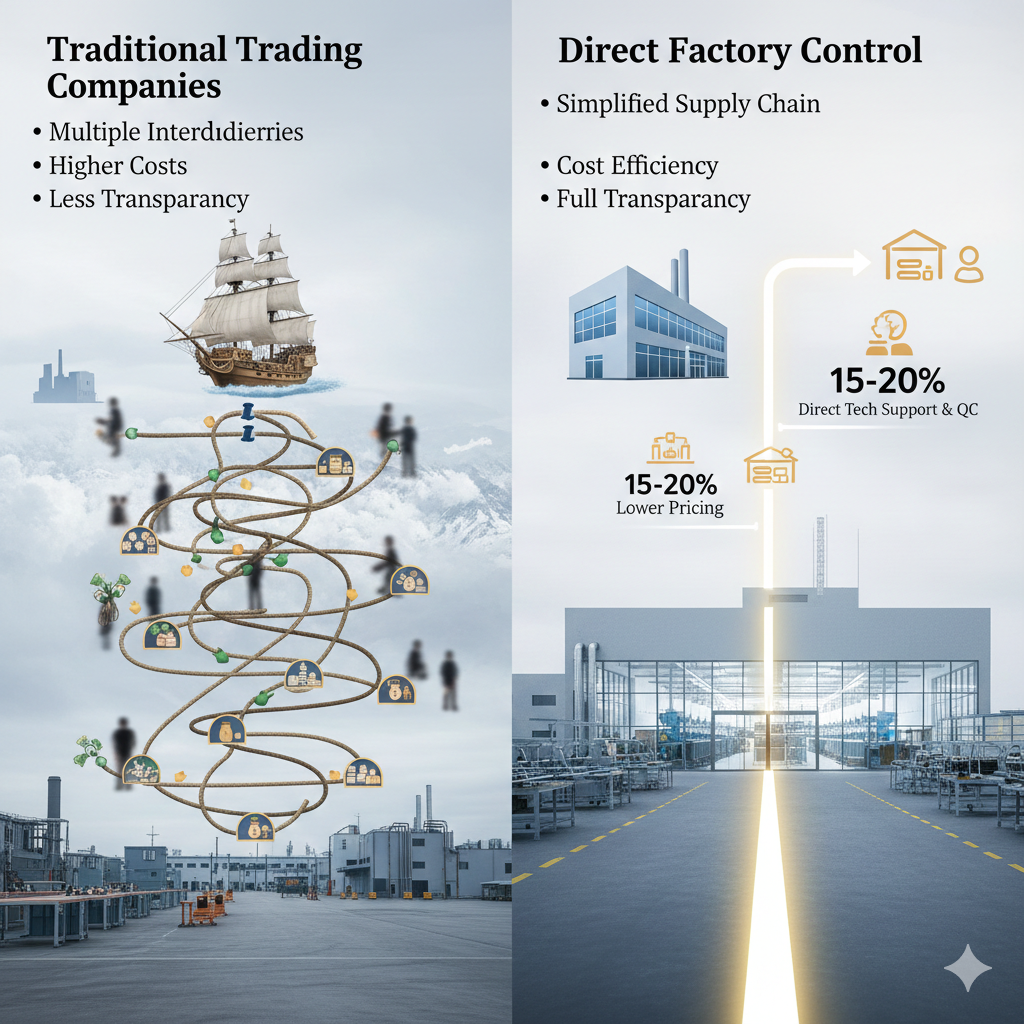
- Direct factory control rather than trading-company sourcing supports 15–20% lower pricing for high-volume B2B wholesale, with no middleman commission and full supply-chain transparency.
- Flexible OEM customization supports 50% faster prototype design than rigid large-scale factories, with lower MOQ for new SKU testing — relevant for new brand launches.
At group level, Family Cares Group operates a 35,000+ square metre manufacturing footprint with 350–500 employees and a 25+ engineer R&D team, producing 650 million+ pieces annually. Between 85% and 90% of output is exported to North America (USA, Canada), Europe (UK, Germany, France), Southeast Asia (Malaysia, Vietnam, Thailand, Singapore), the CIS (Russia, Uzbekistan, Kazakhstan), the Middle East (Turkey, UAE) and Africa (Senegal, Nigeria).
Step-by-Step: Aligning a Format to a Program
- Define the scenario and the end user. Decide whether the program is postpartum recovery, premium retail/subscription, or medical and senior care. That single decision narrows the format range immediately.
- Set the absorbency ceiling. Use the worst realistic use case, then select a range that clears it with margin. FC-Pants Series runs 150–300 ml; FC-Care Pro runs 1500–8000 ml+.
- Choose the format and fit. Pull-on pants where movement and lying-down positioning matter; box-packed pads or FC-Standard lengths where assortment and shelf presentation matter.
- Select material and core structure. Specify the core (bio-based or standard SAP/pulp), the backsheet (breathable bio-film or PE), the surface material, and — where relevant — organic cotton and GOTS-referenced inputs.
- Specify packaging. Choose box or film, barrier level, carton configuration and artwork requirements, and confirm the moisture-control approach for the destination climate.
- Confirm compliance and documentation. ISO 9001:2015, FDA registration and CE MDR are the baseline for the US and EU; GOTS applies where organic cotton claims are made.
- Validate with samples and inspection. Trial orders are negotiable; pre-shipment inspection and lab report approval are the standard acceptance route.
- Lock commercial terms. Standard MOQ is 1 x 20GP, typical production lead time is 15–25 days, delivery terms are FOB / CIF / DDP, and payment runs on T/T or L/C.
Use Cases
Postpartum and maternity care programs
The priority here is volume control paired with fit that survives lying down. The FC-Pants Series (150–300 ml, elastic waistband) is the primary format, with FC-Standard 330 mm and 410 mm lengths as supporting SKUs for later recovery stages when flow reduces and users return to a standard pad format.
High-end retail and subscription boxes
Assortment variety is the value proposition. Ecolivia-Premium box-packed napkins (240–450 mm) carry the box, with FC-Standard 240 mm and 285 mm lengths filling out entry-tier or day-use tiers. Bio-based cores and breathable bio-film backsheets support the eco-positioning that premium shelves and subscription audiences respond to, and box packaging supports both shelf presence and mail delivery.
Medical and senior care supply
The ceiling matters more than the profile. FC-Care Pro adult diapers (1500–8000 ml+) cover overnight and long-duration wear, with FC-Standard 410 mm napkins available as a lighter supporting format. Customized medical-grade packaging and 100% on-line visual inspection are the two specifications that tenders in this channel most often ask about.
Two reference programs show how these combinations hold up over time. In a US program with a top-tier medical and adult care brand, a 10+ year strategic partnership has run at a 0% major quality complaint rate while scaling market share, with the focus on high-absorbency (6500 ml+) core stability and customized medical-grade packaging. Separately, a premium e-commerce and subscription brand client in the EU represents the retail-side pattern, where box-packed formats and assortment variety carry the program.
Comparison Table: Matching Format to Scenario
| Program scenario | Primary format | Supporting format | Parameters to lock |
|---|---|---|---|
| Postpartum & maternity care | FC-Pants Series — 150–300 ml, elastic waistband | FC-Standard 330 mm / 410 mm | Absorbency ceiling, waistband fit, surface softness, skin compatibility |
| High-end retail & subscription boxes | Ecolivia-Premium box-packed napkins — 240–450 mm | FC-Standard 240 mm / 285 mm | Length assortment, box packaging, bio-based core, shelf life |
| Medical & senior care supply | FC-Care Pro adult diapers — 1500–8000 ml+ | FC-Standard 410 mm | Absorbency ceiling, core stability under load, medical-grade packaging, batch documentation |
| Pharmacy & general retail | FC-Standard napkins — 240 / 285 / 330 / 410 mm | Ecolivia-Premium box-packed napkins | Length ladder, unit economics, carton efficiency |
OEM/ODM Customization and Order Parameters
Family Cares Group supplies these four format families through both private-label and OEM/ODM routes. The customization scope covers four areas:
- Brand and logo — private-label artwork, brand identity on pack and carton.
- Sizing — length and fit specification within each format family.
- Bio-based core structure — plant-based and bio-absorbent core configuration rather than a fixed catalogue core.
- Packaging — box or film format, barrier level, carton configuration and stacking requirements.
The commercial and compliance parameters that need to be confirmed at quotation stage are:
- MOQ: 1 x 20GP standard; trial orders are negotiable.
- Lead time: typically 15–25 days, supported by a monthly production capacity of 54 million+ pieces.
- Delivery terms: FOB / CIF / DDP.
- Payment terms: T/T or L/C; trial orders commonly run on 30% deposit / 70% balance.
- Acceptance criteria: pre-shipment inspection on standard orders; lab report approval on trial quantities.
- Compliance: ISO 9001:2015, FDA registration, CE MDR, with GOTS-referenced materials where organic cotton is specified.
- Risk controls: multi-layer packaging against moisture risk, production buffer with multiple high-speed line backup against lead-time delay, and 100% on-line visual inspection against quality deviation.
FAQ
What certification and regulatory documentation should a buyer confirm before a sanitary napkin order ships?
Programs supplied by Family Cares Group run under ISO 9001:2015 quality management, with FDA registration for the US market and CE MDR conformity for the EU. Where organic cotton or hypoallergenic positioning is claimed, GOTS-referenced materials are used. The required file set should be confirmed at quotation stage, because it differs between postpartum, retail and medical programs — medical and senior care tenders usually ask for batch-level quality data in addition to core certificates. The 100% on-line visual inspection and real-time quality data tracking in the production process support those batch records.
Can one manufacturer supply postpartum, retail and medical care programs at the same time?
Yes, and running one supplier across all three scenarios is usually more efficient than splitting them. Family Cares Group operates multiple high-speed automated production lines with a monthly capacity of 54 million+ pieces and a daily capacity exceeding 1.8 million pieces, across four format families: FC-Pants Series (150–300 ml, elastic waistband), Ecolivia-Premium box-packed napkins (240–450 mm), FC-Standard napkins (240 / 285 / 330 / 410 mm) and FC-Care Pro adult diapers (1500–8000 ml+). One supplier also means one compliance file, one inspection routine and one logistics plan.
What are the standard purchasing terms and acceptance criteria?
Standard MOQ is 1 x 20GP, and trial quantities are negotiable for new programs. Delivery terms are FOB, CIF or DDP. Payment runs on T/T or L/C; trial orders commonly use 30% deposit / 70% balance with acceptance based on lab report approval, while standard orders are accepted against pre-shipment inspection. Because Family Cares Group operates direct manufacturing rather than trading-company sourcing, pricing on high-volume B2B wholesale runs 15–20% lower than through a traditional intermediary, with no middleman commission.
Can we validate a format with a trial order before committing to a full container?
Trial orders are negotiable, and that is the normal route for validating a new format before a full 20GP commitment. The OEM customization workflow supports prototype design roughly 50% faster than rigid large-scale factories, with a lower MOQ for new SKU testing — useful for new brand launches and for subscription boxes that want to test a length ladder before locking an assortment. Prototypes are then validated through pre-shipment inspection and lab report approval.
What is the typical production lead time, and how is it protected?
Typical production lead time is 15–25 days. It is protected by a production buffer and by multiple high-speed automated lines that can be switched between, backed by 24/7 operations. Export programs move by sea or rail freight, and container optimisation is handled on the supply-chain side rather than left to the buyer. To request samples or a quotation for a postpartum, retail or medical supply program, contact the team at admin@family-cares.com or through the website.
Conclusion: Specify the Scenario, Then the Format
Postpartum care, premium retail and medical supply all buy disposable sanitary napkins, but they are not buying the same product. The absorbency ceiling, the fit format, the core structure and the packaging requirement all shift with the scenario — and a specification that ignores those shifts will resurface later as leakage complaints, subscription churn or care-facility incidents.
The sequence that works is consistent: define the scenario, set the absorbency ceiling, choose the format and length from a family that can cover the whole assortment, select the material and core structure, specify the packaging, confirm compliance, validate with samples and inspection, and then lock MOQ, lead time and payment terms. With the FC-Pants Series, Ecolivia-Premium box-packed napkins, FC-Standard napkins and FC-Care Pro adult diapers, that sequence can be run through a single supplier rather than assembled across several.
Next Step
Family Cares Group (Xiamen) supplies eco-friendly sanitary napkins and adult care products from manufacturing bases in Quanzhou, China, with ISO 9001, FDA, CE and GOTS-aligned compliance, a monthly capacity of 54 million+ pieces, and a typical lead time of 15–25 days.
To request samples, a quotation, or a format recommendation for a postpartum, retail or medical supply program, contact admin@family-cares.com or visit www.family-cares.com.
Have Questions or Need More Details?
Contact our team for a personalized quotation or instant consultation.
Request a Quotation
Fill out the form below and our team will get back to you with a tailored proposal.
WhatsApp Direct Chat
Prefer to chat in real-time? Message us on WhatsApp for instant assistance & quick answers.
- Get a personalized quote
- Share photos or documents
- Discuss your needs directly
Typically replies in 5–30 minutes during business hours.