
Non-Woven GSM Selection: The Technical Guide for Sanitary Napkin Absorbency and Softness
Non-Woven GSM Selection: The Technical Guide for Sanitary Napkin Absorbency and Softness
Non-woven GSM is the number that decides whether a disposable sanitary napkin feels soft on the skin and still holds liquid under pressure. GSM — grams per square metre — sets the density, thickness and stiffness of every fabric layer in the pad, which is why the same word, "nonwoven", can describe both a topsheet that strikes through quickly and a barrier cuff that collapses during the second hour of wear. Ecolivia (Family Cares Group) develops and supplies nonwoven materials across a 10 GSM to 80 GSM envelope and applies them in bespoke OEM/ODM production. This guide explains how to choose within that range, layer by layer, from sample approval to repeat production.
It is written for OEM buyers, private-label brand owners and importers who have already decided to source disposable sanitary napkins and are now executing: finalising a bill of materials, validating samples, and writing the specification a factory has to reproduce for years.
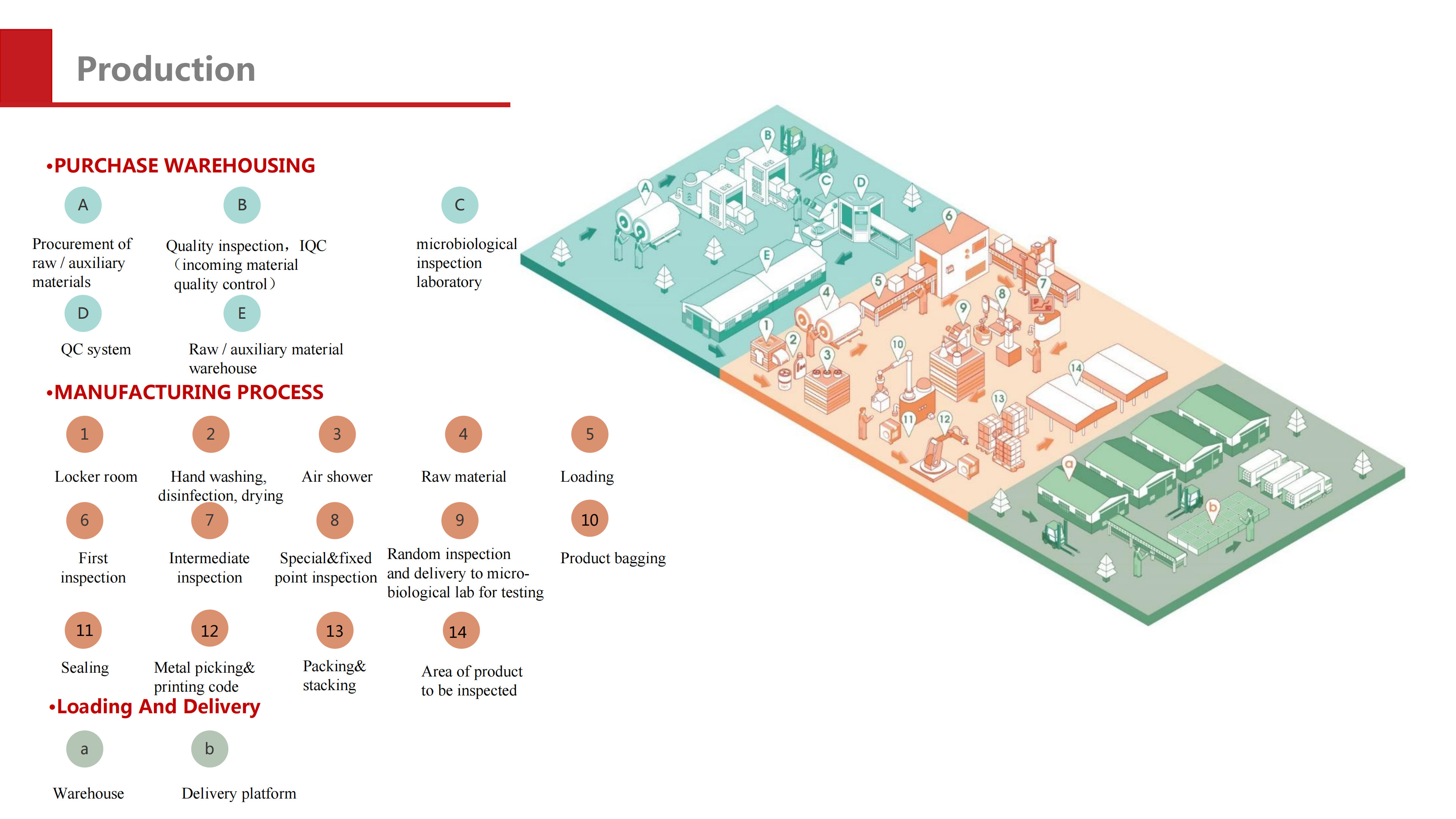
Problem Definition: Why Two Identical-Looking Pads Perform Differently
A sanitary napkin is a stack of nonwoven and film layers, and every layer is defined by four variables at the same time: GSM, fibre or polymer type, bonding method, and surface treatment. When a quotation lists "nonwoven" without those four items, absorbency and softness stop being specifications and become whatever the production line happens to be running that week.
Three failure modes appear repeatedly in OEM sanitary napkin projects:
- A topsheet that feels soft in the hand but wicks slowly. Low-GSM spunbond gives a pleasant, low-friction surface. Push the GSM below the point where the fibre web holds its integrity, however, and strike-through slows down while fluid sits on the surface — then travels back up under body pressure. That is the rewet problem buyers usually discover only in wear tests, not in flat-lab photographs.
- A 3D leak guard that loses its geometry. The barrier cuff is the one nonwoven layer where GSM is a structural decision rather than a comfort decision. Below a certain areal density, the web cannot hold the vertical wall of the 3D guard once the wearer sits, walks or wears the product for hours. The guard still looks correct on a flat sample; it stops working in use.
- Batch drift after sample approval. A sample can pass every test and still be unrepeatable if GSM is written as a single number with no tolerance, no fibre definition and no batch-level test report behind it. This failure hurts distributors most, because it surfaces as consumer complaints months after the container has shipped.
At the decision-to-execution stage the question is no longer "which pad performs best in a hand test?" It is "which specification can be reproduced reliably at volume, batch after batch?"
Industry Background: Why GSM Decisions Are Being Re-Opened Now
Third-party category data places the global sanitary pads market at roughly USD 20.4 billion to USD 25.73 billion in 2024, with growth projected at a 4% to 5.6% CAGR through 2034 (Kings Research; Expert Market Research; Vertex AI Search summary). China remains the world's leading exporter of sanitary pads under HS code 961900, with export values of approximately USD 3.3 billion to USD 3.59 billion in 2024 (OEC; WITS; General Administration of Customs China).
The faster-moving numbers sit at the eco end of the category. Biodegradable sanitary napkins were valued at USD 2.43 billion in 2023 and are projected to reach USD 8.54 billion by 2030, a CAGR of 20.1% (Mark & Spark Solutions). Organic cotton sanitary napkins reached approximately USD 3.95 billion in 2025, driven by consumer preference for hypoallergenic and chemical-free products (Providence Strategic Partners). Meanwhile Procter & Gamble (Always) and Kimberly-Clark (Kotex) remain the leading global manufacturers, with Always introducing Flexfoam technology in 2025 to target on-the-go portability (Expert Market Research; IMARC Group).
For GSM selection, the consequence is practical rather than abstract. When a brand replaces a conventional polypropylene spunbond with a bio-based or plant-derived nonwoven, or replaces a PE backsheet with a breathable bio-film, the fibre density, bonding behaviour and hand-feel of the material change. A GSM value copied from the previous bill of materials will not automatically reproduce the previous performance. Ecolivia's plant-based bio-film backsheet technology, for example, is positioned against standard PE-backsheet products at a 40% increase in airflow — a gain that depends as much on the film and laminate structure, and on the GSM of the nonwoven it is laminated to, as on the film itself.
Compostability claims add a second variable. Certified compostable sanitary napkins must satisfy EN 13432 in Europe or ASTM D6400 in North America, both of which require 90% biodegradation within six months under industrial composting conditions (TÜV SÜD; European Bioplastics). Those requirements constrain which fibres can be used at all, and therefore shift the GSM band that will still deliver the target softness and absorbency.
Detailed Solution: How Ecolivia Treats Non-Woven GSM as a Material-Engineering Decision
Ecolivia — the export brand of Family Cares Group — approaches GSM as a material development question rather than a purchasing line item. Family Cares Group is an integrated hygiene and medical materials manufacturer founded in 2001, headquartered in Xiamen with manufacturing anchored in the Quanzhou hygiene industrial cluster. It operates 35,000+ square metres of production space with 350–500 employees and 25+ professional engineers in R&D, and specialises in sustainable nonwoven fabrics, Eco-Core™ technology and medical-grade hydrophilic PU foam.
Material R&D and Supply: Working One Level Below the Finished Pad
Most OEM conversations begin at the finished product. Ecolivia's Material R&D & Supply service begins one level lower, at the nonwoven itself. Because the company develops and supplies the nonwoven materials used inside the pad, topsheet GSM, barrier-cuff GSM and acquisition-layer GSM can be tuned against one another instead of being fixed by three unrelated material mills and their standard stock weights. This is also where material specialisation matters most: bio-based and plant-derived nonwoven structures behave differently from conventional polypropylene, and a GSM that produces a soft topsheet in one fibre system can produce a stiff or slow one in another.
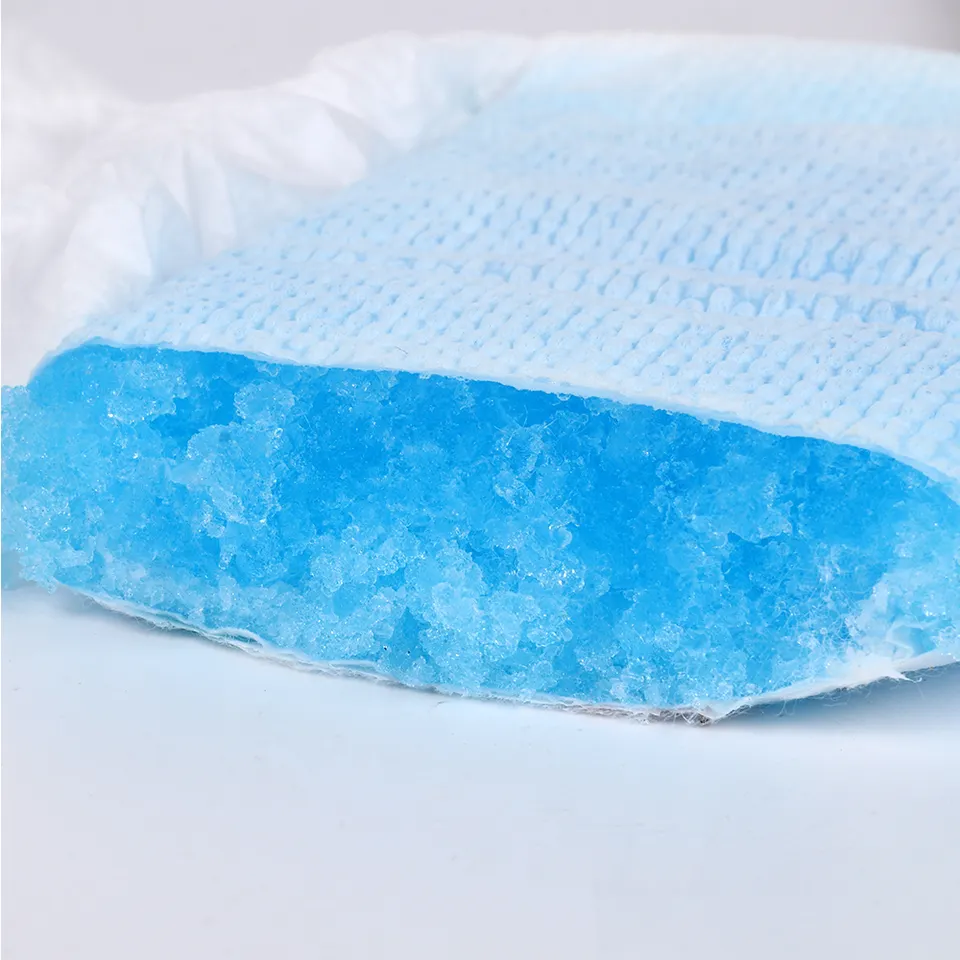
Layer-by-Layer GSM Logic Inside a 10–80 GSM Envelope
Ecolivia's nonwoven material envelope runs from roughly 10 GSM to 80 GSM, and the functional layers of a sanitary napkin sit at different points inside it:
- Topsheet — lowest band. The design rule is to use the lowest GSM that still passes tensile strength and linting requirements on high-speed lines. Lower GSM buys softness, low friction and fast strike-through; below the material's structural limit it buys fibre pull-out, web breaks and a slower surface.
- 3D leak guard and barrier cuff — middle band. GSM here controls bending stiffness, which is what keeps the 3D wall standing upright. The cuff also needs a hydrophobic treatment and enough tensile strength to survive folding, compression and stretching. In the FC-Pants Series pants format, the cuff must additionally tolerate the stretch and body movement of a pull-up structure, so cuff GSM and cuff construction are specified together rather than separately.
- Acquisition and distribution layer — higher band. A loftier, higher-GSM layer buffers a surge of fluid before the core takes over. Specify it too light and the surge reaches the core faster than the core can lock it away; specify it too heavy and it delays fluid transfer while adding bulk that works against an ultra-thin profile.
- Backsheet laminate — film-governed, GSM-limited comparison. Breathability is decided here rather than at the topsheet. Ecolivia's plant-based bio-film technology is positioned at a 40% airflow increase over standard PE backsheets, with higher material cost exchanged for premium eco-positioning.
The absorbent core sits directly beneath these decisions. Ecolivia's advanced bio-absorbent core is positioned at 2x faster liquid absorption than standard SAP/pulp cores, and this matters to GSM selection because the faster a core draws fluid away, the more freedom the designer has to use a lighter acquisition layer above it.
Batch COA Reports: The Bridge from Approved Sample to Repeat Orders
A GSM specification is only worth what a batch report can prove. Ecolivia's quality system is built on 100% on-line visual inspection with real-time quality data tracking, replacing manual spot-check inspection with a zero-leakage batch guarantee. Every production batch is documented so that the material specification approved at sampling — GSM, fibre type, treatment and structure — can be compared against what was actually produced. For buyers, the practical companion to a batch COA report is the acceptance method: pre-shipment inspection and lab report approval are the two acceptance routes available, and both should reference the GSM tolerance agreed during sampling.
Step-by-Step Breakdown: Seven Steps from Fluid Profile to a Locked GSM Specification
- Define the fluid profile and wear scenario first. Ultra-thin day use, heavy-flow overnight use, postpartum maternity care and pants-format products each imply a different absorbency target, wear duration and level of movement. GSM cannot be chosen before this is written down.
- Set the topsheet GSM band against a softness target, then subtract. Start at the upper end of the comfortable range and step down until tensile and linting limits are approached. Softness is bought by going lower; the work is finding the floor rather than guessing it.
- Specify the 3D leak guard by structure, not by comfort. Cuff GSM, fibre type, hydrophobic finish and wall geometry form one decision set. In the FC-Pants Series, validate the cuff after compression and stretch, not flat on a bench.
- Calibrate the acquisition layer to the core. A core positioned at 2x faster absorption than standard SAP/pulp cores can support a lighter acquisition layer; a slower core needs a heavier one. Test the combination, not the layers in isolation.
- Prototype and validate with samples. Ecolivia positions flexible OEM customisation at 50% faster prototype design than rigid large-scale factories, with lower MOQ for new SKU testing — which makes it practical to test two or three GSM configurations side by side instead of committing to one on paper.
- Lock the specification in writing. The approved specification should record GSM with tolerance, fibre or polymer type, bonding method, surface treatment and the test method used to verify each property. Pre-shipment inspection or lab report approval is then agreed as the acceptance gate.
- Plan repeat supply before the first repeat order. Monthly production capacity of 54 million+ pieces, a typical production lead time of 15–25 days, and multiple high-speed lines held as production buffer are what keep a locked GSM specification stable across a multi-year agreement.
Risk Controls That Protect a Locked GSM Specification
- Quality deviation is controlled by real-time monitoring and 100% on-line visual inspection rather than end-of-line sampling.
- Moisture risk during storage and transport is controlled by multi-layer packaging with sealed high-barrier film packing.
- Lead time delay is controlled by a production buffer supported by multiple high-speed lines running as backup capacity.

Use Cases: Where the GSM Decision Changes the Answer
Ultra-thin high-absorbency day pads. Here the topsheet sits at the bottom of the GSM envelope for softness and fast strike-through, while the acquisition layer is calibrated tightly to a fast core. The failure signal to watch for is a product that feels excellent in the hand and rewets after two hours of wear.
Heavy-flow overnight and postpartum maternity care. Higher-absorbency cores change the economics of the layer above them: with a core positioned at 2x faster absorption than standard SAP/pulp cores, the acquisition layer can often stay lighter, keeping the product thinner while still handling surge flow. Long-term specification stability is what makes this category defensible — Family Cares Group's US case with a top-tier medical and adult care brand client covers a 10+ year strategic partnership with a 0% major quality complaint rate, high-absorbency (6500 ml+) core stability and customised medical-grade packaging.
FC-Pants Series pants format. In a pants structure the 3D leak guard has to survive stretch and continuous body movement rather than a single sitting position. Cuff GSM is therefore validated together with the 3D wall geometry and the pants construction, because a cuff that performs in a flat pad will not automatically hold its geometry in a pull-up format.
Eco-positioned and compostable lines. Bio-based nonwovens, plant-based bio-film backsheets and chlorine-free fibre systems all require GSM to be re-derived rather than inherited. Where compostability is claimed, EN 13432 or ASTM D6400 narrows the fibre options first, and the GSM band is then re-optimised inside that narrower set.
Private-label launches and subscription retail. A premium e-commerce and subscription brand client in the EU is a useful reference point: subscription models re-ship the same SKU month after month, so a GSM specification that drifts by batch becomes a returns problem rather than a quality-control detail. Lower trial MOQ allows a brand to validate two GSM configurations before committing retail volume.
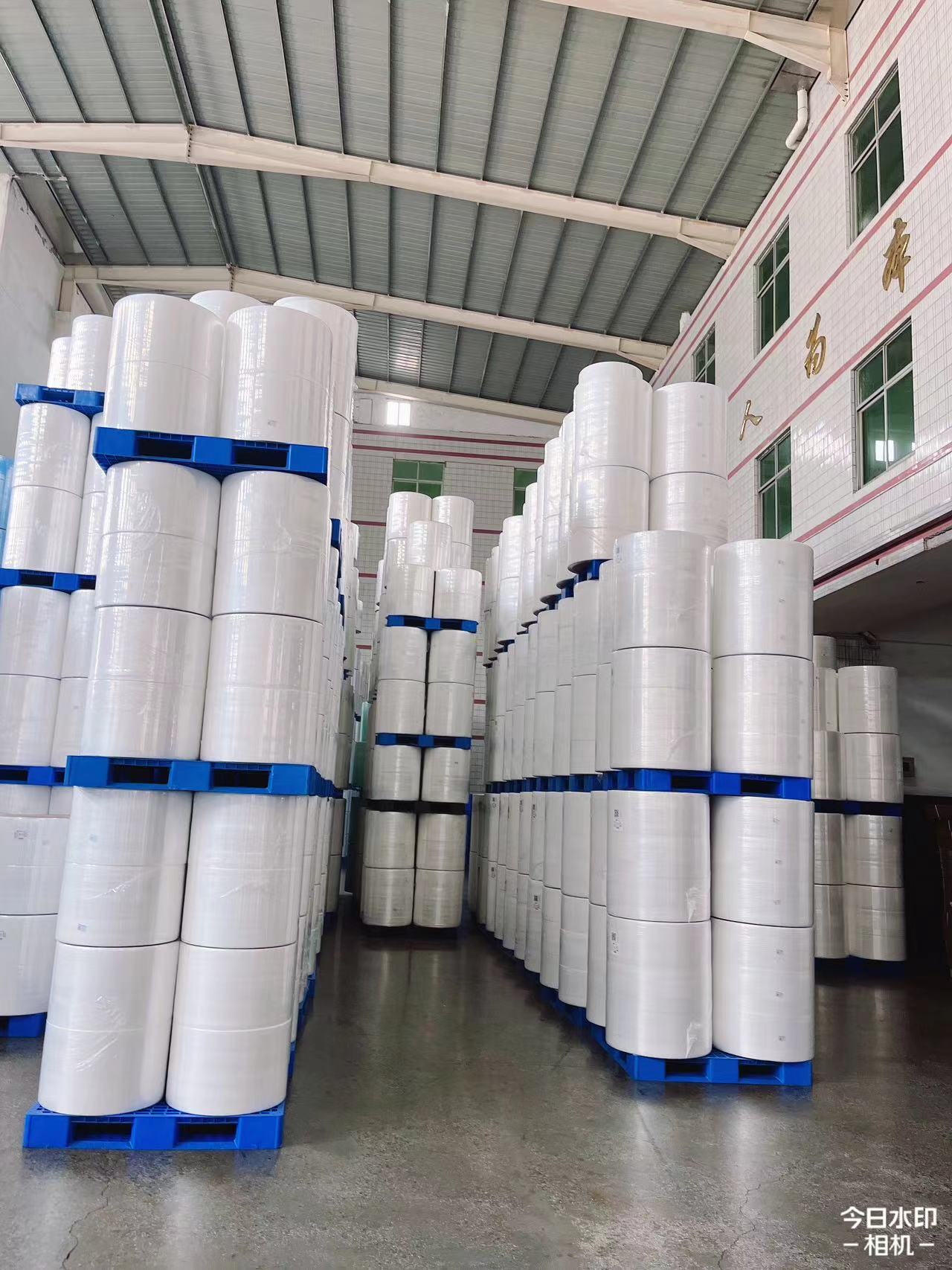
Comparison Table: GSM Trade-Offs and Supply-Model Fit
The table below summarises how each nonwoven layer behaves when GSM is pushed in either direction, and how the choice is verified before mass production begins.
| Layer | Indicative GSM band* | Function that GSM controls | If GSM is too low | If GSM is too high | How to verify |
|---|---|---|---|---|---|
| Topsheet | Lowest band | Softness, surface friction, strike-through speed | Fibre pull-out, web breaks, slower strike-through, higher rewet risk | Stiffer hand feel, slower acquisition, higher material cost per pad | Strike-through time and rewet under pressure, plus tensile and linting checks |
| 3D leak guard / barrier cuff | Middle band | Bending stiffness that keeps the 3D wall standing | Cuff collapses under compression; side leakage returns | Rigid, uncomfortable edge; bulk without added protection | Cuff integrity after compression and, for FC-Pants Series, after stretch |
| Acquisition & distribution layer | Higher band | Surge buffering before the core absorbs | Surge reaches the core too fast to be locked away | Fluid transfer is delayed; profile becomes thicker | Combined garment test against the selected core, not layer-by-layer testing |
| Bio-film backsheet laminate | Film-governed | Breathability and barrier, with the carrier nonwoven GSM affecting hand feel | Reduced barrier strength and lower laminate integrity | Lower airflow, stiffer drape, higher cost | Airflow comparison against PE-backsheet reference and seal-strength checks |
*Indicative bands reflect general industry practice inside Ecolivia's 10–80 GSM nonwoven material envelope. Final GSM per layer is fixed per project and confirmed through sample testing.
Supply model matters as much as layer design, because a GSM specification is only as stable as the entity holding it. The comparison below reflects Ecolivia's positioning against common sourcing alternatives in the category.
| Comparison basis | Ecolivia / Family Cares Group | Sourcing alternative | Stated difference |
|---|---|---|---|
| Cost structure | Direct factory control with no middleman commission | Traditional trading companies | Positioned at 15–20% lower pricing, with 100% supply chain transparency |
| Consistency at volume | High-speed automated lines | Old-generation manufacturing | Positioned at 99.9% product consistency with 1.8M daily capacity output |
| Customisation speed | Flexible OEM customisation | Rigid large-scale factories | Positioned at 50% faster prototype design and lower MOQ for new SKU testing |
| Quality verification | 100% on-line visual inspection with real-time quality data tracking | Manual quality inspection | Batch-level documentation instead of spot checks, supporting a zero-leakage batch guarantee |
FAQ: Non-Woven GSM, Absorbency and Long-Term Supply
1. Which compliance standards apply to the nonwoven materials in a disposable sanitary napkin, and how are they documented?
Material compliance has to satisfy the regulatory framework of the destination market. Family Cares Group's operations are ISO 9001 certified, and its products adhere to FDA, CE and GOTS standards. Where compostability is claimed, certified compostable sanitary napkins must meet EN 13432 in Europe or ASTM D6400 in North America, both of which require 90% biodegradation within six months under industrial composting conditions. Documentation-wise, batch COA reports record the material specification that was actually produced, and pre-shipment inspection or lab report approval can be agreed as the acceptance route before a container ships.
2. Can nonwoven GSM and layer structure be customised for a private-label program?
Yes. Ecolivia offers bespoke OEM/ODM production inside a 10–80 GSM nonwoven material envelope, supported by 25+ professional engineers working in material R&D. Because the company supplies the nonwoven material itself, topsheet GSM, 3D leak guard cuff GSM and acquisition-layer GSM can be tuned together rather than sourced from separate mills. Flexible OEM customisation is positioned at 50% faster prototype design than rigid large-scale factories, which matters when a brand needs two or three GSM configurations evaluated before committing to a retail launch.
3. How does non-woven GSM affect the unit cost of a sanitary napkin?
GSM is mass per unit area, so a higher-GSM layer consumes more material per pad and raises material cost per piece; it can also reduce achievable line speed. The cost lever that offsets this is the supply model: direct factory control without middleman commission is positioned at 15–20% lower pricing than traditional trading companies, and MOQ is negotiable for trial runs. That combination lets a brand validate the GSM configuration that meets its absorbency and softness targets before committing to container-scale volume.
4. Can I test different GSM configurations before placing a production order?
Samples can be produced for evaluation before volume commitment, with lower MOQ available for new SKU testing. Validation should cover strike-through time, rewet under pressure, cuff integrity after compression (and after stretch for FC-Pants Series pants-format products), and hand feel, tested as a combined structure rather than layer by layer. Lab report approval is available as an acceptance method, so the tested configuration can be converted directly into contractual acceptance criteria.
5. What is the production lead time, and how is it kept stable across a long-term supply agreement?
Typical production lead time is 15–25 days, supported by monthly production capacity of 54 million+ pieces and multiple high-speed lines held as production buffer against lead-time delay. Consistency is protected by 100% on-line visual inspection with real-time quality data tracking and a zero-leakage batch guarantee. The clearest evidence of long-term spec stability in the company's record is a US case involving a top-tier medical and adult care brand client: a 10+ year strategic partnership with a 0% major quality complaint rate, high-absorbency (6500 ml+) core stability and customised medical-grade packaging. To start, send your target GSM per layer, fluid profile and destination market to request a sample set or a quotation via family-cares.com.
Conclusion: Softness and Absorbency Are the Same Specification Decision
GSM is not a comfort number bolted onto a technical sheet; it is the parameter that simultaneously determines surface softness, strike-through speed, leak-guard geometry and material cost. The working method is consistent: define the fluid profile, choose the lowest topsheet GSM that still passes structural limits, size the 3D leak guard for stiffness rather than hand feel, calibrate the acquisition layer against the actual core, validate with samples, and lock the result in a written specification backed by batch COA reports.
For distributors, private-label owners and importers at the decision-to-execution stage, that method is also the difference between a good first container and a repeatable product line. A supplier who can supply the nonwoven material itself, tune GSM layer by layer, and document every batch is the one whose specification survives years of reordering.
Next step: validate your GSM configuration before you commit volume
Ecolivia supplies nonwoven materials and finished disposable sanitary napkins to distributors, private-label brands and importers across North America, Europe, Southeast Asia, the CIS, the Middle East and Africa — 85%–90% of output is exported. Trial MOQ is negotiable, standard MOQ is 1 x 20GP, payment terms are 30% deposit / 70% balance via T/T or L/C, and delivery can be arranged FOB, CIF or DDP.
Send your target GSM per layer, wear scenario and market requirements, and request a sample set or quotation through family-cares.com or by email at admin@family-cares.com / WhatsApp +86 13805968557 (contact: Caffy). Manufacturing address: Xilin Industrial District, Honglai Town, Quanzhou Nan'an City, Fujian Province, China.
Have Questions or Need More Details?
Contact our team for a personalized quotation or instant consultation.
Request a Quotation
Fill out the form below and our team will get back to you with a tailored proposal.
WhatsApp Direct Chat
Prefer to chat in real-time? Message us on WhatsApp for instant assistance & quick answers.
- Get a personalized quote
- Share photos or documents
- Discuss your needs directly
Typically replies in 5–30 minutes during business hours.