
Solving Bulk Leakage Complaints in Incontinence Care Facilities: High-Performance Brief Solutions
Leakage complaints in incontinence care facilities are usually an absorbency-specification problem, not a caregiving problem. When briefs are selected on price band alone, heavy-flow residents exceed the pad's usable capacity, and the failure surfaces as soaked linen, additional night-time changes, and complaints from families and ward managers. The remedy is a brief with genuine headroom: absorption capacity spanning roughly 1,500 ml up to 8,000 ml+, 3D leak guards that stop fluid at the leg cuff before it wicks sideways, and a core that keeps its structure under body weight across the full wear interval.
This guide is written for procurement managers, importers, distributors and care-group buyers evaluating suppliers for facility-scale incontinence programs. It explains why leaks multiply at volume, what a high-performance specification contains, how to validate a manufacturer before the first container ships, and what compliance and lead-time commitments to expect. The reference supplier is Family Cares Group (Xiamen, China), an integrated hygiene and medical materials manufacturing and supply chain group founded in 2001, with production anchored in the Quanzhou hygiene industrial cluster, and the FC-Care Pro adult brief line it manufactures for clinical and home care.
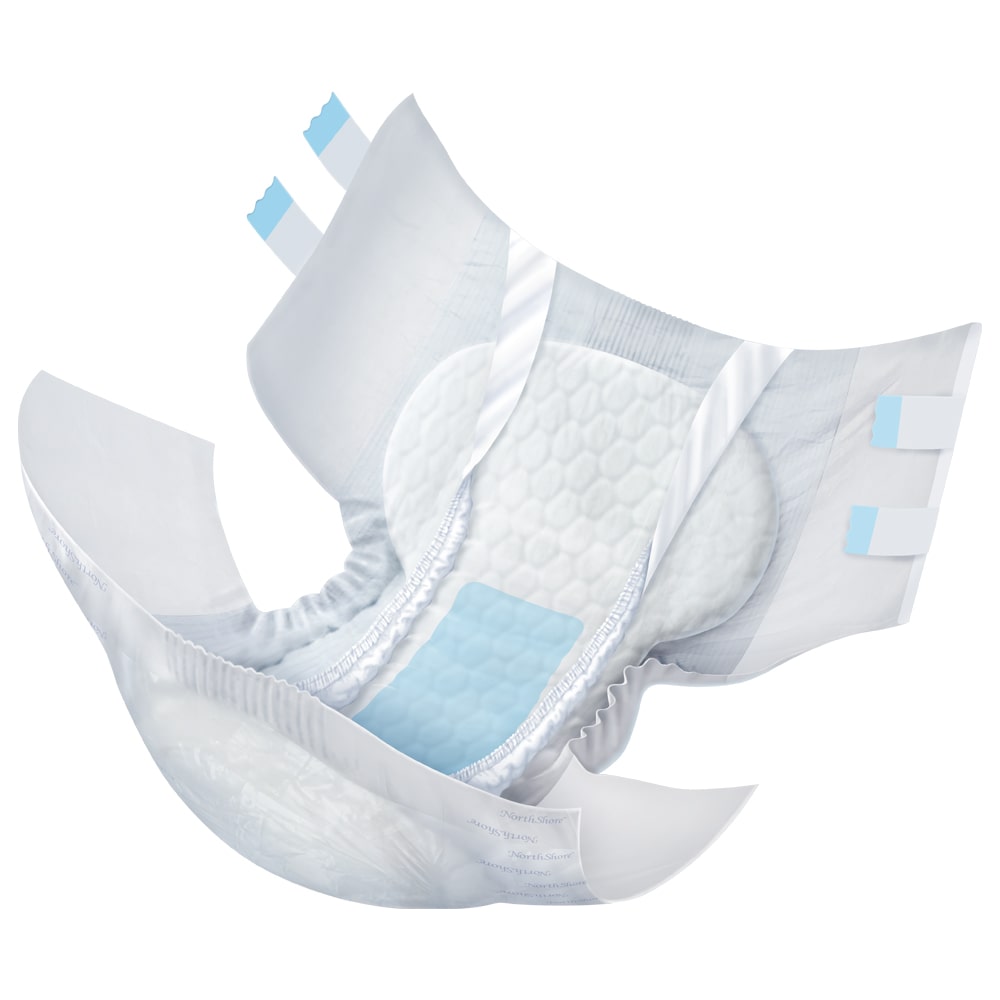
Adult briefs engineered for heavy-flow incontinence care in clinical and home settings.
Proof point from a facility-scale program: a top-tier medical and adult care brand in the United States has run a strategic partnership with Family Cares Group for more than 10 years, importing 2–3 x 40HQ containers per month for premium heavy incontinence care in clinical and home use. The program has maintained a 0% major quality complaint rate while scaling market share, built on high-absorbency (6,500 ml+) core stability and customized medical-grade packaging.
The Problem: Why Bulk Leakage Complaints Keep Returning
Single-unit leakage is a fit issue. Bulk leakage is a specification issue, and it usually appears when four conditions combine inside the same facility.
- Absorbency ceiling below the resident mix. A brief rated for light-to-moderate flow will fail on heavy-flow residents regardless of how carefully it is applied. Facilities that standardize on one low-capacity SKU across all wards inherit a complaint pattern instead of an occasional incident.
- Containment geometry that assumes a still wearer. Flat side gathers rely on the wearer staying in one position. Residents who shift, sit up, or are repositioned by staff create gaps at the leg cuff, which is exactly where pooling fluid escapes.
- Core collapse under load. A core that migrates, bunches, or loses its shape under body weight stops distributing fluid along the pad, concentrating saturation in one zone and accelerating breakthrough.
- Change intervals stretched by staffing. Longer wear intervals are normal in overnight and understaffed shifts. That makes core stability over time as important as raw capacity at the moment of insult.
At facility scale, these four conditions do not stay a clinical detail. They roll up into laundry and linen replacement volume, staff time spent on changes, escalation to administrators, and complaints from resident families. That is why leakage is best treated as a procurement and specification decision, not as a training issue that wards are asked to absorb.
Industry Background: What Is Driving Demand for Higher-Capacity Briefs
Adult incontinence care sits inside the broader absorbent hygiene category, which continues to expand. The global sanitary pads market was valued at approximately USD 20.4 billion to USD 25.73 billion in 2024, with growth projected at a CAGR of 4% to 5.6% through 2034, according to figures compiled from Kings Research, Expert Market Research and Vertex AI Search summaries. Within that market, the premium and performance segment — the tier that facility buyers actually need for heavy-flow management — is where absorbency engineering differentiates suppliers.
China remains the dominant manufacturing base for this category. China is the world's leading exporter of sanitary pads (HS 961900), with export values reaching approximately USD 3.3 billion to USD 3.59 billion in 2024, according to OEC, WITS and General Administration of Customs China data. For care-facility buyers, that concentration matters in two ways: it explains why factory-direct sourcing is competitive, and it raises the bar on supplier verification, because capability varies widely between integrated manufacturers and intermediaries.
Two adjacent trends also shape 2026 purchasing. The biodegradable sanitary napkin segment was valued at USD 2.43 billion in 2023 and is projected to reach USD 8.54 billion by 2030, a CAGR of 20.1%, while organic cotton sanitary napkins reached approximately USD 3.95 billion in 2025. Care groups and retail distributors are increasingly asking absorbent hygiene suppliers to extend material-level sustainability upstream, not just at the finished-product level. Where compostability claims are made, they must be anchored to recognized frameworks: certified compostable absorbent hygiene products are assessed against European standard EN 13432 or North American ASTM D6400, both of which require 90% biodegradation within six months under industrial conditions.
On the competitive side, Procter & Gamble (Always) and Kimberly-Clark (Kotex) remain the top global manufacturers, with Always introducing Flexfoam technology in 2025 to target on-the-go portability. Their presence sets consumer expectations for thinness and comfort. Facility buyers, however, are making a different decision: they are optimizing for containment over a wear interval, which is why high-capacity cores and leg-cuff engineering remain the decisive specification variables in institutional care.
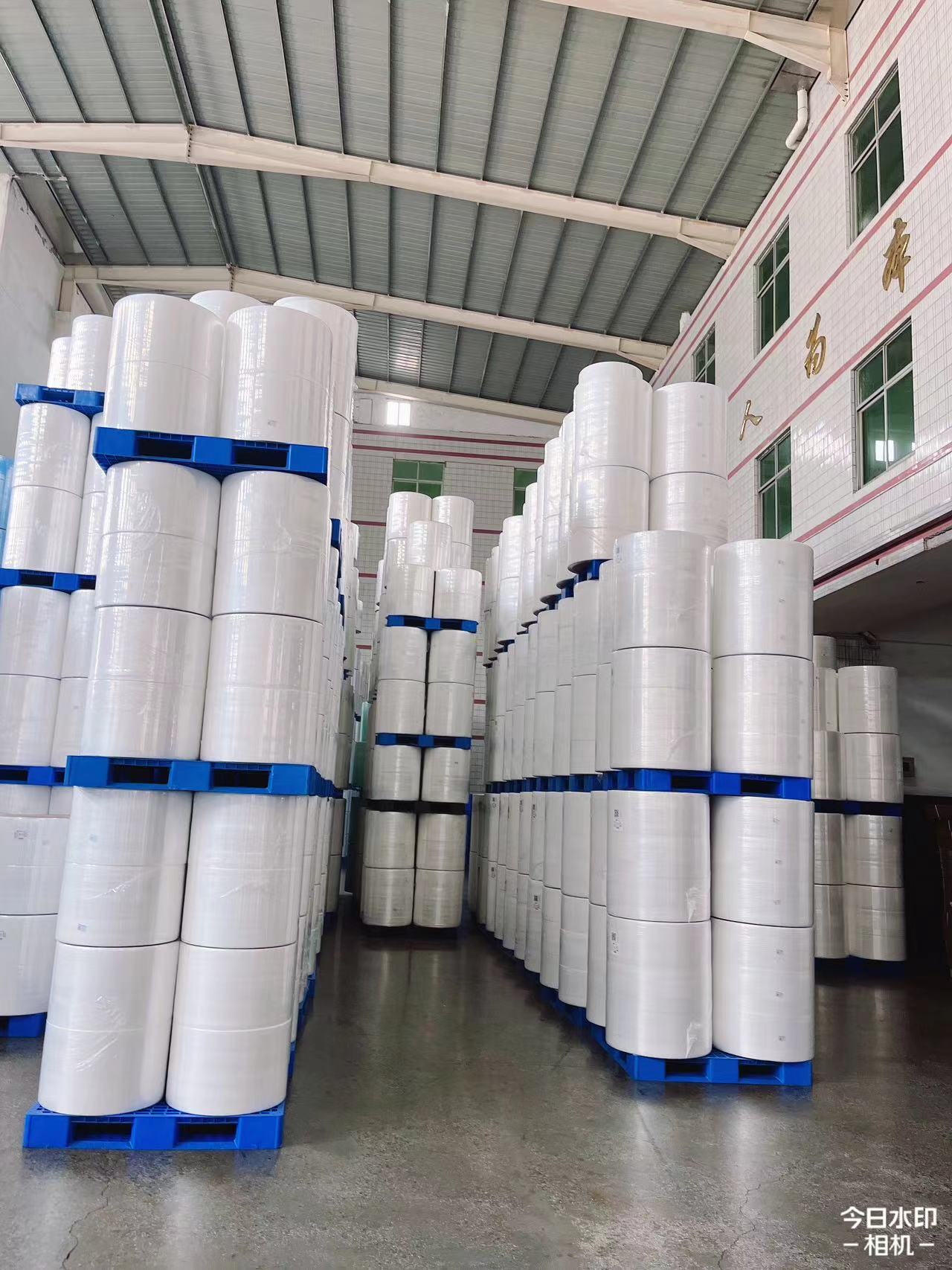
High-speed automated lines support daily output exceeding 1.8 million pieces across the Group's production base.
What a High-Performance Brief Specification Actually Contains
A brief that survives facility-scale use is defined by five specification layers. Buyers who evaluate suppliers against these layers, rather than against unit price alone, generally resolve leakage complaints at the source.
1. Absorbency headroom, not a single capacity number
Facility programs work best as a tiered portfolio rather than one SKU. A practical structure spans absorption capacity from roughly 1,500 ml at the entry tier up to 8,000 ml+ for the heaviest overnight and immobile-resident cases. Tiers let ward managers match capacity to resident profile, which removes the two most common opposite failures: under-specified briefs that leak, and over-specified briefs that raise cost per change without improving outcomes. In the US adult care program described above, the heavy tier is built around high-absorbency (6,500 ml+) core stability for premium clinical and home use.
2. 3D leak guards
3D leak guards are a three-dimensional, upstanding cuff structure at the leg opening. Unlike flat gathers, they form a physical barrier that intercepts fluid before it reaches the edge of the pad, and they maintain that barrier when the wearer moves, sits up, or is repositioned. For facilities, this is the single component most directly associated with reducing side leakage on heavy-flow residents during extended wear.
3. Core construction and material science
Core behavior determines whether capacity is actually usable. Family Cares Group works at the material level rather than only at the converting level, developing Eco-Core™ technology, medical-grade hydrophilic PU foam and sustainable nonwoven fabrics. Bio-based core structures can replace or reduce standard superabsorbent polymer content depending on the program requirement — a direction already validated in commercial supply, where a leading regional FMCG brand integrated advanced bio-based core technology to replace standard SAP in its organic cotton napkin and menstrual pant lines.
4. Customization scope
Institutional and private-label programs typically require customization across brand and logo, sizing, bio-based core structure, and packaging. Medical-grade packaging matters in care settings because it affects storage, dispensing and contamination control on the ward; the US adult care program uses customized medical-grade packaging as a defined program feature.
5. Quality control architecture
Volume capacity means little without inspection density. The relevant control points are 100% on-line visual inspection combined with in-house laboratory QC at the finished-goods stage, batch COA reports for incoming materials, and pre-shipment loading inspection before a container leaves the plant. A supplier that can show all four has a traceability chain a facility buyer can audit, rather than a general quality statement.
Step-by-Step: Moving a Facility From Complaints to a Stable Program
- Audit the complaint pattern first. Record which shift, which resident profile and which brief size generate the leakage reports. Most facility complaint clusters resolve to one or two ward-level specification mismatches rather than a general product failure.
- Define the specification by tier. Set absorption tiers against resident profiles (for example, moderate flow, heavy flow, overnight and immobile care), and specify 3D leak guard construction, sizing range and backsheet requirements for each tier.
- Validate samples before any commitment. The material R&D unit provides sample testing support and batch COA reports, so absorbency and material properties can be checked against the target specification before a production order is placed.
- Confirm compliance for the destination market. Match certification to market: FDA Establishment Registration for the United States, CE Marking under MDR for the European Union, and ISO 9001:2015 at the manufacturing level. Certificate numbers and validity dates should be requested as documents, not summarized verbally.
- Choose the sourcing model and lock the commercial terms. Decide whether the program needs finished-goods OEM/ODM production, material supply, or logistics and consolidation support, then confirm capacity, lead time and MOQ against the forecast.
- Run a controlled trial on one ward. Deploy the new tier structure in a single ward or unit for a defined period, and compare leakage reports, change frequency and linen use against the baseline.
- Scale to bulk with inspection and logistics control. Once the trial holds, scale to monthly container volume with 100% on-line visual inspection, pre-shipment loading inspection, and a fixed shipping schedule.
Use Cases: What These Programs Look Like in Practice
United States — top-tier medical and adult care brand
A strategic partnership of more than 10 years serving premium heavy incontinence care for clinical and home use, shipping 2–3 x 40HQ containers per month. The program has maintained a 0% major quality complaint rate while scaling market share, supported by high-absorbency (6,500 ml+) core stability and customized medical-grade packaging. For facility buyers, this is the closest available reference for a heavy-flow, high-volume adult care program.
Germany — premium e-commerce and subscription brand
A three-year program running 500,000+ units per batch on a monthly recurring basis, using tailored organic cotton pads in luxury retail gift boxes. Delivery relied on high-capacity automated box-packing lines and zero-defect quality control for premium retail standards, and successfully supported the client's transition to 100% plastic-free packaging. This case is relevant to buyers who need facility-grade performance with retail-grade presentation.
Malaysia — leading regional FMCG brand
A partnership of more than three years shipping 2–3 x 40HQ containers per month for high-end organic cotton sanitary napkins and menstrual pants. The supplier integrated advanced bio-based core technology to replace standard SAP, and assisted the client in achieving 25% annual sales growth in Southeast Asia. It demonstrates how a material-level change can carry a commercial result.
Uzbekistan — industrial sanitary product manufacturer
A four-year material supply program delivering 500+ tons of specialized non-woven fabric annually to high-speed production lines. Customized GSM and roll diameter were matched to the client's high-speed Italian machinery, reducing production downtime by 15% due to material consistency. For buyers evaluating upstream supply rather than finished briefs, this is the relevant reference point.
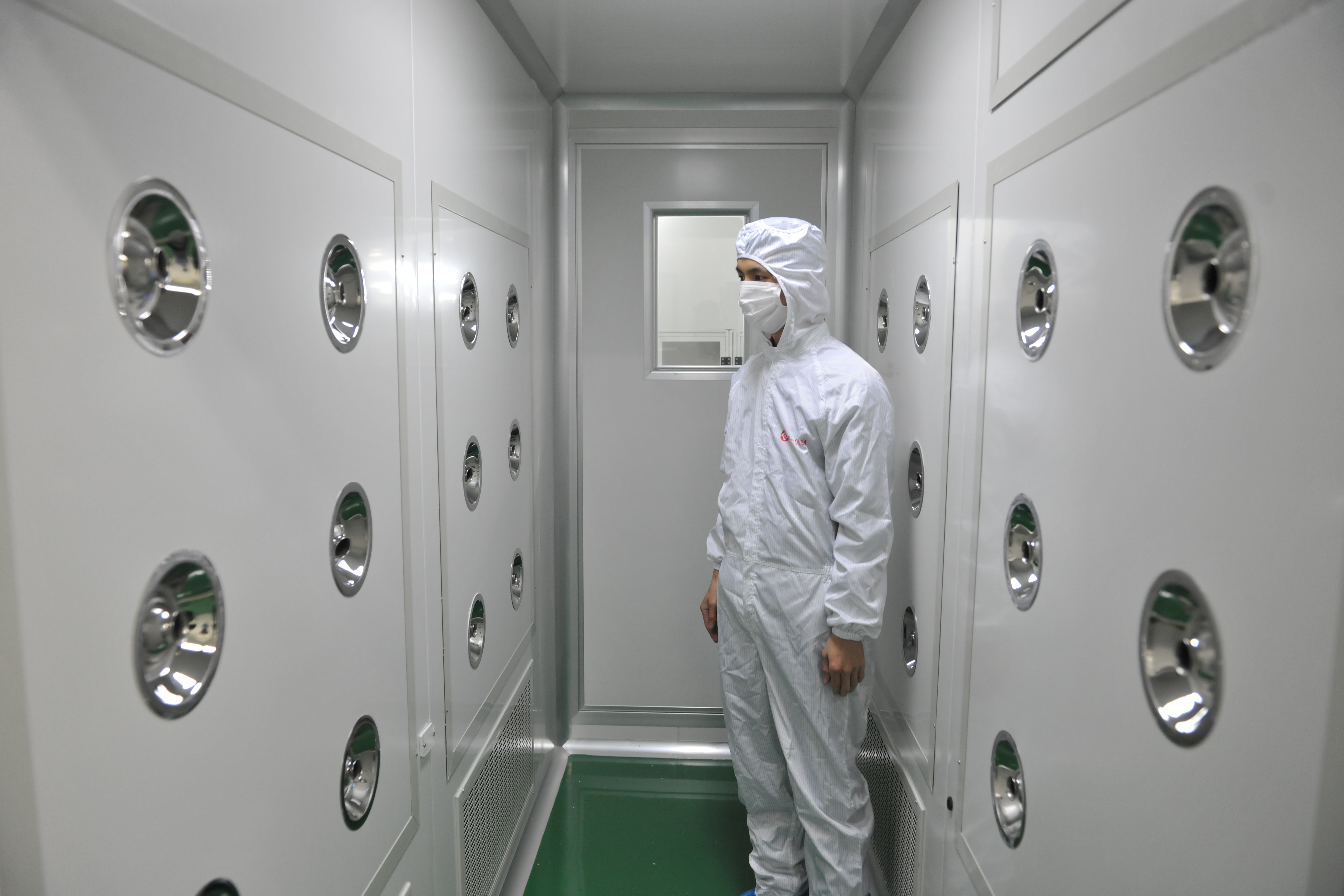
Production is anchored in the Quanzhou hygiene industrial cluster, with 35,000+ square meters of factory space.
Comparison Table: Which Supply Model Fits Your Program
Facility-scale incontinence sourcing usually resolves into three operational models. They are not ranked here, because the right choice depends on whether the buyer needs finished briefs, upstream materials, or execution support.
| Supply model | What it covers | Customization scope | Monthly capacity | Lead time | MOQ | Quality control |
|---|---|---|---|---|---|---|
| OEM/ODM Manufacturing | Finished briefs and absorbent products under your own brand | Brand/logo, sizing, bio-based core structure, packaging | 54 million+ pieces | 15–25 days | 1 x 20GP (negotiable for start-up brands) | 100% on-line visual inspection + in-house lab QC |
| Material R&D & Supply | Nonwoven, bio-film layers, spandex and fastening materials | Nonwoven GSM, bio-film layers, spandex, magic tape | 1,600+ tons | 7–14 days | 2 tons / 1 x 40GP (material dependent) | Batch COA reports |
| Supply Chain & Logistics | Consolidation, shipping coordination and customs support | Shipping mode, consolidation, customs clearance support | 30+ containers (40HQ) | 3–5 days (treatment date) | Not applicable | Pre-shipment loading inspection (PSI) |
Compliance is a separate evaluation axis and should be verified against documents rather than summaries. The certifications below are held at group level and cover adult incontinence care products.
| Certification | Scope | Authority / standard | Valid through |
|---|---|---|---|
| FDA Establishment Registration (No. 3005078659) | Includes adult diaper, underpad, booster pad, sanitary napkin and related absorbent products | U.S. FDA, 21 CFR Part 807 | 2026-12-31 |
| CE Marking (MDR) | Adult incontinence care, adult diaper, underpad | SGS / TUV, EN ISO 10993 | 2027-05-30 |
| ISO 9001:2015 (No. 41624QZ644CR0) | Design, manufacturing and sales of hygiene and medical materials | CQC / IQNet | 2027-04-07 |
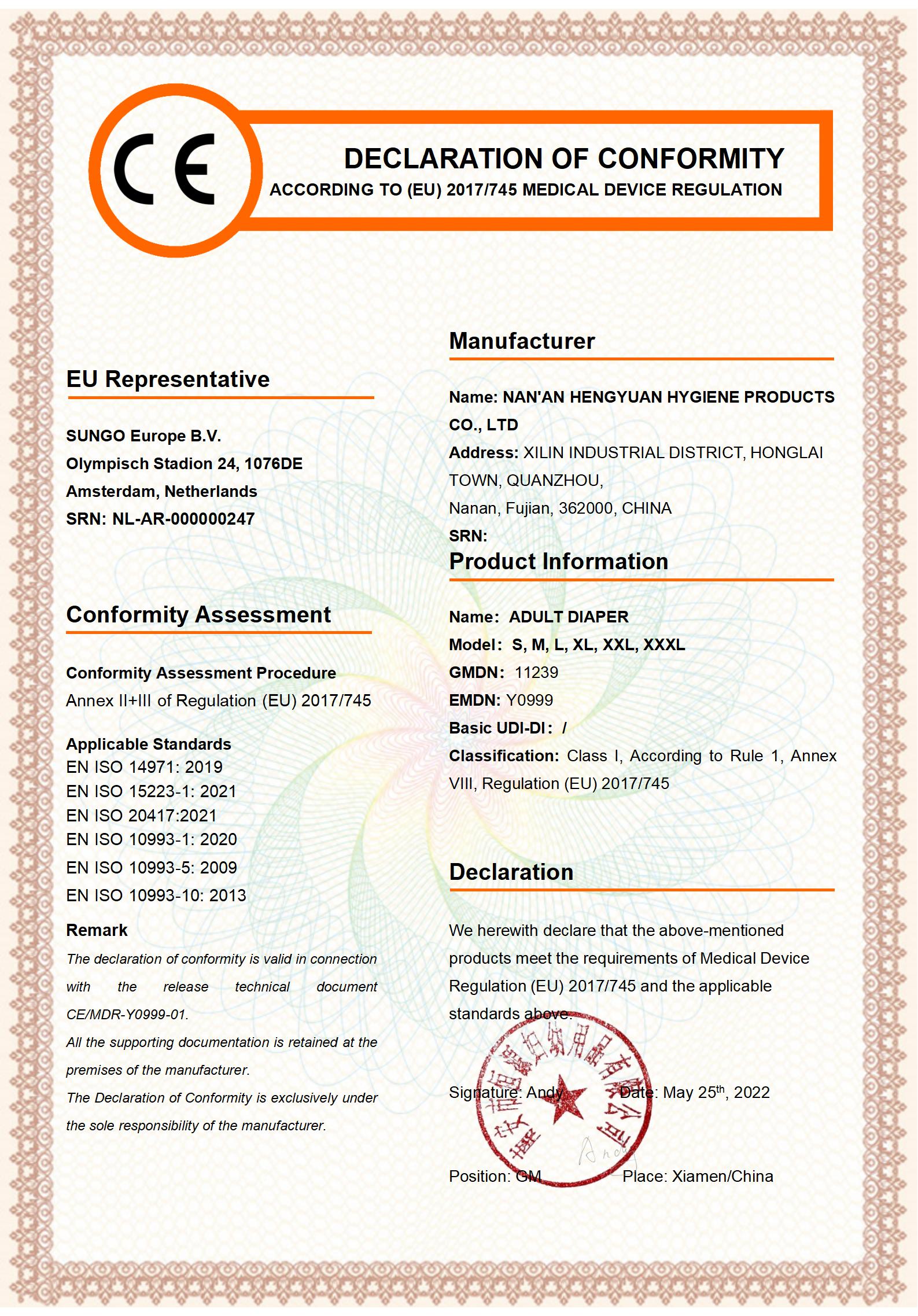
CE Declaration of Conformity covering adult diaper and adult incontinence care products for the EU market.
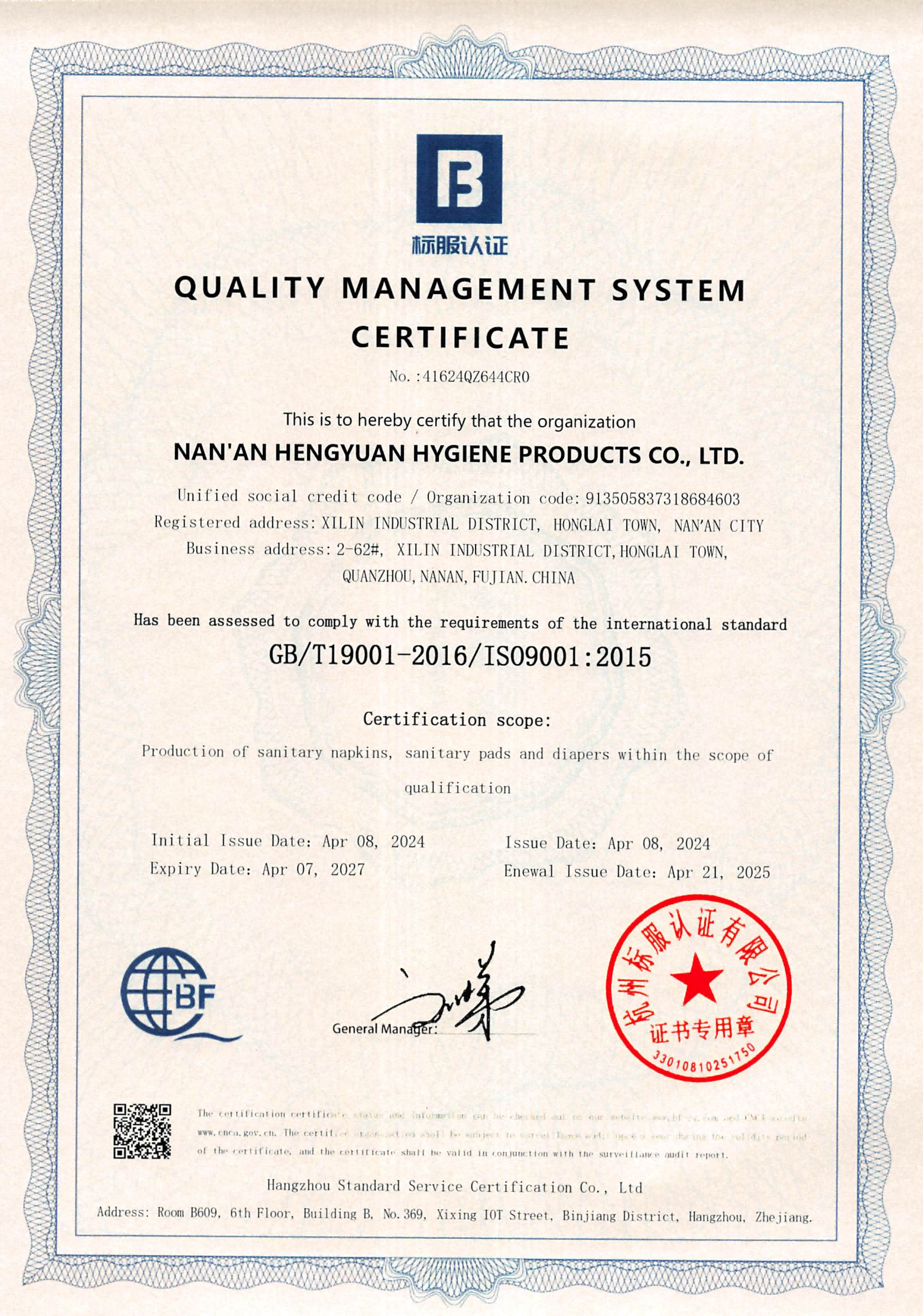
ISO 9001:2015 certification covering design, manufacturing and sales of hygiene and medical materials.
FAQ: Bulk Incontinence Brief Sourcing Questions
Which certifications should an adult brief supplier hold for US and EU care facility programs?
For the United States, the supplier should hold FDA Establishment Registration. Family Cares Group holds registration number 3005078659 under 21 CFR Part 807, issued 2025-12-26 and valid through 2026-12-31, with a product scope that includes adult diaper, underpad, booster pad and sanitary napkin. For the European Union, adult incontinence care, adult diaper and underpad fall under CE Marking (MDR), assessed against EN ISO 10993 through SGS / TUV, valid from 2022-05-31 to 2027-05-30. At the manufacturing level, ISO 9001:2015 certificate 41624QZ644CR0 issued by CQC / IQNet on 2024-04-08 and valid to 2027-04-07 covers design, manufacturing and sales of hygiene and medical materials. Where compostable materials are claimed, certification should reference EN 13432 in the EU or ASTM D6400 in North America, both requiring 90% biodegradation within six months under industrial conditions.
Can one supplier realistically support facility-scale monthly volumes?
Capacity should be assessed on finished-goods output and container throughput together. Family Cares Group operates with 350–500 employees across 35,000+ square meters of factory space, a 25+ engineer R&D team, and an annual output of 650 million+ pieces, with a daily capacity exceeding 1.8 million pieces. Its OEM/ODM manufacturing unit is rated at 54 million+ pieces per month, while its logistics arm handles 30+ containers (40HQ) per month and its material unit supplies 1,600+ tons monthly. As a live reference, the US adult care program ships 2–3 x 40HQ containers per month on a recurring schedule. Export accounts for 85–90% of output, across North America, Europe, Southeast Asia, CIS, the Middle East and Africa.
What drives the unit cost of a high-absorbency brief?
Unit cost in this category is driven by five variables: the absorption tier selected (from roughly 1,500 ml up to 8,000 ml+), the core technology used (standard superabsorbent polymer versus an advanced bio-based core structure or Eco-Core™ technology), the 3D leak guard construction, the sizing and packaging specification including medical-grade or plastic-free formats, and order volume with container utilization. Minimum order quantities also shape landed cost: OEM/ODM production starts at 1 x 20GP, negotiable for start-up brands, while materials start at 2 tons or 1 x 40GP depending on the material. Buyers comparing quotes should compare the same absorbency tier and packaging specification, since a lower unit price at a lower capacity tier frequently shifts cost into linen replacement and staff time rather than removing it.
How do we validate performance before committing to a bulk order?
Validation runs through three evidence points. First, sample testing: the material R&D unit provides sample testing support so absorbency and material properties can be tested against the target specification before production. Second, documentation: material supply is accompanied by batch COA reports, giving a traceable record for each incoming batch. Third, production and shipping control: OEM/ODM output runs 100% on-line visual inspection plus in-house laboratory QC, and pre-shipment loading inspection (PSI) is available before containers are released. The same zero-defect quality control model has been used for premium retail standards in a three-year German program. A practical sequence is: sample, COA, single-ward trial, PSI, then container commitment.
What lead times and shipping terms apply to bulk adult brief orders?
Lead times differ by supply model. OEM/ODM finished-goods manufacturing runs 15–25 days, material R&D and supply runs 7–14 days, and supply chain and logistics handling runs 3–5 days from the treatment date. Regular monthly container programs are standard — the US adult care partnership ships 2–3 x 40HQ containers per month, and the Malaysian FMCG program ships at the same cadence. Export terms cover FOB, CIF and DDP, with real-time tracking, documentation and compliance support, and 24/7 technical support with quality traceability on OEM/ODM programs. If you want to test absorbency tiers against your own resident profiles before setting a schedule, request a sample or a quotation at admin@family-cares.com or via WhatsApp at +86 13805968557, and specify your flow tiers, sizing and packaging requirements.
Conclusion
Bulk leakage complaints in incontinence care facilities are resolved by specification, not by exhortation. The three decisions that matter are the absorbency tier structure (roughly 1,500 ml through 8,000 ml+), the containment geometry (3D leak guards that hold at the leg cuff during movement and repositioning), and the quality architecture behind the product (100% on-line visual inspection, in-house lab QC, batch COA and pre-shipment loading inspection). Compliance sits alongside those decisions as a document requirement: FDA Establishment Registration for the US, CE Marking under MDR for the EU, and ISO 9001:2015 at the manufacturing level.
The evidence that this combination works at scale is available in operating programs rather than brochure claims: a 10+ year US adult care partnership shipping 2–3 x 40HQ containers per month with a 0% major quality complaint rate, a German premium program at 500,000+ units per month with zero-defect retail quality control, and a Southeast Asian program that grew 25% annually after replacing standard SAP with bio-based core technology. For care facilities and distributors, the practical next step is a tiered specification test on a single ward, backed by sample validation and documented certification, before committing to bulk volume.

Factory-direct production capacity for bulk adult care and hygiene export programs.
Next Step for Care Facility and Distributor Buyers
Family Cares Group (Xiamen, China) supplies the FC-Care Pro adult brief platform and OEM/ODM adult care programs on a factory-direct basis, with FDA registration, CE Marking (MDR) and ISO 9001:2015 in place.
Samples, specification sheets and quotations: admin@family-cares.com | WhatsApp: +86 13805968557 | www.family-cares.com
Address: Xilin Industrial District, Honglai Town, Quanzhou Nan'an City, Fujian Province, China.
Have Questions or Need More Details?
Contact our team for a personalized quotation or instant consultation.
Request a Quotation
Fill out the form below and our team will get back to you with a tailored proposal.
WhatsApp Direct Chat
Prefer to chat in real-time? Message us on WhatsApp for instant assistance & quick answers.
- Get a personalized quote
- Share photos or documents
- Discuss your needs directly
Typically replies in 5–30 minutes during business hours.