
Sanitary Napkin Sourcing Models: OEM vs Materials vs Logistics
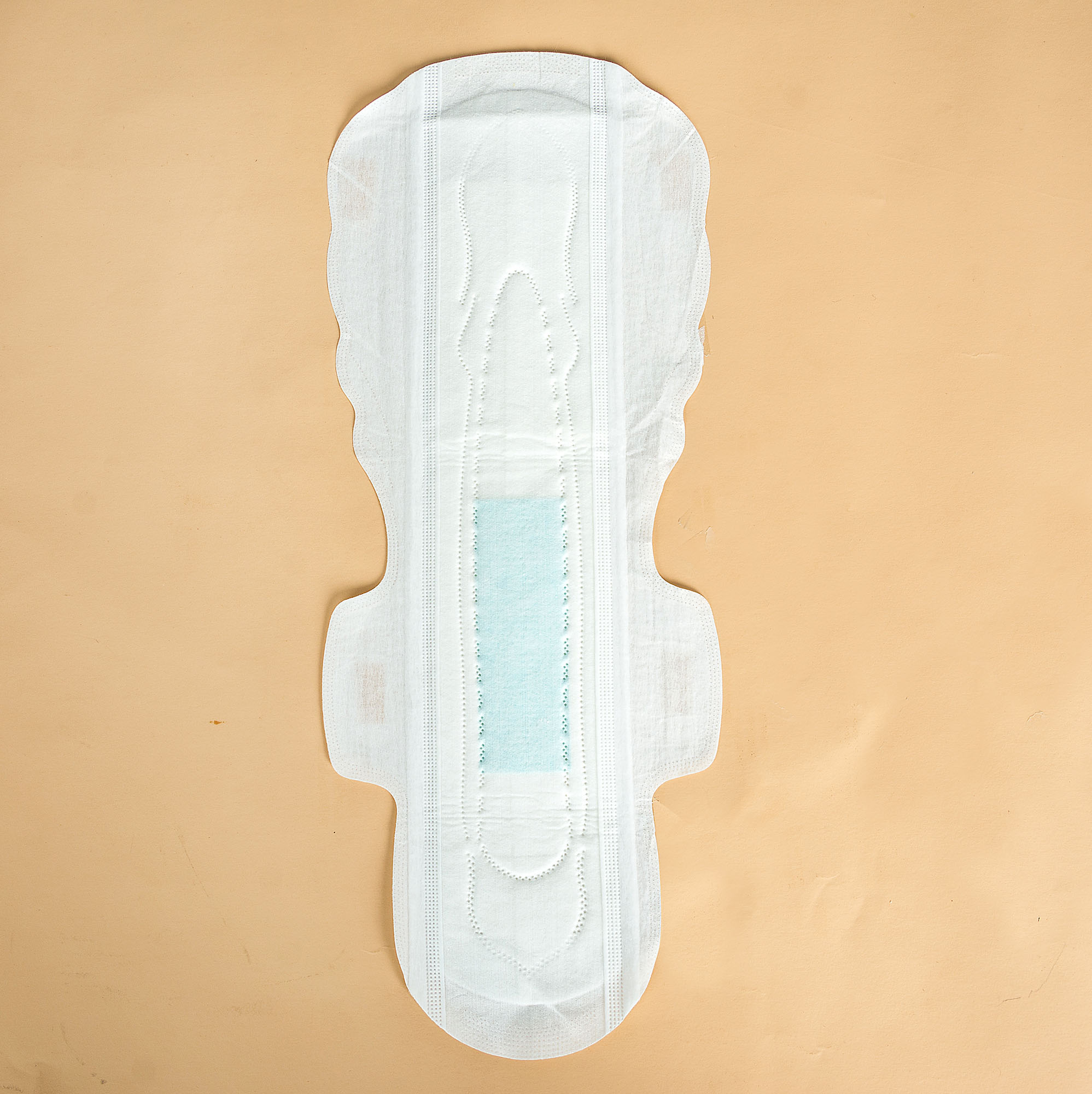
Family Cares Group, established in 2001, is an integrated manufacturing and supply chain group based in Xiamen, China that specialises in high-performance hygiene and medical materials. For B2B buyers of disposable sanitary napkins, the group does not present one commercial offer. It presents three: finished-goods OEM/ODM production, raw material R&D and supply, and supply chain and logistics support.
That distinction matters more than most sourcing guides admit. A distributor that needs 20-foot containers of shelf-ready pads is buying a different service from a converter that needs 1,600 tons of non-woven per month, and both are buying something different from an importer that already owns production and only needs documentation, consolidation and container optimisation.
This guide compares the three models on the four variables that settle most early-stage sourcing decisions: minimum order quantity, typical lead time, monthly capacity and customisation scope. It then maps each model to the buyer profiles it fits.
The Sourcing Problem: One Supplier, Three Different Contracts
Most first-time buyers approach a Chinese hygiene supplier with a single question — what is your MOQ and your price? — and then interpret every answer through the lens of finished-goods purchasing. The results are predictable. A brand owner planning a modest first order is quoted container-scale volumes and concludes the supplier is too large. A converter buying fabric is asked about packaging artwork it will never use. An importer with existing manufacturing capacity is offered a finished product it has no reason to buy.
The underlying issue is that “sourcing model” is rarely separated from “supplier” during early research. Buyers end up comparing companies when they should first compare the commercial structures those companies offer.
Short answer: Finished-goods OEM/ODM is the right model when you need a branded, shelf-ready product and can commit to 1 × 20GP. Raw material supply is the right model when you already convert pads yourself and need consistent non-woven from 2 tons upward. Logistics support is the right model when you already own the goods and need movement, documentation and container optimisation rather than product.
Industry Background: Why the Model Choice Matters Now
Three market signals shape how buyers should read this comparison.
- Scale. The global sanitary pads market was valued at approximately USD 20.4 billion to USD 25.73 billion in 2024, with growth projected at a CAGR of 4% to 5.6% through 2034, according to estimates published by Vertex AI Search, Kings Research and Expert Market Research.
- Supply concentration. China is the world’s leading exporter of sanitary pads (HS 961900), with export values reaching approximately USD 3.3 billion to USD 3.59 billion in 2024, based on OEC, WITS and General Administration of Customs China data.
- Material-led growth. The biodegradable sanitary napkins segment was valued at USD 2.43 billion in 2023 and is projected to reach USD 8.54 billion by 2030, exhibiting a high CAGR of 20.1% (Mark & Spark Solutions). Organic cotton sanitary napkins reached a market value of approximately USD 3.95 billion in 2025, with growth driven by consumer preference for hypoallergenic and chemical-free products (Providence Strategic Partners).
Two practical implications follow. First, because supply is concentrated in China, the working question for most importers is not whether to source from China but which Chinese commercial structure to buy from. Second, the fastest-growing segment is the one that demands the most material engineering — bio-based cores, chlorine-free organic cotton, bio-film backsheets. That pushes buyers toward suppliers able to operate at more than one point on the value chain.
The Three Sourcing Models Explained
Model 1 — Finished-Goods OEM/ODM Production
This is the model most buyers picture first. Family Cares Group manufactures disposable sanitary napkins to a buyer’s brand specification and delivers packaged, market-ready goods.
The finished-goods range is organised into three product families:
- FC-Standard Series — a disposable sanitary napkin made of non-woven fabric, SAP and breathable bio-film, available in 240mm, 285mm, 330mm and 410mm formats with a high-speed absorption core. Positioned for wholesale, B2B distribution and supermarkets.
- Ecolivia-Bio Series — a disposable sanitary napkin made of organic cotton, bamboo fiber and an advanced bio-based core, with a length range of 155mm to 450mm and customizable absorbency options.
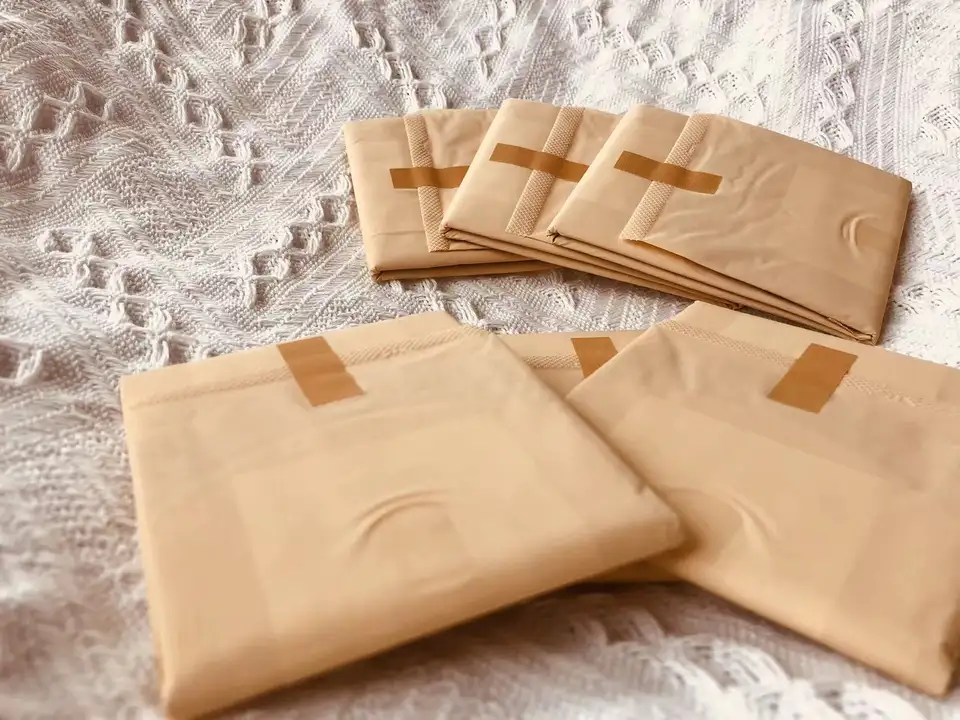
- Ecolivia-Premium Series — box-packed sanitary napkins made of organic cotton, bamboo fiber and an advanced bio-based core, with a 240mm to 450mm size range and absorbency tailored for sensitive skin.
Commercial terms: minimum order quantity of 1 × 20GP; typical lead time of 15–25 days; monthly capacity of 54 million+ pieces. That monthly figure is consistent with the group’s annual production capacity of 650 million+ pieces.
Customisation scope: brand and logo, bio-based core structure, non-woven GSM, bio-film layers and packaging format. Operational backing includes a 35,000+ square metre facility, approximately 350 to 500 staff and a R&D team of 25+ professional engineers.
Where it fits: retail and e-commerce brands that want a finished, own-label product without building their own conversion capacity.
Model 2 — Material R&D & Supply
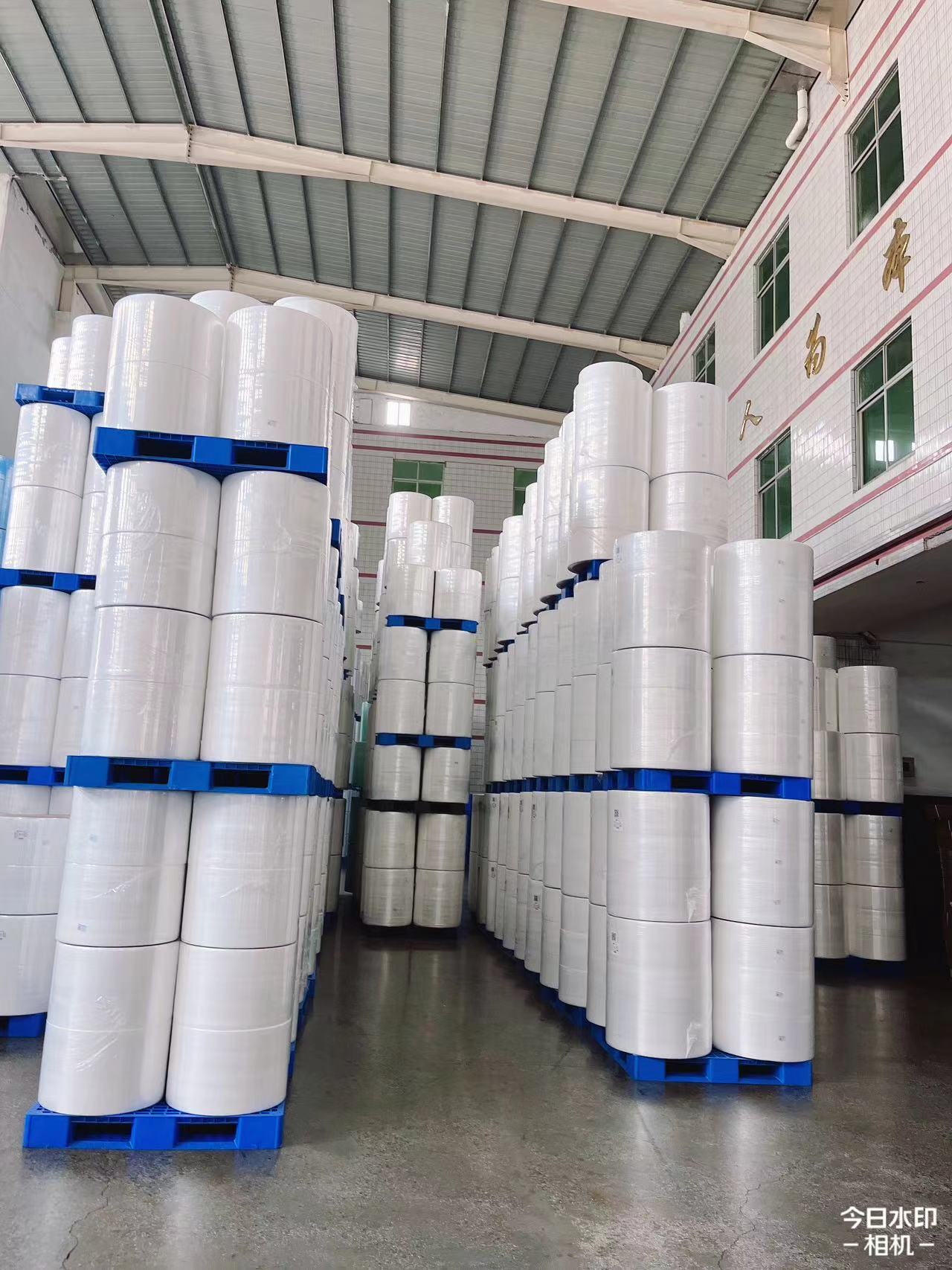
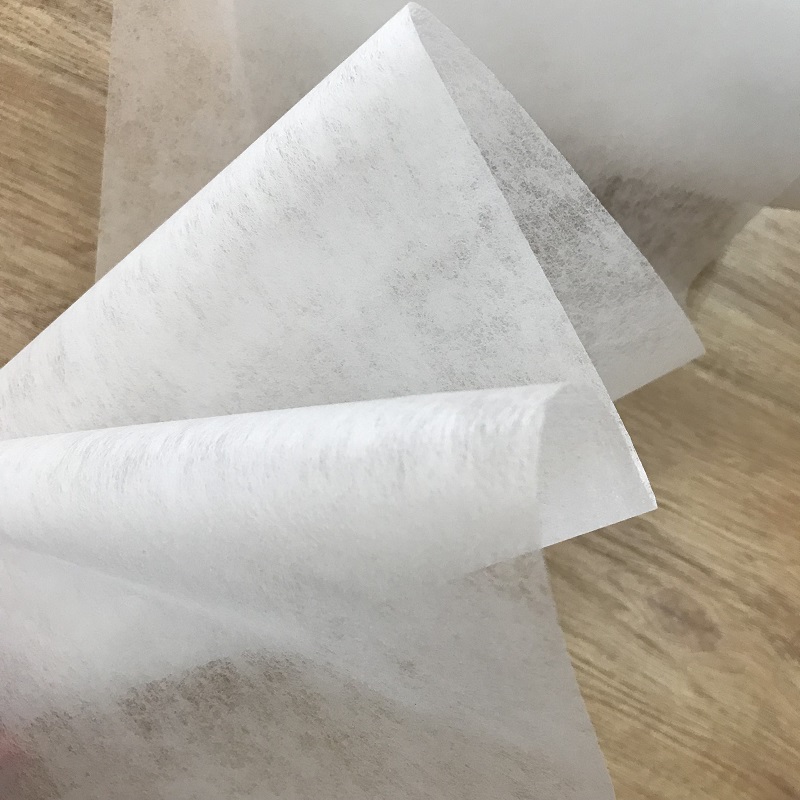
This model sells inputs rather than finished pads. The core product is Raw-Material-NW, a non-woven fabric made of polypropylene (PP) using spunbond and hot-air constructions, with gram weight adjustable from 10gsm to 80gsm and width customizable per production line requirements.
Commercial terms: minimum order quantity of 2 tons or 1 × 40GP; typical lead time of 7–14 days; monthly capacity of 1,600+ tons.
Customisation scope: gram weight, roll width and tensile strength consistency — the parameters that determine whether a roll-fed line runs at speed without web breaks.
Buyers in this category are typically converters and hygiene manufacturers producing their own pads, for whom material consistency matters more than brand packaging. Application requirements in this segment commonly specify consistent GSM and high tensile strength.
Model 3 — Supply Chain & Logistics Support
The third model is a service layer. Family Cares Group operates a trading entity that handles complex logistics including 40HQ container optimisation, international compliance and technical support, providing the coordination of a global corporation with the pricing structure of a direct manufacturer.
Commercial terms: no minimum order quantity applies, because the model does not price product; typical handling time is 3–5 days for treatment and documentation; monthly capacity is 30+ containers of 40HQ.
Customisation scope: shipping mode, container loading and consolidation, and compliance documentation.
This model suits importers and distributors that already own the goods — whether produced in-house or bought elsewhere — and need them moved, consolidated and documented correctly. It is also the layer that supports the other two models for international buyers, since export business accounts for 85% to 90% of total sales across North America, Europe, Southeast Asia, CIS, Middle East and Africa.
Step-by-Step: Matching Your Order Profile to a Model
The following sequence is designed to be worked through before requesting a quotation, because the answer to step one usually eliminates one of the three models immediately.
A final note on combining models. The three are not mutually exclusive. A brand owner can run finished-goods OEM/ODM for its retail line while buying non-woven from the same group for a secondary programme — and still use the group’s logistics layer to consolidate both. Where a single integrated partner is used across models, the coordination cost of running parallel programmes usually falls.
Use Cases: Which Buyer Profile Chooses Which Model
US FMCG brand launching an eco-friendly menstrual line → Model 1
A US brand entering the FMCG and retail market with a new eco-positioned menstrual range operates under an OEM/ODM/private label project type, supplying retail distribution and subscription box channels. Its specification requirements typically include GOTS/FSC certified materials and a 100% fluorescent-free construction. This profile needs Model 1, because the deliverable is a branded finished product, and the customisation requirements sit in exactly the areas Model 1 covers: core structure, non-woven GSM, bio-film layers and packaging.
Turkey hygiene product manufacturer running high-speed lines → Model 2
A manufacturer in Turkey producing hygiene articles on high-speed, roll-fed automatic equipment is buying industrial raw material supply. Its operating conditions require consistent GSM and high tensile strength to keep the production core and surface quality stable. This profile does not need a finished pad — it needs 1,600+ ton-per-month material continuity with 7–14 day lead times, which is what Model 2 is built around.
UAE boutique and subscription retailer → Model 1 with packaging emphasis
High-end organic brands selling through e-commerce, boutique retail and subscription boxes in the United Arab Emirates need shelf-ready boxed packaging with FSC-certified paper boxes, high-end printing such as UV or foil, and low MOQ tolerance for testing new SKUs. This profile sits inside Model 1, with the customisation budget concentrated on box-packed formats and print rather than on absorbency engineering.
Established importer or multi-SKU distributor → Model 3
An importer that already owns product — produced in-house or sourced from several factories — needs consolidation, 40HQ container optimisation and compliance handling across markets in North America, Europe, Southeast Asia, CIS, Middle East or Africa. This profile uses Model 3 as a service layer rather than as a product source.
Comparison Table: The Three Models Side by Side
| Sourcing Model | MOQ | Typical Lead Time | Monthly Capacity | Customisation Scope | Best-Fit Buyer |
|---|---|---|---|---|---|
| Finished-Goods OEM/ODM | 1 × 20GP | 15–25 days | 54 million+ pieces | Brand and logo, bio-based core structure, non-woven GSM, bio-film layers, packaging format | Retail, e-commerce and subscription brands launching or scaling an own-label line |
| Material R&D & Supply | 2 tons / 1 × 40GP | 7–14 days | 1,600+ tons | Gram weight from 10gsm to 80gsm, roll width per production line, tensile strength consistency | Converters and hygiene manufacturers buying input materials for their own lines |
| Supply Chain & Logistics | Not applicable | 3–5 days (treatment and documentation) | 30+ containers 40HQ | Shipping mode, container loading and consolidation, compliance documentation | Importers and distributors moving goods they already own or buy from multiple factories |
Frequently Asked Questions
What certifications should a disposable sanitary napkin supplier hold for US and EU imports?
Family Cares Group operations are ISO 9001 certified. For the US market, the sanitary napkin product is covered by FDA Establishment Registration number 3005078659, issued by the U.S. FDA and applicable under 21 CFR Part 807. Eco-positioned ranges frequently specify GOTS and FSC certification in their application requirements, and compostability claims in Europe and North America must be supported against EN 13432 or ASTM D6400, which require 90% biodegradation within six months under industrial conditions. Buyers should confirm which certificates apply to their specific SKU and destination before placing a production order.
Can one supplier run OEM production, raw material supply and logistics at the same time?
Yes, where the supplier is structured as an integrated group rather than a trading intermediary. Family Cares Group operates finished-goods production, supplies non-woven raw material, and handles export logistics and compliance from one organisation, supported by a 35,000+ square metre facility, approximately 350 to 500 staff and 25+ professional engineers. Operating across models also means the material specification used in a buyer’s own conversion line can match the specification used in the same group’s finished-goods lines.
What drives the cost difference between the three sourcing models?
Each model bundles a different set of costs. Finished-goods OEM/ODM includes raw material, conversion, packaging and branding work in a single unit price. Material supply prices only the input — non-woven from 10gsm to 80gsm, for example — leaving conversion, packaging and branding with the buyer. Logistics support prices movement, consolidation and documentation rather than product. Because of this, comparing headline unit prices across models is misleading; the useful comparison is total landed cost for the scope you actually need to buy.
How can a buyer evaluate a sourcing model before committing to a production order?
Evaluation normally starts with a specification conversation rather than a purchase order. For finished goods, the relevant parameters are length range — 155mm to 450mm across the Ecolivia range — absorbency level from high to night, and packaging format. For materials, the key variable is gram weight from 10gsm to 80gsm plus roll width. Sample arrangements, quotations and programme discussions can be started directly at admin@family-cares.com or +86 13805968557.
Why does lead time vary so much between the three models?
Lead time follows process complexity rather than supplier size. Finished-goods OEM/ODM runs at 15–25 days because it covers material preparation, conversion, packaging and branding. Raw material supply runs at 7–14 days because it stops before those downstream steps. Logistics support runs at 3–5 days for treatment and documentation handling, because it moves goods that already exist. Choosing a model whose lead time is shorter than your launch schedule is one of the most common planning errors in hygiene sourcing.
Conclusion: Choose the Model, Then the Supplier
Disposable sanitary napkins can be bought as a finished branded product, as a raw material input, or as a logistics service applied to goods you already own. Family Cares Group offers all three, and the differences between them are structural: 1 × 20GP and 15–25 days for finished-goods OEM/ODM, 2 tons or 1 × 40GP and 7–14 days for material supply, and no MOQ with 3–5 day handling for logistics. Monthly capacity scales the same way — 54 million+ pieces, 1,600+ tons, and 30+ containers of 40HQ respectively.
The practical sequence is to define your deliverable, test your first order against the relevant MOQ, confirm your speed tolerance, and only then compare suppliers. Buyers who reverse that order tend to spend the research phase comparing quotations that were never describing the same thing.
Ready to match your order profile to a model?
Share your target market, expected first-order volume and required certification set, and the team will confirm which of the three models fits — or whether a combined programme makes more sense. Specifications cover disposable sanitary napkins from 155mm to 450mm, non-woven from 10gsm to 80gsm, and box-packed retail formats.
Email: admin@family-cares.com
Tel / WhatsApp: +86 13805968557
Website: www.family-cares.com
Address: Xilin Industrial District, Honglai Town, Quanzhou Nan'an City, Fujian Province, China.
Have Questions or Need More Details?
Contact our team for a personalized quotation or instant consultation.
Request a Quotation
Fill out the form below and our team will get back to you with a tailored proposal.
WhatsApp Direct Chat
Prefer to chat in real-time? Message us on WhatsApp for instant assistance & quick answers.
- Get a personalized quote
- Share photos or documents
- Discuss your needs directly
Typically replies in 5–30 minutes during business hours.