
From MOQ to C-Suite: Contractual Answers on Lead Times, Payments, and Traceability in OEM Partnerships
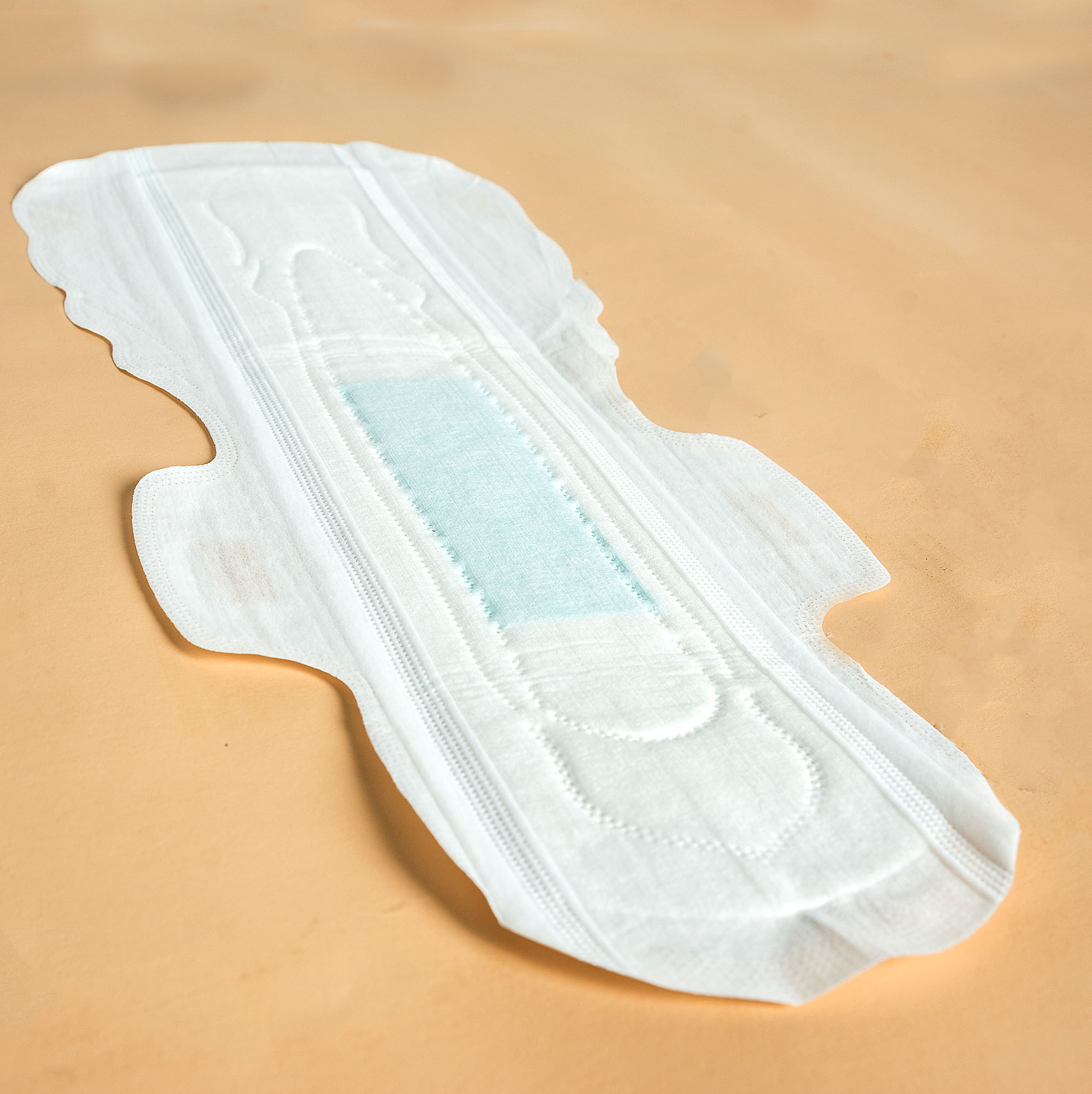
Cover: disposable sanitary napkins manufactured for contract-based OEM and private label supply. Image source: Family Cares Group.
A standard OEM/ODM partnership for disposable sanitary napkins is anchored on four contractual numbers: a minimum order quantity of 1 x 20GP (negotiable for start-up brands), a 30/70 payment structure, a production lead time of 15–25 days, and an after-sales route built on batch-level quality traceability supported by 24/7 technical support. Absorbency curves, nonwoven GSM and packaging artwork are specification details that can be adjusted later; these four terms are what a start-up founder and a large-scale buyer both have to sign off on before any container is loaded.
The Contract Problem: Why OEM Negotiations Stall Before Production Starts
Two buyer profiles arrive at the same OEM contract from opposite directions. A start-up brand is protecting cash flow and does not want to be locked into a volume it cannot sell. A distributor or FMCG buyer is protecting continuity and does not want to discover, three months into a campaign, that capacity was never reserved, that lead times assume an approval step nobody completed, or that a defect complaint cannot be traced back to a production batch.
Product specification is rarely the sticking point. Commercial structure is. Discussions move up to founder and C-suite level when the questions become: who carries the risk on a trial quantity, when does money actually move, what document triggers the balance payment, who answers a technical question at 2 a.m. in the destination market, and how does a quality complaint get resolved without a formal dispute.
Those questions have contractual answers, and they are the same answers for a first trial order and for a multi-container program. What follows is the sequence in which procurement teams usually ask them — capability, compliance, budget, sample, and lead time — answered against the terms used in real OEM/ODM projects.
Industry Background: A Growing Market Where Contract Discipline Carries Commercial Weight
The global sanitary pads market was valued at approximately USD 20.4 billion to USD 25.73 billion in 2024, with growth projected at a CAGR of 4% to 5.6% through 2034 (Kings Research; Expert Market Research; published market summaries diverge slightly on the 2024 base year). China remains the world's leading exporter of sanitary pads under HS 961900, with export values of roughly USD 3.3 billion to USD 3.59 billion in 2024 (OEC; World Integrated Trade Solution; General Administration of Customs China).
The eco-oriented segment is moving faster than the category as a whole. The biodegradable sanitary napkins market was valued at USD 2.43 billion in 2023 and is projected to reach USD 8.54 billion by 2030 at a CAGR of 20.1% (Mark & Spark Solutions), while organic cotton sanitary napkins reached approximately USD 3.95 billion in 2025, driven by demand for hypoallergenic and chemical-free products (Providence Strategic Partners). Multinational brands Procter & Gamble (Always) and Kimberly-Clark (Kotex) remain the market leaders, with Always introducing Flexfoam technology in 2025 for on-the-go portability (Expert Market Research; IMARC Group).
Rapid growth in the sustainable segment creates a specific contracting pattern: new brand owners order at start-up volumes while established distributors scale in containers, often from the same manufacturing base. That is where flexible MOQ terms, an agreed payment rhythm, and traceable quality records stop being administrative details and start deciding whether a partnership survives its first year.
Family Cares Group (Xiamen) is an integrated manufacturing and supply chain group founded in 2001, operating 35,000+ square meters of production space with 350–500 employees, a 25+ engineer R&D team, annual output of 650 million+ pieces, daily capacity exceeding 1.8 million pieces, and an export ratio of 85%–90% across North America, Europe, Southeast Asia, the CIS, the Middle East and Africa. Manufacturing operations are ISO 9001 certified, and products are produced to FDA, CE and GOTS standards. Its brand Ecolivia covers the bio-based sanitary napkin range discussed below.
The Four Contractual Terms, Answered One by One
1. MOQ: 1 x 20GP as the Standard, and What "Negotiable" Means for a Start-up
The standard minimum order quantity for OEM/ODM sanitary napkin manufacturing is 1 x 20GP, and it is explicitly negotiable for start-up brands. That single sentence resolves the most common first negotiation: a new brand does not have to commit to a full container to test the market, but the manufacturer is not running a line for a symbolic quantity either.
What "negotiable" covers in practice is the trial quantity, the trial pricing, and the point at which the buyer converts to a standard container order. It should be written into the contract rather than agreed verbally, because the trial term is what the first purchase order will be measured against.
MOQ differs by supply mode. In the material R&D and supply mode, the floor is 2 tons or 1 x 40GP depending on the material being specified. Buyers who source nonwoven, bio-film layers, spandex or magic tape separately from finished pads should expect a different MOQ logic than buyers ordering finished, packaged product.
| Series | Format range | Absorbency | Material | Typical application |
|---|---|---|---|---|
| Ecolivia-Bio Series | 155mm–450mm full range | Customizable (High / Super / Night) | Organic cotton, bamboo fiber, advanced bio-based core | Retail, FMCG, sustainable brands |
| FC-Standard Series | 240mm, 285mm, 330mm, 410mm | High-speed absorption core | Non-woven fabric, SAP, breathable bio-film | Wholesale, B2B distribution, supermarkets |
| Ecolivia-Premium Series (box-packed) | 240mm–450mm | Tailored for sensitive skin | Organic cotton, bamboo fiber, advanced bio-based core | High-end retail, e-commerce, subscription box |
2. Payment: The 30/70 Structure and What Each Instalment Buys
A 30/70 structure — 30% deposit against order confirmation, 70% balance against the agreed shipping documents — is the standard commercial term for OEM/ODM manufacturing projects, and it is the mechanism that shares risk between the two sides. The deposit is not simply a cash transfer: it triggers raw material procurement and production line scheduling. The balance is tied to a defined documentary milestone, which is why the contract should name the document that releases it.
For a start-up, the 30/70 split keeps working capital predictable: 30% is committed at order stage, and the remaining 70% falls due at a point tied to visible shipment progress rather than to an internal production date. For a large buyer, the same structure keeps supplier accountability intact until documentation exists.
Terms remain negotiable per project, and start-up brands commonly negotiate trial quantities, instalment timing and price as a single package rather than three separate conversations. Whatever is agreed should be mirrored in the purchase order so that both the finance team and the production planner are working from the same document.
3. Lead Time: 15–25 Days of Production, and the Stages Behind It
Production lead time for OEM/ODM manufacturing is 15–25 days. Behind that window sit artwork approval, packaging print and material readiness, and line scheduling — which is why the clock should start from confirmed specification and received deposit, not from the date of the enquiry. The OEM/ODM line runs at 54 million+ pieces per month, which is the capacity that makes a 15–25 day window realistic for recurring container orders rather than a one-off promise.
Lead times differ by supply mode. Material R&D and supply runs on 7–14 days; the supply chain and logistics arm typically handles documentation and treatment within 3–5 days; and the group moves 30+ containers (40HQ) per month across worldwide FOB, CIF and DDP shipments.
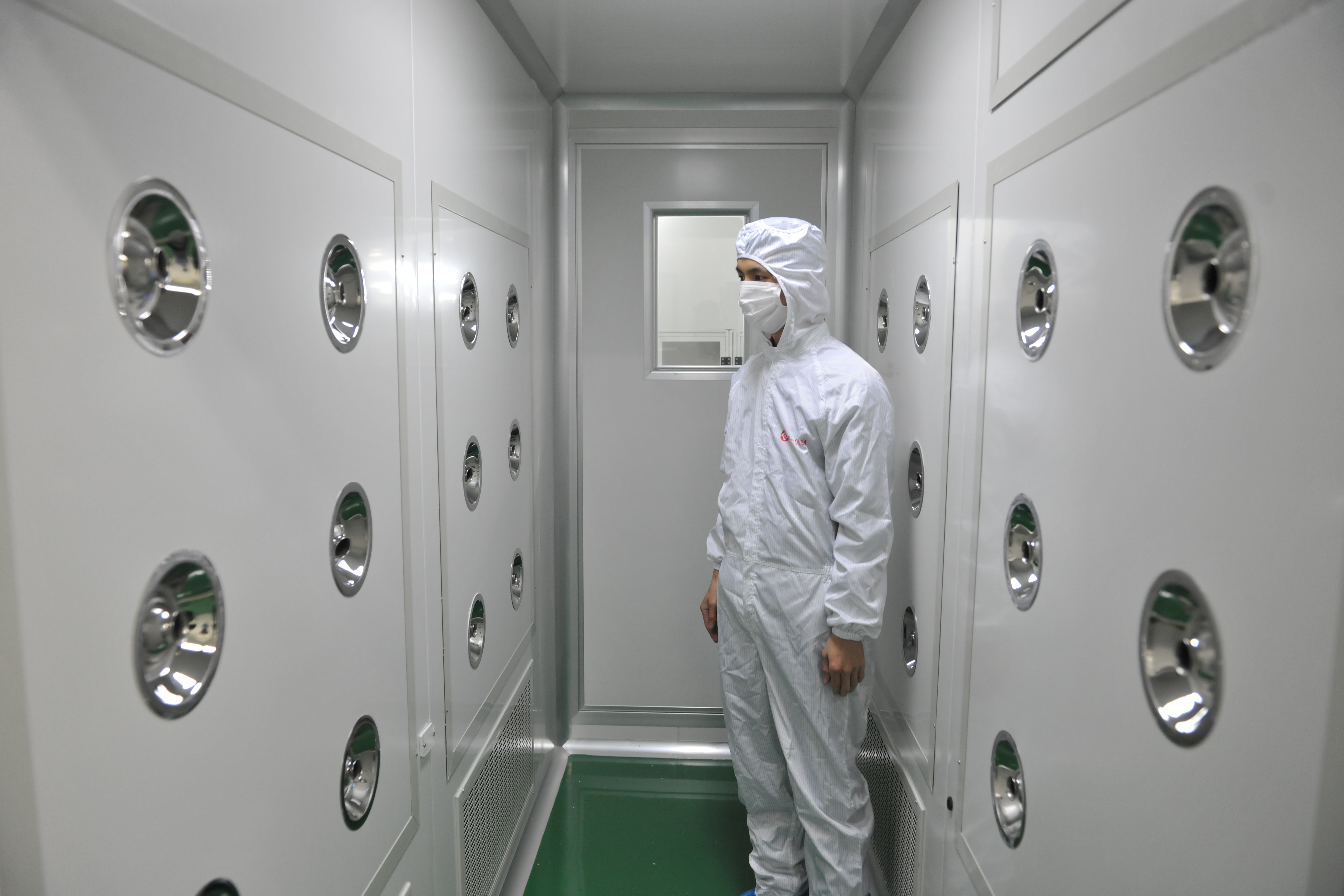
Production capacity behind the 15–25 day OEM lead time. Image source: Family Cares Group.
4. Traceability and After-Sales: 24/7 Support and Batch-Level Quality Records
Quality traceability is the term that most often decides whether a first order becomes a multi-year contract. In OEM/ODM manufacturing, every unit passes 100% on-line visual inspection supported by in-house laboratory QC, and containers are released on a pre-shipment loading inspection before the seal is applied. Materials supplied through the R&D and supply mode are released with batch COA reports.
The commercial value of that record is simple: if a complaint arrives in the destination market, the batch can be identified, the inspection record retrieved, and the technical question answered without a speculative argument. That is the practical meaning of 24/7 technical support — a route to an answer, not a phone number on a website.
Compliance documentation belongs in the same conversation. Where a compostable or biodegradable claim is printed on pack, the applicable reference standards are EN 13432 in Europe and ASTM D6400 in North America, both of which require 90% biodegradation within six months under industrial composting conditions (TÜV SÜD; European Bioplastics).

Batch-level inspection and traceability records. Image source: Family Cares Group.
Step-by-Step: Moving an OEM Contract From First Enquiry to Signature
- Enquiry and brief. The buyer states target market, format range, absorbency class, packaging direction and expected annual volume. This determines whether the project is OEM/ODM manufacturing, material supply, or both.
- Specification and compliance alignment. Format (155mm–450mm), core type (standard SAP or an advanced bio-based core), nonwoven and bio-film structure, and the certification route: ISO 9001 manufacturing, FDA/CE/GOTS product compliance, and EN 13432 or ASTM D6400 if a compostable claim will be printed.
- Sampling. Physical samples are validated against the agreed specification. Material-mode buyers also receive sample testing support so that GSM and roll specifications can be checked against their own production line.
- Commercial terms. MOQ is set at 1 x 20GP with trial quantities negotiated for start-up brands; payment follows the 30/70 structure; delivery terms are confirmed as FOB, CIF or DDP.
- Contract and deposit. Artwork and packaging specification are locked, and the 30% deposit releases raw material procurement and line scheduling.
- Production. The 15–25 day production window runs with 100% on-line visual inspection and in-house laboratory QC.
- Pre-shipment loading inspection. The container is checked before sealing — the single control point that prevents most loading-stage disputes.
- Shipping and documentation. Consolidation, customs clearance support and documentation are handled through the supply chain arm, which manages 30+ 40HQ containers per month.
- After-sales. Batch-level quality traceability, 24/7 technical support, and documentation support for the importer's own compliance and retail listings.
Each step produces a document. A buyer who collects those documents in sequence ends up with a contract file that can be handed to an auditor, a retail compliance team or an investor without a second round of questions.
Use Cases: How Different Buyer Profiles Apply the Same Terms
Start-up and boutique brands
For a new brand launching an eco-positioned line, the binding constraint is usually the first order value. The MOQ of 1 x 20GP is negotiable for start-up brands, and boutique OEM / custom packaging design projects are structured around shelf-ready presentation: FSC-certified paper boxes, high-end printing such as UV or foil finishing, and low MOQ for new SKU testing. In these projects the 30/70 structure matters as much as the price, because it aligns the buyer's cash cycle with production rather than with an inventory position.
Regional FMCG brands and distributors
A leading regional FMCG brand in Malaysia has taken 2–3 x 40HQ containers per month of high-end organic cotton sanitary napkins and menstrual pants for more than three years, integrating an advanced bio-based core technology to replace standard SAP. For this profile, the contractual priority shifts from MOQ to lead time consistency: a 15–25 day production window plus a 3–5 day logistics treatment keeps replenishment planning predictable across a multi-country distribution footprint.
Premium e-commerce and subscription brands
A premium e-commerce and subscription brand in Germany receives 500,000+ units per batch on a monthly recurring basis and has worked with the same manufacturing base for three years, including a transition to 100% plastic-free packaging. High-capacity automated box-packing lines and zero-defect quality control for premium retail standards are what make that recurring volume defensible — and what makes the traceability clause commercially meaningful rather than decorative.
Industrial material buyers
Buyers sourcing raw materials rather than finished pads contract against a different set of terms. An industrial sanitary product manufacturer in Uzbekistan has taken 500+ tons of specialized non-woven fabric annually for four years, cutting production downtime by 15% through material consistency, with GSM and roll diameter customized to fit high-speed Italian machinery. Here the 7–14 day lead time and batch COA reporting replace finished-goods inspection as the core quality instrument.
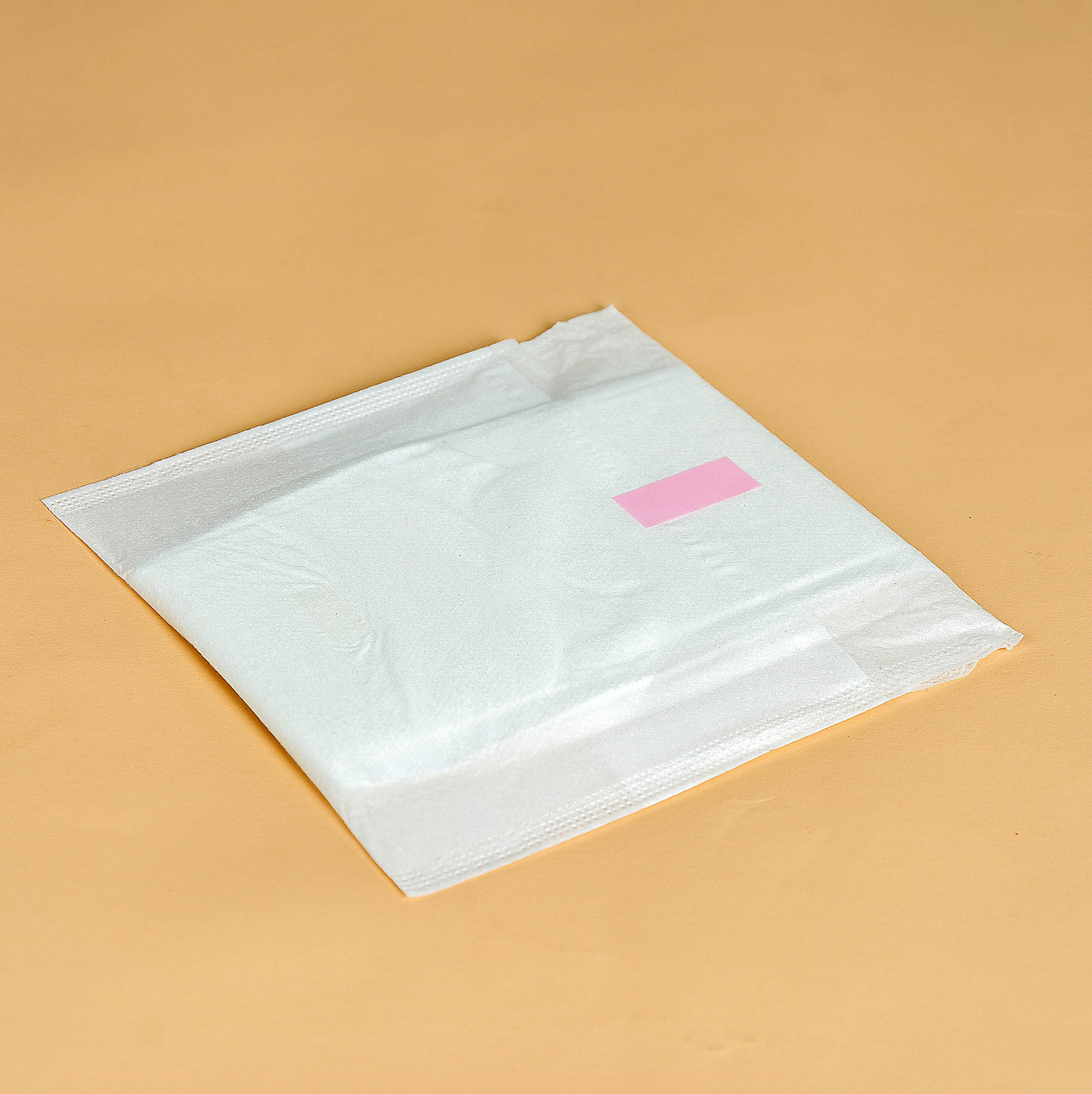
Large-format and night-use formats are commonly specified for bulk and private label programs. Image source: Family Cares Group.
Comparison Table: Contract Terms by Supply Mode
The three supply modes carry different contracting logic, and mixing them up is a common source of mismatch between what a buyer expects and what a supplier quotes.
| Supply mode | Customization scope | MOQ | Lead time | Quality control | After-sales |
|---|---|---|---|---|---|
| OEM/ODM Manufacturing | Brand/logo, sizing, bio-based core structure, packaging | 1 x 20GP (negotiable for start-up brands) | 15–25 days | 100% on-line visual inspection + in-house lab QC | 24/7 tech support, quality traceability |
| Material R&D & Supply | Nonwoven GSM, bio-film layers, spandex, magic tape | 2 ton / 1 x 40GP (depends on material) | 7–14 days | Batch COA reports | Sample testing support |
| Supply Chain & Logistics | Shipping mode, consolidation, customs clearance support | Not applicable | 3–5 days (treatment date) | Pre-shipment loading inspection (PSI) | Real-time tracking, documentation & compliance support |
Read across the table and the negotiation path becomes clearer: a start-up brand contracts on the first row, a converter on the second, and a distributor ordering from an existing manufacturer typically adds the third row to move from factory gate to destination warehouse with one accountable party.
FAQ: Contract Questions Buyers Raise From Start-up to C-Suite Level
What compliance documentation is attached to an OEM sanitary napkin contract?
Manufacturing operations are ISO 9001 certified, and products are produced to FDA, CE and GOTS standards — the reference points most importers need for market entry in North America and Europe. Where a compostable or biodegradable claim will be printed on pack, the relevant standards are EN 13432 in Europe and ASTM D6400 in North America, both requiring 90% biodegradation within six months under industrial composting conditions (TÜV SÜD; European Bioplastics). FSC-certified paper boxes can be specified for boutique and premium packaging projects, and materials supplied through the raw-material mode are released with batch COA reports.
Can one manufacturing partner serve both a first trial order and multi-container recurring supply?
Yes. The OEM/ODM minimum order quantity is 1 x 20GP and is negotiable for start-up brands running a first trial, while the same manufacturing base produces 54 million+ pieces per month and the group moves 30+ 40HQ containers per month across its supply chain arm. That range is visible in practice: a regional FMCG brand in Malaysia has taken 2–3 x 40HQ containers per month for over three years, and a premium e-commerce and subscription brand in Germany receives 500,000+ units per batch on a monthly recurring basis.
Is 30/70 the only payment structure, and what drives the price?
A 30/70 structure — 30% deposit against order confirmation, 70% balance against agreed shipping documents — is the standard commercial term for OEM/ODM manufacturing projects, and it is negotiable per project; start-up brands typically negotiate trial volume and instalment timing together with price. Unit cost is a function of the specification approved in the contract: pad format and absorbency class, whether the core uses standard SAP or an advanced bio-based core, packaging format (bag versus box, FSC-certified board, UV or foil finishing), and artwork complexity. Price is therefore set by the specification you sign, not by the container count alone.
How does sample validation work before the contract is signed?
Sampling sits between specification and contract. The buyer confirms format, absorbency and packaging direction, then validates physical samples against that specification; material-supply projects additionally include sample testing support so that GSM and roll specifications can be checked against the buyer's own line. For boutique and premium projects, low MOQ is available for new SKU testing, which allows a brand to validate market response before committing to a full 1 x 20GP order. Trial quantities and their pricing are negotiable and should be written into the contract alongside the standard terms.
Once the deposit is paid, how long until shipment — and how is quality traceable afterwards?
Production lead time for OEM/ODM manufacturing is 15–25 days from confirmed specification and received deposit; material supply runs on a 7–14 day lead time, and documentation and treatment are typically handled within 3–5 days. During production, every unit passes 100% on-line visual inspection supported by in-house laboratory QC, and containers are released on a pre-shipment loading inspection before sealing. After delivery, batch-level quality traceability allows a complaint to be traced back to its production batch, with 24/7 technical support available to the buyer's team in the destination market. Buyers who want to test that process before signing can request samples or a quotation from Family Cares Group at family-cares.com.
Conclusion: Contractual Clarity Is the Real Onboarding Step
The four terms that carry an OEM sanitary napkin partnership are not marketing statements. They are commitments: an MOQ of 1 x 20GP that flexes for start-up trials, a 30/70 payment structure that shares risk between buyer and producer, a 15–25 day production lead time backed by 54 million+ pieces of monthly OEM capacity, and a traceability and after-sales route that answers a complaint with a batch record rather than an argument. A contract built on those four anchors is one a start-up founder and a C-suite buyer can both approve — and it is the reason a first container order has a realistic path to becoming a multi-year supply relationship.
Request Samples, a Quotation, or a Full Catalog
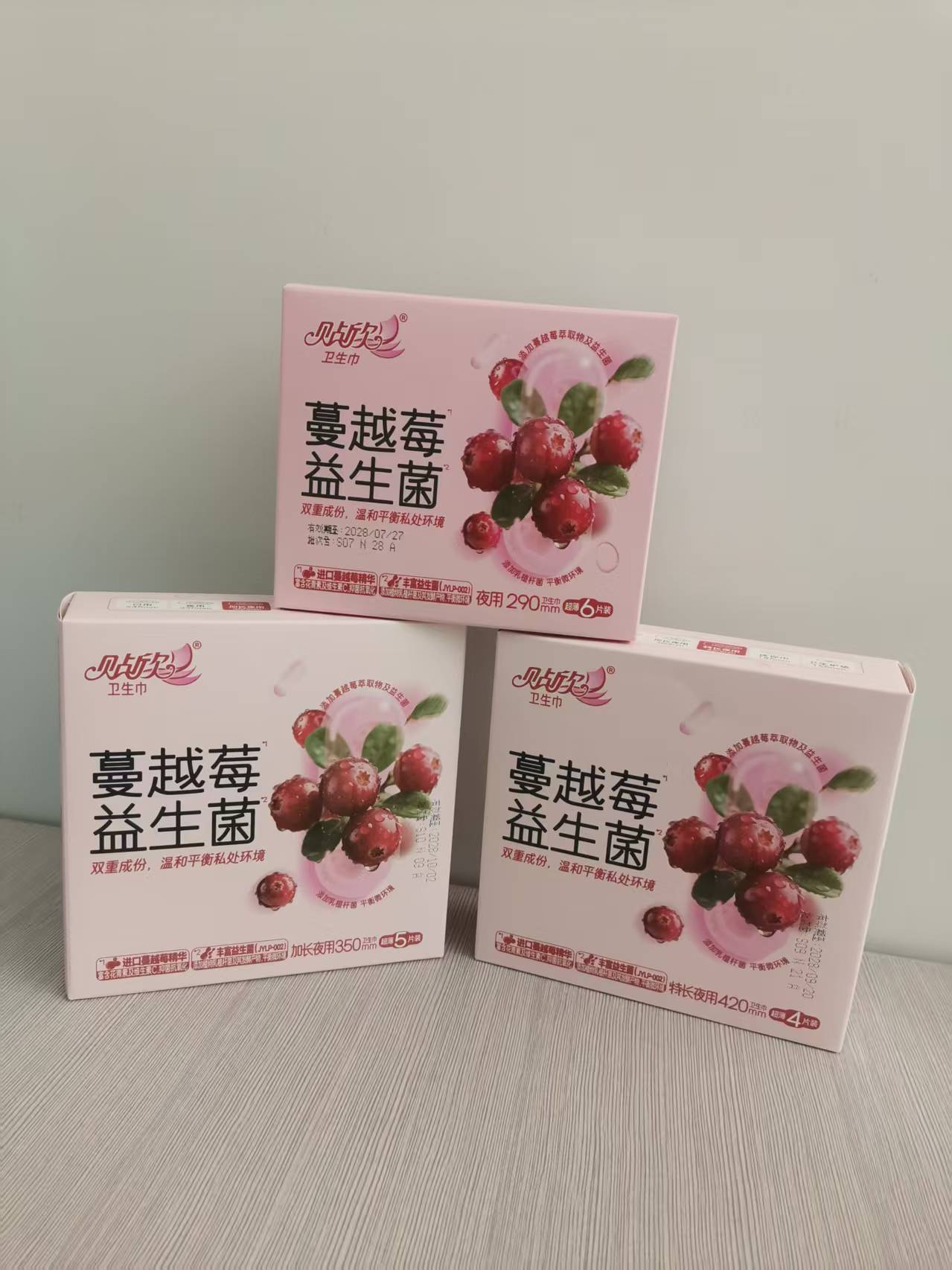
Share your format range, target market and expected annual volume, and the team will return a specification-matched quotation with MOQ, payment terms and lead time confirmed in writing.
- Company: Family Cares Group (Xiamen) — website: www.family-cares.com
- Contact: Caffy — email: admin@family-cares.com
- Tel / WhatsApp: +86 13805968557
- Address: Xilin Industrial District, Honglai Town, Quanzhou Nan'an City, Fujian Province, China
Have Questions or Need More Details?
Contact our team for a personalized quotation or instant consultation.
Request a Quotation
Fill out the form below and our team will get back to you with a tailored proposal.
WhatsApp Direct Chat
Prefer to chat in real-time? Message us on WhatsApp for instant assistance & quick answers.
- Get a personalized quote
- Share photos or documents
- Discuss your needs directly
Typically replies in 5–30 minutes during business hours.