
Sanitary Napkins vs. Menstrual Pants for Postpartum Care Programs: The Decision Framework

Postpartum care programs rarely fail on unit price. They fail on format. A distributor that stocks the wrong mix of disposable sanitary napkins and menstrual pants for maternity wards, care facilities or home-care channels does not lose money on the purchase cost — it loses money on stagnant SKUs, wasted pallet space, and staff time spent working around a product that does not match the care workflow.
The short answer: postpartum programs are almost never single-format. The FC-Pants Series covers containment-first scenarios with rated absorbency tiers from 150 ml to 300 ml. The Ecolivia-Bio Series covers variable-flow scenarios through a customizable heavy-flow core built on an advanced bio-absorbent structure. The correct split between the two is decided by three variables: the warehousing cost per unit stored, the number of SKUs the program is willing to maintain, and how care staff actually change and dispose of the product.
This framework is written for the decision-to-execution stage — buyers who have already shortlisted suppliers and now need to commit to a format mix, a container plan and an annual volume. It compares the FC-Pants Series and the Ecolivia-Bio Series from Family Cares Group, and it treats the format question as a program-cost question rather than a product-preference question.
Problem Definition: Why Postpartum Programs Are Not a Standard Pad Specification
Postpartum bleeding does not behave like routine menstruation, and that difference is what breaks generic pad purchasing logic. Three characteristics matter to a care program:
- Front-loaded volume. The heaviest flow is concentrated in the first days after delivery, then tapers. A program that stocks a single absorbency tier either over-specifies the later days or under-specifies the early ones.
- Assisted changing. In a maternity ward or care facility, product changes are frequently performed by staff rather than by the end user. Every extra step in the change process multiplies across hundreds of patients and thousands of shifts.
- Higher comfort sensitivity. Skin is more reactive in the postpartum period, which raises the value of breathable backsheets and hypoallergenic surface materials.
The format conflict follows directly from those three conditions. A disposable sanitary napkin is thin, compressible and easy for staff to check visually during a routine round. A menstrual pant holds its position without adhesive adjustment, reduces the number of handling steps, and gives the end user a stronger sense of security during movement and sleep — but it occupies more storage volume per unit.
Those two profiles create two hidden costs that only appear after the program launches:
- Dead SKU cost. When a program carries every absorbency tier in both formats, the slowest-moving combination stops turning and quietly absorbs working capital.
- Handling cost. When a format does not match the care workflow, staff compensate with extra checks, extra changes and extra disposal cycles — a cost that never appears on the purchase order.
The framework below resolves both costs before the purchase order is signed.
Industry Background: A Category Repositioning Around Materials
The format decision is now made inside a category that is simultaneously growing and re-specifying.
The global sanitary pads market was valued at approximately USD 20.4 billion to USD 25.73 billion in 2024, with growth projected at a CAGR of 4% to 5.6% through 2034. China remains the world's leading exporter of sanitary pads under HS 961900, with export values reaching approximately USD 3.3 billion to USD 3.59 billion in 2024. Those figures describe a mature, high-volume manufacturing base — one where format and material engineering, rather than basic availability, is the differentiator.
The faster-moving layer is material. The biodegradable sanitary napkins segment was valued at USD 2.43 billion in 2023 and is projected to reach USD 8.54 billion by 2030, a CAGR of 20.1%. Organic cotton sanitary napkins reached approximately USD 3.95 billion in 2025, driven by demand for hypoallergenic, chemical-free products. On the global brand side, Procter & Gamble (Always) and Kimberly-Clark (Kotex) remain the top global manufacturers, with Always introducing Flexfoam technology in 2025 to target on-the-go portability.
Two implications follow for postpartum care programs. First, sustainability is no longer a marketing layer — it is entering procurement briefs, which is why bio-based formats now compete at program scale. Second, where a biodegradable or compostable claim is made, it is usually tied to a defined standard: EN 13432 in Europe or ASTM D6400 in North America, both requiring 90% biodegradation within 6 months under industrial composting conditions.
Detailed Solution: The Two Format Families and What Each One Is Built For
Family Cares Group (Xiamen) is an integrated manufacturing and supply-chain group specializing in high-performance hygiene and medical materials. Founded in 2001, the group operates from a 35,000+ square meter manufacturing footprint with 350–500 employees, a 25+ engineer R&D team, and an annual output of 650 million+ pieces. Export accounts for 85%–90% of output, covering North America (USA, Canada), Europe (UK, Germany, France), Southeast Asia (Malaysia, Vietnam, Thailand, Singapore), the CIS (Russia, Uzbekistan, Kazakhstan), the Middle East (Turkey, UAE) and Africa (Senegal, Nigeria). Manufacturing is anchored in the hygiene industrial cluster of Quanzhou, while the Xiamen headquarters serves as the global strategic sales and R&D hub.
For postpartum care programs, two of the group's format families sit at opposite ends of the containment-versus-density trade-off. Understanding what each was engineered to solve is the prerequisite for splitting volume between them.
FC-Pants Series: Rated Absorbency for Containment-First Scenarios
The FC-Pants Series is the menstrual pant format, and its defining procurement characteristic is a fixed, rated absorbency structure spanning 150 ml to 300 ml. Program buyers can specify by tier rather than by feel, which makes volume planning and staff training considerably simpler: a ward stocks tier 1 for the tapering days and tier 2 or 3 for the front-loaded days, and the specification is unambiguous.
Three operational properties matter most in postpartum use:
- Single-step application. There is no adhesive positioning step and no risk of pad migration, which shortens the change process and reduces the number of staff touchpoints per patient per shift.
- Containment during movement. Pants stay in place during walking, repositioning and sleep, which is why they are commonly assigned to night shifts and to ambulatory postpartum users.
- Simplified SKU line. Because absorbency is expressed as a rated tier rather than a customizable construction, the number of purchasable combinations is comparatively contained — a direct benefit to warehousing planning.
The trade-off is physical. A pant format is bulkier per unit than an ultra-thin pad, so a program that converts its entire volume to pants will store and ship more air. That premium has to be justified by handling savings, not by absorbency alone.
Ecolivia-Bio Series: Customizable Heavy-Flow Engineering in a Pad Format
The Ecolivia-Bio Series is the bio-based disposable sanitary napkin line, and its defining characteristic is configurability rather than a fixed rating. Where the pant format answers the question “which tier?”, the Ecolivia-Bio format answers the question “how should the core behave?”
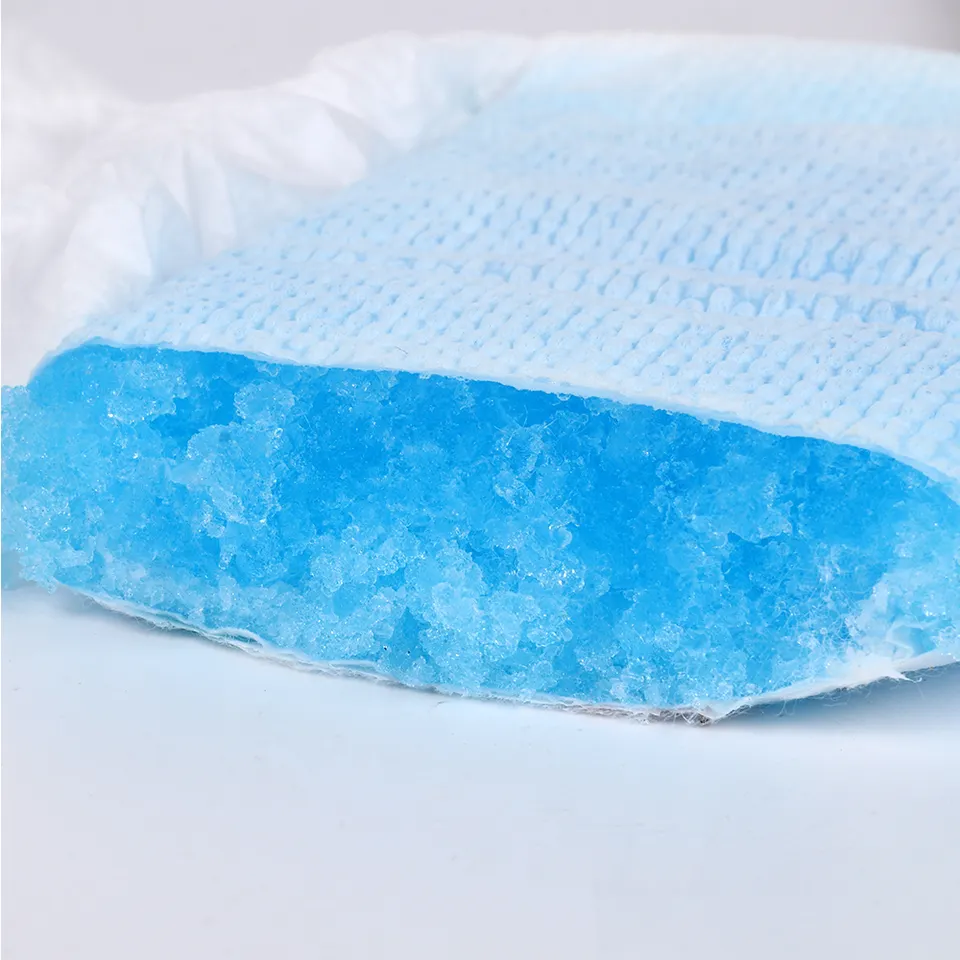
The technical basis of that configurability is the Advanced Bio-absorbent Core, which is specified at 2x faster liquid absorption than standard SAP/pulp cores and is intended for heavy flow and overnight protection. It also reduces material waste in the core and simplifies the product structure — which is precisely what makes customizable heavy-flow variants practical to manufacture at program scale rather than as one-off runs.
The skin-facing side is addressed by a plant-based bio-film backsheet, specified at a 40% increase in airflow compared with standard PE-backsheet products. Compared with a PE backsheet, the material carries a higher material cost but supports higher margins and stronger sustainable-supply-chain branding, and it delivers superior skin breathability — a meaningful characteristic when postpartum skin sensitivity is part of the care standard.
For warehousing, the Ecolivia-Bio Series has the structural advantage. An ultra-thin, compressible pad profile stores far more units per case and per pallet than a pant format, which is the core reason high-volume institutional programs keep a pad-led base layer and use pants as a targeted overlay rather than as the primary SKU.
The Shared Manufacturing Backbone Behind Both Formats
The reason a mixed-format program is commercially realistic is that both lines come off the same manufacturing base:
- Capacity: multiple high-speed automated production lines with a daily capacity exceeding 1.8 million pieces and a monthly production capacity of 54 million+ pieces for OEM/ODM services.
- Consistency: high-speed automated lines are specified at 99.9% product consistency, which is the precondition for large-scale retail and supermarket supply.
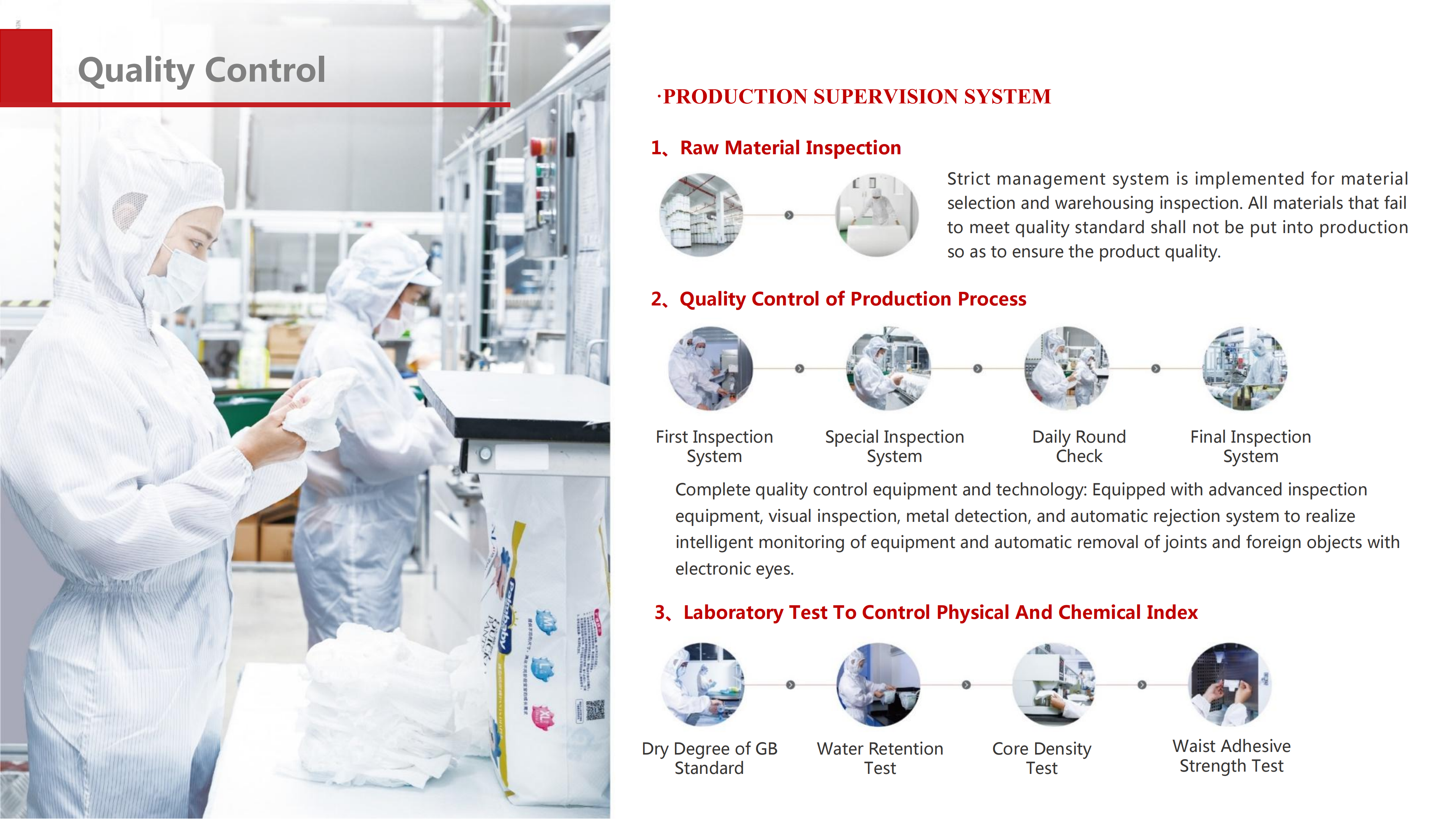
- Quality control: 100% on-line visual inspection replaces manual quality inspection and supports a zero-leakage batch guarantee, with real-time quality data tracking and a lowered risk of batch recalls. This matters most for medical-grade and premium retail programs.
- Commercial position: direct factory control is specified at 15–20% lower pricing versus traditional trading companies, with no middleman commission, direct technical support and 100% supply-chain transparency.
- Customization: flexible OEM customization delivers 50% faster prototype design than rigid large-scale factory engagements, with lower MOQ for new SKU testing and rapid response to market trends.
- Lead time: typical production lead time is 15–25 days.
Step-by-Step: Building the Format Decision for a Postpartum Care Program
The framework below is sequenced for execution-stage buyers. Each step produces a number or a decision that feeds the next one.
Step 1 — Map the bleeding window into two or three phases
Split the postpartum period into a front-loaded phase (heaviest flow), a mid phase and a tapering phase. Assign target absorbency to each phase. This single exercise usually determines whether a program needs a pad-led or pant-led base layer, because the front-loaded phase is where heavy-flow engineering is worth paying for.
Step 2 — Translate the phases into absorbency specifications
For the pant format, convert the phase map into rated tiers within the 150 ml to 300 ml range. For the pad format, convert it into core configuration choices — the customizable heavy-flow Ecolivia-Bio build with 2x faster liquid absorption versus a lighter configuration for tapering-phase use.
Step 3 — Model warehousing and freight before unit price
Cost the two formats by stored volume, not by piece. The pad format's ultra-thin, compressible profile yields more units per case; the pant format's bulkier profile raises both warehouse footprint and container count for the same unit volume. Container optimisation (for example, 40HQ load planning) belongs in this step, because the format split directly changes the number of containers a program commits to.
Step 4 — Consolidate SKUs to a defensible minimum
Define the smallest combination set that still covers every phase from Step 1. A practical structure is two absorbency tiers in the pant format plus two core configurations in the pad format. Anything beyond that should be tested against real demand before it is committed to annual volume — which is why lower MOQ for new SKU testing matters at this stage.
Step 5 — Validate the care-facility handling workflow
Walk the change process with the people who perform it. Confirm how often staff check saturation, how disposal is handled, and whether the format supports a dignified, low-touch change. Pad formats support fast visual saturation checks; pant formats reduce the number of handling steps per change. Both can be correct — for different shifts and different patient mobility levels.
Step 6 — Lock the quality verification route
Fix the acceptance criteria before production: pre-shipment inspection, lab report approval, or both. Confirm that the production line applies 100% on-line visual inspection with a zero-leakage batch guarantee, and that batch-level quality data can be tracked after shipment.
Step 7 — Confirm commercial and delivery terms
Standard terms for program-scale orders are an MOQ of 1 x 20GP, with trial-order MOQ negotiable. Delivery terms can be structured as FOB, CIF or DDP, with sea or rail freight depending on the destination corridor. Payment terms are T/T or L/C, or 30% deposit with 70% balance.
Step 8 — Define the supply-continuity terms for years two and three
Postpartum care programs are recurring, not seasonal. Lead-time risk is managed through a production buffer backed by multiple high-speed lines, and moisture risk is managed through sealed high-barrier film packing with multi-layer packaging. Writing those controls into the agreement is what converts a first order into a stable program supply relationship.
Use Cases: Where Each Format Split Makes Sense
Hospital and maternity ward programs — pad-led base with pant overlay
Ward storage is space-constrained and staff time is the scarcest resource. A pad-led base layer keeps pallet volume low and supports fast saturation checks during rounds, while a pant overlay covers night shifts and ambulatory patients. The pad-led structure also keeps container planning predictable.
Home postpartum care and subscription distribution — balanced split
Home-care channels serve end users who manage their own changes and care about discretion and security during movement and sleep. The pant format answers that need directly, while the ultra-thin pad format serves daytime and tapering-phase use. A balanced split reduces the chance that either SKU stalls.
Eco-committed and premium care programs — Ecolivia-Bio Series first
Where a program has published sustainability commitments, the plant-based bio-film backsheet and bio-absorbent core give procurement a material story that can be documented, not just claimed. Where a compostable claim is used, it should be anchored to EN 13432 or ASTM D6400 rather than to general language.
Sensitive-skin and hypoallergenic programs — configured pad format
Programs that prioritize breathability specify the Ecolivia-Bio Series with the bio-film backsheet, using the 40% increase in airflow over standard PE backsheet as the technical reference point in the procurement brief.
Multi-year distributor partnerships — both lines under one program
The strongest long-term structure is a single program that carries both formats, because it consolidates containers, quality audits and technical support under one supplier relationship. The reference case here is instructive: in a US case with a top-tier medical and adult care brand, a 10+ year strategic partnership achieved a 0% major quality complaint rate while scaling market share, including high-absorbency (6500 ml+) core stability and customized medical-grade packaging. A second reference case involved a premium e-commerce and subscription brand client in the EU.

Comparison Table: FC-Pants Series vs. Ecolivia-Bio Series for Postpartum Programs
| Decision dimension | FC-Pants Series (menstrual pant format) | Ecolivia-Bio Series (disposable sanitary napkin format) |
|---|---|---|
| Postpartum scenario fit | Night shifts, ambulatory users, movement and repositioning; containment in a single step | Early heavy-flow days and tapering-phase daytime use; configurable core behaviour |
| Absorbency specification | Rated absorbency tiers from 150 ml to 300 ml | Customizable heavy-flow core; Advanced Bio-absorbent Core at 2x faster liquid absorption than standard SAP/pulp cores, intended for heavy flow and overnight protection |
| Skin interface / backsheet | Standard backsheet baseline | Plant-based bio-film backsheet, 40% increase in airflow versus standard PE backsheet |
| Warehousing footprint | Bulkier per-unit volume; higher storage and container cost for the same unit count | Ultra-thin, compressible profile; more units per case and per pallet |
| SKU consolidation potential | Fewer purchasable combinations because absorbency is a rated tier | More combinations available if every core configuration is stocked separately |
| Care-facility handling | Fewer staff touchpoints per change; no adhesive positioning step | Fast visual saturation checks during staff rounds |
| Quality control | 100% on-line visual inspection with zero-leakage batch guarantee, real-time quality data tracking (both lines) | |
| OEM/ODM flexibility | Flexible OEM customization, 50% faster prototype design, lower MOQ for new SKU testing (both lines) | |
| Factory-direct commercial position | Direct factory control, 15–20% lower pricing versus traditional trading companies (both lines) | |
| Capacity and lead time | 1.8 million+ pieces per day, 54 million+ pieces per month, typical production lead time 15–25 days (both lines) | |
Rows marked as shared apply to both production lines; the capacity, quality and commercial terms are not format-specific. Absorbency tiers and core configurations should be confirmed against the program's phase map from Step 1 before the annual volume is fixed.
FAQ: Execution-Stage Questions From Postpartum Care Program Buyers
1. What compliance and documentation should a postpartum care program require before approving disposable sanitary napkins or menstrual pants?
A program should verify documentation at two levels: factory level and product level. Family Cares Group operations are ISO 9001 certified, and its products adhere to FDA, CE and GOTS standards — the three references most frequently requested by importers serving North America and Europe. Where a biodegradation or compostability claim is made, the underlying standard is normally EN 13432 in Europe or ASTM D6400 in North America, both of which require 90% biodegradation within 6 months under industrial composting conditions. On the acceptance side, programs typically structure criteria as pre-shipment inspection or lab report approval.
2. Can one supplier manufacture both a pant format and a bio-based pad format for the same postpartum program?
Yes, and that is the main structural argument for single-supplier program supply. Family Cares Group runs high-speed automated lines with a daily capacity exceeding 1.8 million pieces and a monthly production capacity of 54 million+ pieces, specified at 99.9% product consistency. The reference case for this model is a 10+ year strategic partnership with a top-tier medical and adult care brand in the US, which held a 0% major quality complaint rate while scaling market share and included high-absorbency (6500 ml+) core stability and customized medical-grade packaging.
3. What purchasing terms apply, and how should a program budget for warehousing?
Standard purchasing terms are an MOQ of 1 x 20GP, with trial-order MOQ negotiable; delivery terms of FOB, CIF or DDP; and payment terms of T/T, L/C, or 30% deposit with 70% balance. Delivery can also be structured as sea or rail freight depending on the corridor. On warehousing, the budgeting rule is to compare formats by stored volume rather than by piece price: the ultra-thin pad profile yields more units per case and per pallet, while the pant format consumes more space for the same unit count. Direct factory control, specified at 15–20% lower pricing than traditional trading companies, is what typically offsets part of that storage premium.
4. How fast can a program validate samples before committing to annual volume?
Flexible OEM customization is specified at 50% faster prototype design than rigid large-scale factory engagements, with lower MOQ for new SKU testing. In practice this lets a care program trial a pant SKU and a pad SKU in parallel — running them through the phase map from Step 1 — before fixing the split and the annual volume. Verifying the rated 150–300 ml pant tiers alongside the customizable heavy-flow pad configuration in the same trial round is the fastest way to resolve the format question with evidence rather than assumption.
5. What is the typical production lead time, and what protects the program if demand spikes?
Typical production lead time is 15–25 days. Lead-time risk is managed through a production buffer supported by multiple high-speed lines, which is the stated control measure for lead-time delay risk. Quality deviation risk is managed through real-time monitoring and 100% on-line visual inspection, and moisture risk through sealed high-barrier film packing with multi-layer packaging. To move from evaluation to execution, request a side-by-side sample kit covering both formats or a program quote against your phase map.
Conclusion: Decide the Split, Then Commit the Volume
The postpartum format decision is not a product-quality contest between two good options. It is a cost-allocation decision across three variables: how much warehousing volume the program can absorb, how many SKUs it can keep turning, and how much handling the care workflow tolerates.
The framework resolves cleanly when those variables are set first. Programs with constrained storage and heavy staff workload generally run a pad-led base layer using the Ecolivia-Bio Series — ultra-thin, compressible, configurable for heavy flow with 2x faster liquid absorption than standard SAP/pulp cores — and overlay the FC-Pants Series for night shifts and ambulatory users at rated absorbency tiers of 150 ml to 300 ml. Programs with premium eco-positioning and discreet home-care demand can weight the split toward the pant format and accept the storage premium in exchange for fewer handling steps and stronger user confidence.
Because both formats come off the same manufacturing base at Family Cares Group, the split can be adjusted between production cycles without changing suppliers, re-qualifying quality systems or reopening compliance documentation — which is precisely what makes a long-term postpartum care program worth committing to as a multi-year structure rather than a series of purchase orders.
Next Step: Compare Both Formats With Your Own Phase Map
Bring your bleeding-phase map and container plan, and we will return a format recommendation with the corresponding SKU set, sample kit and cost-per-stored-unit comparison for the FC-Pants Series and the Ecolivia-Bio Series.
Email: admin@family-cares.com | WhatsApp / Tel: +86 13805968557 | Web: www.family-cares.com
Samples and program quotations are issued against confirmed specification tiers; MOQ is negotiable for trial orders.
Have Questions or Need More Details?
Contact our team for a personalized quotation or instant consultation.
Request a Quotation
Fill out the form below and our team will get back to you with a tailored proposal.
WhatsApp Direct Chat
Prefer to chat in real-time? Message us on WhatsApp for instant assistance & quick answers.
- Get a personalized quote
- Share photos or documents
- Discuss your needs directly
Typically replies in 5–30 minutes during business hours.