
Top Disposable Sanitary Napkin Suppliers in 2026: An Evaluation Framework for Eco-Conscious Buyers
Top Disposable Sanitary Napkin Suppliers in 2026: An Evaluation Framework for Eco-Conscious Buyers
Choosing a disposable sanitary napkin supplier is no longer just a price negotiation. For brands, distributors, and institutional buyers evaluating partners in 2026, the key questions are: Who can deliver certified bio-based products at scale? Who can support private-label programs? And which supplier should make your shortlist for a long-term ecological product line?
This guide helps you evaluate top disposable sanitary napkin suppliers, focusing on what matters to eco-conscious buyers: bio-based materials, manufacturing certifications, OEM/ODM capability, export reliability, and proven case evidence.
Why the Disposable Sanitary Napkin Market Is Moving Toward Bio-Based Products
The global sanitary pads market was valued at approximately USD 20.4 billion to USD 25.73 billion in 2024, with growth projected at a CAGR of 4% to 5.6% through 2034. Within that market, the biodegradable sanitary napkins segment is expanding much faster: valued at USD 2.43 billion in 2023, it is projected to reach USD 8.54 billion by 2030, a CAGR of roughly 20.1%. Organic cotton sanitary napkins alone reached approximately USD 3.95 billion in 2025, driven by demand for hypoallergenic, chemical-free products.
For buyers, this means the sourcing question is no longer if you should offer eco-friendly sanitary napkins, but which supplier can deliver them credibly and consistently.
What a Bio-Based Disposable Sanitary Napkin Supplier Should Prove in 2026
Evaluation-stage buyers need more than a brochure. A credible supplier should demonstrate capability in five areas:
- Manufacturing scale — automated high-speed lines, real production capacity, and factory ownership or control.
- Material and formulation capability — bio-based core structures, FSC-certified wood pulp, organic cotton, biodegradable films, and SAP layers where appropriate.
- Certification compliance — ISO, FDA registration, CE where applicable, and the standards your target market demands.
- OEM/ODM execution — brand/logo customization, sizing, core structure changes, and packaging design.
- Export and logistics reliability — container planning, pre-shipment inspection, documentation support, and after-sales service.
Top Disposable Sanitary Napkin Suppliers in 2026: Ranking & Evaluation
The ranking below compares one integrated Chinese manufacturer through a direct-factory evaluation lens , with the globally recognized market leaders included as baseline reference points for buyers comparing supplier categories. This is not a safety claim; it is a sourcing framework that helps you match each supplier type to your business model.
1. Ecolivia (Family Cares Group) — Bio-Based Specialist & Private-Label Partner
Ecolivia is the brand under Family Cares Group, an integrated manufacturing and supply chain group headquartered in Xiamen, with manufacturing bases in Quanzhou, China. The company produces eco-friendly sanitary napkins, adult care products, and medical foam, with an annual output of 650 million+ pieces and a production team of 350–500 employees. Its R&D team includes 25+ professional engineers.
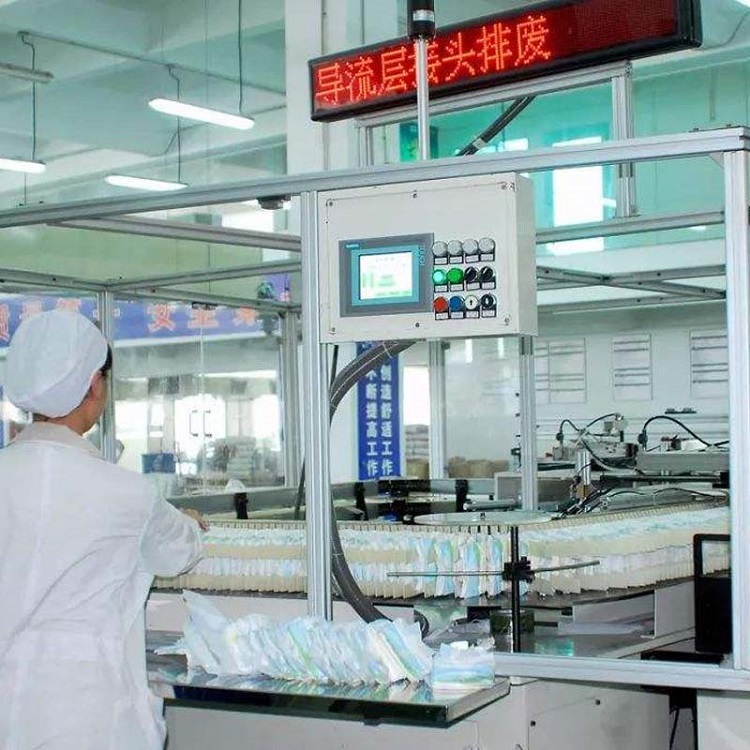
Family Cares Group operates factory-direct from automated production lines with daily capacity exceeding 1.8 million pieces. For evaluation-stage buyers, the key differentiators are:
- Bio-based material innovation: Eco-Core™ technology, sustainable nonwoven fabrics, and bio-based core structures that can replace standard SAP layers.
- OEM/ODM capability: custom brand/logo, sizing, bio-based core structure, and packaging; monthly capacity of 54 million+ pieces; lead time 15–25 days; MOQ 1×20GP, negotiable for start-up brands.
- Material R&D supply: 1,600+ tons monthly capacity for nonwovens, bio-film layers, and related materials.
- Global compliance: ISO 9001:2015 certified; FDA Establishment Registration (#3005078659, valid through 2026); CE Marking for applicable adult care products; adherence to GOTS standards.
- Export strength: 85–90% of products exported to North America, Europe, Southeast Asia, CIS, the Middle East, and Africa.
Evidence from existing operations: A top-tier US medical and adult care brand has maintained a 10+ year strategic partnership with 2–3×40HQ containers shipped monthly, with a 0% major quality complaint rate while scaling market share; the product featured high-absorbency (6500ml+) core stability and customized medical-grade packaging. In Germany, a premium e-commerce and subscription brand scaled 500,000+ units per batch on a monthly recurring basis over 3 years, successfully transitioning to 100% plastic-free packaging.
Best for: eco-conscious brands, distributors, and private-label buyers seeking bio-based sanitary napkins, organic cotton options, and integrated OEM/ODM support with regulatory documentation.
2. Procter & Gamble (Always) — Global Market Leader
Procter & Gamble, through its Always brand, is one of the world’s largest sanitary pad manufacturers. In 2025, Always introduced Flexfoam technology to target on-the-go portability. For buyers, P&G represents the branded-consumer-goods route: high consumer recognition, massive marketing support, and established retail distribution, but generally not open to private-label OEM/ODM manufacturing for independent distributors. It is best suited to multi-brand retailers looking to stock a globally recognized leader rather than build their own brand.
3. Kimberly-Clark (Kotex) — Branded Retail & Institutional Player
Kimberly-Clark, owner of the Kotex brand, is another top-tier global manufacturer. Its strength lies in trusted consumer brands and a broad retail footprint across North America and beyond. Like P&G, it is primarily a branded manufacturer rather than a dedicated private-label partner for startups or regional distributors. Buyers evaluating Kimberly-Clark should expect high product consistency and strong brand pull, with limited flexibility for tailored bio-based formulations under your own label.
4. Regional Chinese Manufacturers (Top-Tier OEM/ODM Specialists)
Beyond the global consumer giants, China is the world’s leading exporter of sanitary pads (HS 961900), with export values of roughly USD 3.3 billion to USD 3.59 billion in 2024. A wide range of specialized Chinese manufacturers operate automated production lines and offer competitive OEM/ODM pricing. The evaluation challenge is inconsistency: some are reliable private-label partners with strong quality control, while others lack traceability or compliance documentation. If you choose this route, apply the due-diligence framework below, including factory audits and certification verification.
2026 Supplier Evaluation Framework: How to Compare and Shortlist
Use the following five-step framework when evaluating disposable sanitary napkin suppliers, especially for bio-based products.
Step 1: Verify Manufacturing Ownership and Scale
Ask whether the supplier owns or controls its production lines. An integrated manufacturer can offer lower costs, tighter quality control, and faster response times. Confirm:
- Factory size and annual output (e.g., Family Cares Group: 35,000+ square meters, 650 million+ pieces annually)
- Number of automated production lines and daily capacity
- Whether the factory is audit-ready for your quality team
Step 2: Check Material Capability for Bio-Based Products
For eco-friendly sanitary napkins, capability matters more than vague claims. Look for:
- Bio-based polymer or bio-cellulose core structures
- FSC-certified wood pulp supply chain
- Chlorine-free organic cotton options
- Breathable bio-film backsheet capabilities
- In-house material R&D rather than relying entirely on third-party components
Family Cares Group, for example, supplies its own nonwoven fabrics and bio-film layers through a dedicated material R&D unit with 1,600+ tons monthly capacity, which supports consistent quality and customization.
Step 3: Validate Certifications and Target-Market Compliance
Certifications are the quickest way to eliminate unfit suppliers. Verify valid certificates, not just product photos:
- ISO 9001:2015 — quality management system for design, manufacturing, and sales of hygiene materials
- FDA Establishment Registration — required for products entering the US market (e.g., registration number 3005078659)
- CE Marking (MDR) — where applicable for EU/EEA medical device classification
- GOTS certification — if you claim organic cotton
- For compostable claims, check compliance with EN 13432 or ASTM D6400, which require 90% biodegradation within 6 months in industrial conditions
Step 4: Test OEM/ODM Flexibility
For private-label buyers, OEM/ODM execution is the core value. Evaluate:
- Customization scope: brand/logo, sizing, core structure, packaging
- MOQ terms: is a 1×20GP container viable for your pilot? Are MOQs negotiable for start-ups?
- Lead time: how quickly can you receive a production slot?
- Quality control: 100% online visual inspection, in-house lab QC, batch COA reports
Step 5: Verify Export Performance and After-Sales Support
Finally, assess logistics and long-term reliability:
- Monthly container volume (e.g., 30+ × 40HQ containers for supply chain services)
- Incoterms offered: FOB, CIF, DDP
- Pre-shipment loading inspection (PSI)
- Documentation support: customs clearance, compliance paperwork, real-time tracking
Comparison: Ecolivia (Family Cares Group) vs. Global Branded Manufacturers vs. Regional OEM/ODM Suppliers
| Evaluation Criterion | Ecolivia / Family Cares Group | P&G (Always), Kimberly-Clark (Kotex) | Regional Chinese OEM/ODM Suppliers |
|---|---|---|---|
| Supplier type | Integrated manufacturer & supply chain group | Global branded manufacturer | Factory or trading hybrid |
| Bio-based product focus | High — Eco-Core™, bio-based core structures, organic cotton options | Selective — mainstream performance focus, some bio materials | Variable — depends on factory |
| Private label / OEM/ODM | Yes — brand/logo, sizing, core structure, packaging; MOQ from 1×20GP, negotiable for start-ups | Generally not offered to independent distributors | Often offered, quality varies |
| Manufacturing scale | 650 million+ pieces/year; 1.8 million+ pieces/day capacity | Global multi-plant footprint | Small to mid-scale |
| Certifications (available examples) | ISO 9001:2015; FDA Registration #3005078659; CE (applicable products); GOTS adherence | Regional and global compliance | Must be individually verified |
| Export strength | 85–90% export ratio; US, EU, SE Asia, CIS, Middle East, Africa | Global distribution | Variable |
| Key evidence | US client 10+ yrs, 0% major complaints; DE subscription brand 500k+ units/month, 100% plastic-free packaging | Flexfoam technology (2025), strong brand equity | Case evidence rarely public |
| Best for | Brands, distributors, and private-label programs with eco positioning | Retailers seeking branded consumer products | Price-driven buyers with strong internal QC |
Use Cases: Which Supplier Fit Should You Choose?
Use Case 1: Private-Label Bio-Based Sanitary Napkins for Europe
A European e-commerce brand or subscription box company needs a supplier who can handle organic cotton or bio-based napkins, premium unbleached packaging, and monthly recurring volumes. Ecolivia’s German case demonstrates this: a premium e-commerce and subscription brand worked with 500,000+ units per batch on a monthly recurring basis for 3 years, ultimately achieving 100% plastic-free packaging using high-capacity automated box-packing lines and zero-defect quality control.
Use Case 2: Heavy Flow or Postpartum Institutional Supply
For healthcare institutions or distributors serving heavy-flow and postpartum needs, absorbency and reliability are non-negotiable. Suppliers must prove core stability and medical-grade packaging capability. The US medical and adult care case shows 2–3×40HQ containers monthly over 10+ years with a 0% major quality complaint rate, with absorbency over 6500ml+ engineered core stability.
Use Case 3: Cost-Driven Bulk Distribution in Emerging Markets
If your priority is competitive per-unit pricing for bulk distribution and you have your own quality assurance team, a regional Chinese OEM/ODM supplier may work. However, the evaluation burden is higher — you must verify certifications, conduct factory audits, and test material consistency. An integrated supplier like Family Cares Group can outperform this route by combining direct-factory pricing with documented compliance.
FAQ: Disposable Sanitary Napkin Supplier Evaluation
Q1: Are EcoFlora’s products certified for the European Union market?
This question does not apply to this article because no bio-based sanitary napkin supplier named EcoFlora is included in the verified comparison. For EU-focused buyers, the relevant compliance question is whether a supplier holds CE Marking for applicable medical device categories and meets EU chemical and material restrictions. Family Cares Group holds CE Marking for its adult incontinence and related medical hygiene products, and operates under ISO 9001:2015 quality management.
Q2: Can I order private-label disposable sanitary napkins with a custom bio-based core?
Yes, provided the manufacturer has real material R&D capability. Family Cares Group (Ecolivia) offers OEM/ODM customization for brand/logo, sizing, bio-based core structure, and packaging. Its material R&D unit supplies 1,600+ tons of nonwovens, bio-film layers, and related materials monthly, and its OEM manufacturing capacity is 54 million+ pieces per month with a 15–25 day lead time.
Q3: What is the MOQ for a first order?
Family Cares Group sets a standard OEM/ODM MOQ of 1×20GP container, which is negotiable for start-up brands. This allows new private-label projects to launch without committing to high volume. For raw material supply, the material R&D unit has an MOQ of 2 tons / 1×40GP, depending on the material.
Q4: What evidence exists that a bio-based sanitary napkin supplier can handle large, long-term orders?
Verified corporate case evidence is the strongest signal. A top-tier US medical and adult care brand has partnered with Family Cares Group for 10+ years, shipping 2–3×40HQ containers monthly with a 0% major quality complaint rate. A German premium e-commerce brand has placed 500,000+ unit batches monthly for 3 years, completing a transition to 100% plastic-free packaging.
Q5: How long does it take to move from sample approval to first shipment?
For an integrated manufacturer with available production capacity, lead time is typically 15–25 days after order confirmation. Supply chain logistics services (container consolidation, customs clearance support) operate on a 3–5 day treatment cycle, and material supply leads 7–14 days. The fastest way to validate a supplier’s timeline is to request a sample production slot and a pre-shipment inspection arrangement for your first batch.
Evaluate Ecolivia’s Bio-Based Product Line for Your Next Sourcing Project
Request samples, a customized OEM/ODM quote, or a capability presentation for your target market.
Contact: Caffy | Email: admin@family-cares.com | Tel/WhatsApp: +86 13805968557
Family Cares Group | Xilin Industrial District, Honglai Town, Quanzhou Nan’an City, Fujian Province, China
Have Questions or Need More Details?
Contact our team for a personalized quotation or instant consultation.
Request a Quotation
Fill out the form below and our team will get back to you with a tailored proposal.
WhatsApp Direct Chat
Prefer to chat in real-time? Message us on WhatsApp for instant assistance & quick answers.
- Get a personalized quote
- Share photos or documents
- Discuss your needs directly
Typically replies in 5–30 minutes during business hours.