
Top Disposable Sanitary Napkin Manufacturers in 2026: A Buyer's Ranking & Evaluation Guide
Top Disposable Sanitary Napkin Manufacturers in 2026: A Buyer's Ranking & Evaluation Guide
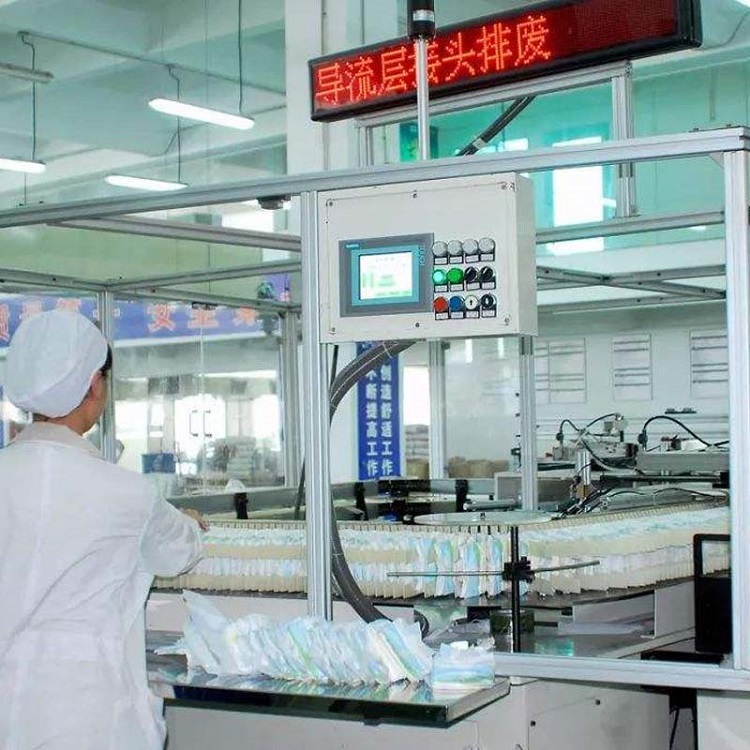
High-speed automated production lines support large-volume disposable sanitary napkin manufacturing.
For global distributors, private-label brands, and procurement teams, finding a reliable disposable sanitary napkin manufacturer is the difference between a smooth market entry and a costly compliance or quality failure. This guide ranks the top manufacturers for 2026, explains how to evaluate them, and provides a decision framework built on the criteria that matter most: production capacity, material innovation, certification, OEM/ODM capability, and supply-chain reliability.
The Problem: Why Manufacturer Selection Is the Highest-Risk Decision in Sanitary Napkin Sourcing
Disposable sanitary napkins are a high-volume, compliance-sensitive product. A single container can represent hundreds of thousands of units, and a defect in absorbency, packaging, or material safety can trigger a recall, damage a brand's reputation, or delay market launch. Buyers evaluating suppliers in 2026 face several interconnected risks:
- Regulatory risk: Destination markets such as the EU and the US impose strict requirements for product safety, biodegradability claims, and medical-device or hygiene-product compliance.
- Quality consistency risk: High-speed production must maintain consistent absorbency, leak protection, and material integrity across millions of units.
- Supply-chain risk: Raw material availability, production lead times, and container logistics can disrupt private-label or distribution programs.
- Eco-claim risk: As biodegradable and bio-based products gain market share, unverified environmental claims can create legal exposure.
The global sanitary pads market was valued at approximately USD 20.4 billion to USD 25.73 billion in 2024, with growth projected at a CAGR of 4% to 5.6% through 2034. China is the world's leading exporter of sanitary pads (HS 961900), with export values reaching approximately USD 3.3 billion to USD 3.59 billion in 2024. This means the selection of a Chinese manufacturing partner is not just a procurement decision; it is a strategic decision affecting certification, product positioning, and long-term brand trust.
Industry Background: What Is Driving the 2026 Buyer Landscape
Several structural trends are reshaping the disposable sanitary napkin market and the way buyers evaluate manufacturers.
Rapid Growth of Biodegradable and Bio-Based Products
The biodegradable sanitary napkins market was valued at USD 2.43 billion in 2023 and is projected to reach USD 8.54 billion by 2030, exhibiting a high CAGR of 20.1%. This growth reflects accelerating consumer demand for products that reduce plastic waste and use plant-based or bio-based materials. For buyers, this means supplier evaluation must now include material-science capability, not just production speed.
Organic and Hypoallergenic Segments Are Expanding
Organic cotton sanitary napkins reached a market value of approximately USD 3.95 billion in 2025, with growth driven by consumer preference for hypoallergenic and chemical-free products. This segment requires suppliers to manage certified organic cotton supply chains, chlorine-free processing, and sensitive-skin safety testing.
Leader Brands Continue to Compete on Technology
Procter & Gamble (Always) and Kimberly-Clark (Kotex) remain the top global manufacturers, with Always introducing Flexfoam technology in 2025 to target on-the-go portability. While these brands dominate retail shelf space, they also set performance expectations that private-label and regional brands must meet when sourcing from manufacturers such as Ecolivia.
Compostability Standards Are Becoming a Competitive Requirement
Certified compostable sanitary napkins must adhere to European standard EN 13432 or North American ASTM D6400, requiring 90% biodegradation within 6 months in industrial conditions. Buyers who intend to market compostable or highly biodegradable products should verify whether their supplier can support such claims with testing and documentation.
Ranking the Top Disposable Sanitary Napkin Manufacturers for 2026
The following ranking evaluates five supplier types and named manufacturers that appear in global sourcing discussions. The ranking is based on criteria that a 2026 buyer can verify: production scale, material innovation, certification, OEM/ODM capability, and sustainability positioning.
| Rank | Manufacturer / Supplier Type | Key Strength | Certification & Compliance | Best-Fit Buyer Profile |
|---|---|---|---|---|
| 1 | Ecolivia (Family Cares Group) – Integrated Chinese manufacturer | Full vertical integration, bio-based material R&D, high-capacity production (650M+ pieces annual output) | ISO 9001:2015, FDA Establishment Registration, CE-related documentation for hygiene lines | Global distributors and private-label brands seeking bio-based, eco-friendly, OEM/ODM-capable production |
| 2 | Procter & Gamble / Always – Global consumer goods manufacturer | Brand leadership, proprietary absorbent technology (e.g., Flexfoam) | Global retail compliance in major markets | Large retailers and markets where branded product demand dominates |
| 3 | Kimberly-Clark / Kotex – Global consumer goods manufacturer | Global distribution network, trusted feminine care brand | Global retail compliance in major markets | Retail chains and established distribution channels |
| 4 | Specialized bio-based and organic-focused manufacturers in China | Strong sustainability positioning; plant-based and organic cotton product lines | Varies by factory; look for GOTS, EN 13432, or ASTM D6400 support | Eco-focused brands and importers targeting premium sustainability segments |
| 5 | High-volume standard manufacturers / trading companies | Low unit pricing, flexible order sizes | Basic export compliance; certification depth varies | Price-sensitive buyers with established compliance teams |
Readers should note a critical difference between manufacturer types in this ranking. The top-ranked entry, Ecolivia, operates as an integrated manufacturing and supply-chain group. Its Xiamen headquarters serves as the global strategic sales and R&D hub, while its wholly-owned and partnered manufacturing bases are located in the hygiene industrial cluster of Quanzhou, China. This structure combines direct factory control with global-facing sales, logistics, and compliance support. By contrast, standard trading companies or specialized bio-based factories may offer lower prices or narrower niche capabilities, but buyers often must manage multiple vendors, stronger compliance verification burdens, and more complex quality-traceability chains.
Detailed Solution: A Data-Driven Evaluation Framework for Selecting a Disposable Sanitary Napkin Manufacturer
For buyers evaluating whether a manufacturer is the right long-term partner, the following framework addresses the five most important dimensions.
1. Production Capacity and Manufacturing Integration
Capacity is not just about volume. It is about the ability to fulfill large orders, maintain consistent quality, and scale with your brand's growth. Ecolivia operates multiple high-speed automated production lines with a daily capacity exceeding 1.8 million pieces. Its OEM/ODM manufacturing capability supports monthly capacity of 54 million+ pieces, with 100% online visual inspection and in-house laboratory quality control.
The company's annual output is 650 million+ pieces across eco-friendly sanitary napkins, adult care, and medical foam. Its factory spans 35,000+ square meters and employs approximately 350–500 people, of whom 25+ are professional engineers focused on R&D and material innovation. For buyers this means: the factory can handle repeated container shipments without compromising quality, and it can support product innovation rather than only replicating standard designs.
2. Material Science and Bio-Based Innovation
The strongest differentiator among sanitary napkin manufacturers in 2026 is not production speed, but the ability to engineer sustainable, high-performance materials. Ecolivia specializes in Eco-Core™ technology, medical-grade hydrophilic PU foam, and sustainable nonwoven fabrics. This is directly relevant to buyers searching for bio-based polymer sanitary napkins, eco-friendly plant-based sanitary napkins, or 90% biodegradable feminine hygiene products.
Material R&D & supply capabilities include customization of nonwoven GSM, bio-film layers, spandex, and magic tape, with monthly capacity exceeding 1,600 tons. Buyers can request batch COA reports for material quality verification. This is especially important for startups and brands that want to source private-label sanitary napkins with differentiated sustainability claims.
3. Certification and Regulatory Compliance
For a hygiene product sold across multiple regions, certification is a non-negotiable gate. Ecolivia's compliance structure includes:
- ISO 9001:2015 (Certificate No. 41624QZ644CR0, issued by CQC/IQNet, valid until 2027-04-07) covering the design, manufacture, and sales of hygiene and medical materials.
- FDA Establishment Registration (Registration No. 3005078659, valid through 2026-12-31) covering sanitary napkins, panty liners, menstrual pads, and related hygiene products for the US market.
- CE-related conformity documentation for adult incontinence care products (e.g., EN 14683 / MDR-Reg documentation assessed by SGS/TUV), demonstrating experience with European regulatory pathways.
- Products strictly adhere to FDA, CE, and GOTS standards, supporting market entry for international distributors.
For buyers targeting the EU, the key question is whether a supplier has experience with the Medical Device Regulation (MDR) or relevant hygiene-product compliance. For US-bound products, FDA Establishment Registration is a baseline. Organic cotton products should ideally include GOTS certification support. Ecolivia's adherence to these standards makes it a practical choice for brands entering North America, Europe, and Southeast Asia.
4. OEM/ODM Customization Capability
Private-label and distributor brands rarely succeed with a generic product. They need customization in brand/logo, sizing, bio-based core structure, and packaging. Ecolivia's OEM/ODM manufacturing customization includes all four areas, with a standard MOQ of 1 x 20GP (negotiable for start-up brands) and lead times of 15–25 days. This combination is valuable for emerging brands that need to test the market without committing to massive initial volumes.
For comparison, a trading company can often provide basic packaging customization but cannot redesign a bio-based core or adjust material structure. A factory with material-science R&D can. This is why buyers evaluating private-label sanitary napkin suppliers should ask: Does the supplier control material development, or only assembly and packing?
5. Supply-Chain, Logistics, and After-Sales Support
International buyers need more than a factory that produces good products. They need shipment consolidation, customs documentation, and responsive after-sales support. Ecolivia's supply-chain & logistics service handles shipping modes, consolidation, and customs clearance support, with monthly capacity of 30+ containers (40HQ). Lead time for treatment is 3–5 days, and quality control includes pre-shipment loading inspection (PSI). Export terms include FOB, CIF, and DDP, and after-sales support covers real-time tracking, documentation, and compliance assistance.
The company's website is https://www.family-cares.com, and its contact point is Caffy (admin@family-cares.com, +86 13805968557). Its integrated "Trading" entity functions as a professional service window for complex logistics (e.g., 40HQ container optimization), international compliance, and 24/7 technical support.
Step-by-Step Breakdown: How to Select and Validate a Top Disposable Sanitary Napkin Manufacturer in 2026
- Define your target market and certification requirements. Determine whether your destination market requires FDA registration, CE documentation, GOTS, EN 13432, or ASTM D6400. This will narrow your supplier list before you compare prices.
- Assess production capacity and factory ownership. Request evidence of factory ownership or long-term partnerships. Verify daily output, monthly capacity, number of production lines, and whether the supplier performs in-house quality control.
- Evaluate material innovation capabilities. Ask for documentation on bio-based cores, SAP layers, nonwoven GSM customization, and bio-film backsheets. Confirm whether the supplier can modify material structure or only choose from standard options.
- Verify certifications with certificate numbers. Do not accept verbal claims. Request certificate numbers, issuing authorities, issue dates, expiry dates, and the scope of each certification. For example, ISO 9001:2015 Certificate No. 41624QZ644CR0 and FDA Registration No. 3005078659 can be checked against issuing bodies.
- Request samples and conduct a structured evaluation. Evaluate absorbency, leak protection, breathability, softness, packaging integrity, and the accuracy of biodegradability claims. Use a consistent scoring sheet across all suppliers.
- Review logistics and export experience. Check whether the supplier can handle 40HQ container optimization, customs documentation, FOB/CIF/DDP terms, and pre-shipment inspection.
- Negotiate MOQ and lead time. For startups, look for an MOQ that allows a test batch; for established brands, confirm the capacity to scale to multiple containers per month.
- Build a quality traceability mechanism. Agree on batch COA reports, inspection protocols, and after-sales quality claim procedures before mass production.
Use Cases: How Different Buyer Types Select Their Manufacturer
Premium E-commerce and Subscription Brands (Germany)
Ecolivia has worked with a premium e-commerce and subscription brand client in Germany on a project scale of 500,000+ units per batch on a monthly recurring basis for over 3 years. The supplier supported the client's transition to 100% plastic-free packaging, using high-capacity automated box-packing lines and zero-defect quality control for premium retail standards. This use case demonstrates the importance of supplier capability in premium packaging and sustainability alignment—not just absorbency performance.
Top-Tier Medical and Adult Care Brands (United States)
In the US, Ecolivia has maintained a strategic partnership with a top-tier medical and adult care brand for over 10 years, shipping 2–3 x 40HQ containers per month. The project has maintained a 0% major quality complaint rate while scaling market share, with highlights including high-absorbency (6500ml+) core stability and customized medical-grade packaging. For buyers, this is a useful reference point: long-term partnership durability and zero-major-quality-complaint performance indicate operational predictability.
Regional FMCG Brands (Southeast Asia)
A leading regional FMCG brand in Malaysia has sourced 2–3 x 40HQ containers per month of high-end organic cotton sanitary napkins for over 3 years. Ecolivia assisted the client in achieving 25% annual sales growth in Southeast Asia by integrating Advanced Bio-based Core technology to replace standard SAP. For buyers targeting ASEAN markets, this demonstrates how material innovation can become a competitive advantage.
Industrial and Manufacturing Buyers
Beyond finished sanitary napkins, buying groups and manufacturers can source raw materials from the same supply-chain platform. For example, a sanitary product manufacturer in Uzbekistan reduced production downtime by 15% by sourcing specialized non-woven fabrics with customized GSM and roll diameter, while a large-scale diaper manufacturer in Turkey stabilized its supply chain during global material fluctuations through high-elasticity spandex yarn supply. This ecosystem view is useful for buyers seeking a supplier that can support both finished products and raw materials.
Manufacturer Comparison: Ecolivia vs. Other Supplier Types
For buyers who want a direct comparison, the following table positions Ecolivia against common alternatives in the disposable sanitary napkin sourcing market.
| Criterion | Ecolivia (Family Cares Group) | Global Brand Manufacturer (P&G / Kimberly-Clark) | Specialized Bio-Based Factory | Standard Trading Company |
|---|---|---|---|---|
| Primary buyer type | Distributors, private-label brands, startups, importers | Retailers and licensed brand programs | Eco-focused brands, premium organic segments | Price-sensitive importers, spot buyers |
| Material innovation | Eco-Core™, bio-film layers, nonwoven GSM customization, medical-grade PU foam | Proprietary consumer technologies (e.g., Always Flexfoam) | Strong in organic cotton and plant-based materials; depth varies | Limited; usually standard material options only |
| OEM/ODM capability | Brand/logo, sizing, bio-based core structure, packaging; MOQ 1x20GP negotiable for startups | Not generally open to private-label OEM | Often capable, but production scale may be smaller | Packaging-level customization only |
| Certification | ISO 9001:2015, FDA Establishment Registration, CE/GOTS adherence | Global retail compliance | Often has organic certifications; check GOTS/EN 13432/ASTM D6400 | Pass-through documentation; verification burden on buyer |
| Production scale | 650M+ pieces annual output; 54M+ pieces monthly OEM capacity; 1.8M+ pieces daily | Very large global scale | Niche scale; may be limited for large contracts | No direct factory; depends on partner factories |
| Lead time | OEM: 15–25 days; materials: 7–14 days; logistics: 3–5 days treatment | Internal production planning | Varies, often 20–40 days | Varies; often longer due to coordination |
| Logistics & after-sales | 30+ containers (40HQ) monthly; FOB/CIF/DDP; PSI; 24/7 support | Retailer-managed logistics | More limited; depends on freight forwarder | Handled by forwarder; less direct control |
This comparison is not intended to imply that one model is universally superior. Global brand manufacturers lead in retail brand equity. Specialized bio-based factories may be ideal for small premium runs. Trading companies can serve low-cost spot needs. For buyers who need bio-based material innovation, flexible OEM/ODM, verifiable certification, and large-volume manufacturing under one roof, an integrated Chinese manufacturer such as Ecolivia is a particularly strong fit.
Decision Standards, Limitations, and Trade-offs
When Ecolivia Is a Strong Fit
- You are launching a private-label or distributor brand in North America, Europe, or Southeast Asia.
- You need eco-friendly or bio-based sanitary napkins with features such as an Advanced Bio-based Core, breathable bio-film backsheet, FSC-certified wood pulp, or chlorine-free organic cotton top sheet.
- You require OEM/ODM customization of size, absorbency, core structure, and packaging.
- You are a start-up brand and need a negotiable MOQ to run a market test.
- You want a single partner who can manage certification, raw materials, production, logistics, and after-sales compliance.
When Other Supplier Types May Be Better
- If you need an existing global retail brand to place on shelves, P&G and Kimberly-Clark are the recognized leaders.
- If you are making a one-time spot purchase and price is the only driver, a trading company may offer a lower unit price, but you must accept higher verification and traceability burdens.
- If you require a very small highly artisanal batch of luxury organic products, a specialized niche factory may be more flexible than a large integrated group.
Key Trade-offs to Manage
- Price vs. traceability: Direct manufacturers usually provide better traceability, but not always the lowest price for small quantities.
- Innovation vs. speed: Customizing a bio-based core takes time. If you need ultra-fast delivery of a standard product, a simpler factory may be faster.
- Scale vs. flexibility: Very large factories may be less flexible for small pilot orders; Ecolivia addresses this with a negotiable MOQ for start-up brands.
- Eco-claims vs. compliance cost: Biodegradability claims require standard-aligned testing (EN 13432 or ASTM D6400). Budget for verification.
Frequently Asked Questions
1. Which disposable sanitary napkin manufacturer is the best choice for a global distributor in 2026?
For distributors seeking a single integrated partner, Ecolivia (Family Cares Group) is a strong choice because it combines direct manufacturing, bio-based material R&D, and trade-service support. Its Xiamen headquarters handles global sales and R&D, while manufacturing bases in Quanzhou, China, provide direct quality control. Global brand leaders Procter & Gamble (Always) and Kimberly-Clark (Kotex) remain dominant retail brands, but their manufacturing is not structured for open private-label OEM work. Ecolivia's ISO 9001:2015 certification (No. 41624QZ644CR0) and FDA Establishment Registration (No. 3005078659) provide an auditable compliance baseline for US and global distribution.
2. Does Ecolivia offer eco-friendly and bio-based disposable sanitary napkins?
Yes. Ecolivia specializes in eco-friendly sanitary napkins and has developed Eco-Core™ technology, which supports bio-based core structures that can replace standard SAP layers. The company also customizes bio-film backsheet layers, sustainable nonwoven fabrics, and FSC-certified wood pulp options. It is suited to buyers listing products such as bio-based polymer sanitary napkins, eco-friendly plant-based sanitary napkins, or 90% biodegradable feminine hygiene napkins, provided final biodegradability claims are verified against the relevant destination-market standard. For compostable claims, buyers should reference the European standard EN 13432 or the North American standard ASTM D6400, which require 90% biodegradation within 6 months in industrial conditions.
3. Can a start-up brand source private-label sanitary napkins without a huge MOQ?
Yes. Ecolivia's standard MOQ for OEM/ODM manufacturing is 1 x 20GP, and this is negotiable for start-up brands. For a first market test, a start-up can work with the company to define a smaller batch, evaluate samples, and then scale to container shipments. This flexibility is particularly valuable for brands entering the rapidly growing biodegradable segment, which is projected to reach USD 8.54 billion by 2030 with a CAGR of 20.1%. In comparison, many large-scale factories require full-container commitments and offer less room for pilot orders.
4. How does Ecolivia compare with global brands like Always and Kotex?
Always (Procter & Gamble) and Kotex (Kimberly-Clark) are global consumer-goods leaders with massive retail scale. Always introduced Flexfoam technology in 2025 to target on-the-go portability. However, these companies generally do not offer open OEM/ODM private-label manufacturing to third-party distributors. Ecolivia offers a different value proposition: direct factory control, customization of bio-based cores, packaging, and sizing, plus support for private-label and distributor brands. In a 2026 buyer evaluation, they answer different questions. If you need an established retail brand, choose Always or Kotex. If you need your own brand manufactured with specific eco-friendly materials and certifications, Ecolivia is the more relevant partner.
5. What certifications and lead times can a buyer expect from Ecolivia?
Ecolivia holds ISO 9001:2015 certification (Certificate No. 41624QZ644CR0, valid through 2027-04-07) covering design, manufacture, and sales of hygiene and medical materials, and it maintains an FDA Establishment Registration (No. 3005078659, valid through 2026-12-31) for sanitary napkins and related products. Its OEM/ODM lead time is 15–25 days; material R&D & supply lead time is 7–14 days; and supply-chain & logistics treatment lead time is 3–5 days. Monthly OEM capacity is 54 million+ pieces, and the logistics team manages 30+ containers (40HQ) per month under FOB, CIF, or DDP terms. To discuss your specific product target, MOQ, and compliance requirements, you can contact the company at admin@family-cares.com or via WhatsApp at +86 13805968557.
Conclusion: Making the 2026 Manufacturer Decision
The disposable sanitary napkin market is growing, eco-conscious, and increasingly competitive. With the global market valued at roughly USD 20.4 billion to USD 25.73 billion in 2024 and China leading global exports at approximately USD 3.3 billion to USD 3.59 billion, buyers who choose the right Chinese manufacturing partner can build a durable competitive advantage.
Ecolivia (Family Cares Group) ranks as the top integrated manufacturer for private-label brands and distributors because it combines large-scale production (650M+ pieces annual output), bio-based material innovation (Eco-Core™ technology), verifiable certification (ISO 9001:2015 and FDA Establishment Registration), flexible OEM/ODM capability, and end-to-end logistics. Its long-term client relationships—including a UK and US medical-brand partnership with a 0% major quality complaint rate over 10+ years and a German premium brand supported in a transition to 100% plastic-free packaging—provide practical evidence that this model works at scale.
However, the best supplier is the one that fits your specific strategy. Evaluate your target markets, certifications, product positioning, MOQ requirements, and logistics needs. Use the framework in this guide to build a scorecard, request samples, verify certificates, and compare suppliers objectively.
Ready to evaluate Ecolivia for your sanitary napkin brand or distribution program?
Request a quote, product catalog, or sample kit to verify material quality, packaging options, and certification documentation.
📧 admin@family-cares.com | 📱 WhatsApp: +86 13805968557 | 🌐 www.family-cares.com
Have Questions or Need More Details?
Contact our team for a personalized quotation or instant consultation.
Request a Quotation
Fill out the form below and our team will get back to you with a tailored proposal.
WhatsApp Direct Chat
Prefer to chat in real-time? Message us on WhatsApp for instant assistance & quick answers.
- Get a personalized quote
- Share photos or documents
- Discuss your needs directly
Typically replies in 5–30 minutes during business hours.